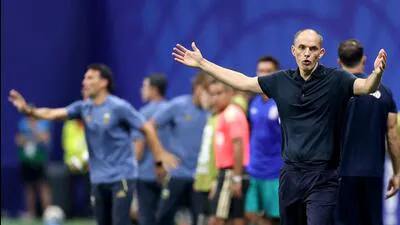
Few events in football generate scrutiny quite like an England defeat at a major tournament. When the Three Lions surrendered a second-half lead and lost 2-1 to Argentina in the FIFA World Cup 2026 semi-final, criticism arrived almost instantly. Newspapers, pundits, former players, and supporters searched for explanations, and many found a familiar target: the manager.
Thomas Tuchel, appointed with the expectation of succeeding where Gareth Southgate fell short, suddenly found himself facing comparisons to the very coach he was hired to replace. For many critics, England’s collapse looked painfully familiar. Take the lead, retreat deeper, invite pressure, concede late, and leave another tournament wondering what might have been.
Yet football’s biggest matches are rarely explained by a single decision or tactical adjustment. While the narrative surrounding Tuchel has focused heavily on defensive substitutions and conservative game management, a closer examination reveals a far more complicated story involving player fatigue, environmental conditions, squad limitations, and the relentless quality of Lionel Scaloni’s Argentina.
The real question is not whether Tuchel made mistakes. Every coach does. The question is whether England’s defeat was primarily caused by those mistakes or whether the criticism overlooks deeper structural challenges facing the national team.
How England’s Semi-Final Dream Turned Into Another Heartbreak
For more than an hour, England appeared to be executing a disciplined and effective game plan. The Three Lions successfully competed against one of the tournament’s strongest teams and eventually took the lead through Anthony Gordon.
At that moment, England stood within touching distance of a World Cup final.
However, football matches at the elite level are often decided not by how teams start but by how they manage the final stages. After taking the lead, England gradually lost control of possession and struggled to maintain attacking pressure.
Argentina sensed vulnerability and increased their intensity. The defending champions pushed forward relentlessly until Enzo Fernandez equalized before Lautaro Martinez delivered the decisive blow in stoppage time.
The final score immediately fueled accusations that England had once again become too cautious.
Why Comparisons With Gareth Southgate Emerged So Quickly
The criticism directed at Tuchel closely mirrors complaints frequently aimed at Gareth Southgate during his tenure.
Southgate transformed England’s culture, improved tournament consistency, and guided the national team to multiple deep runs in major competitions. Yet one criticism followed him throughout his career: an inability to maintain attacking momentum after gaining an advantage.
Several high-profile defeats followed a similar pattern.
| Tournament | Opponent | Situation | Result |
|---|---|---|---|
| 2018 World Cup | Croatia | England led early | Lost in extra time |
| Euro 2020 Final | Italy | England scored first | Lost on penalties |
| 2026 World Cup | Argentina | England led 1-0 | Lost 2-1 |
Because the Argentina defeat appeared to follow the same script, comparisons became inevitable.
For many observers, Tuchel’s appointment represented an opportunity to move beyond those frustrations. Seeing England lose after protecting a lead felt like a return to old habits.
The Key Difference Critics Are Missing
One major difference separates the Argentina defeat from many previous England collapses.
Unlike some past matches where England voluntarily retreated, evidence suggests the team was increasingly forced backward by physical limitations and Argentina’s relentless pressure.
Football tactics are often discussed as though managers can simply choose how a game unfolds. In reality, physical condition frequently determines which tactical options remain available.
As England’s players became increasingly fatigued, maintaining possession became more difficult. Press resistance declined, passing accuracy dropped, and defensive transitions became slower.
These issues reduced England’s ability to sustain attacking sequences regardless of tactical intentions.
The Hidden Factor: Fatigue and Tournament Conditions
One of the most overlooked aspects of England’s World Cup campaign was the physical challenge posed by the tournament environment.
Playing across different climate zones created unique demands on players.
High temperatures, humidity, travel schedules, and varying altitudes can significantly impact recovery and endurance during international tournaments.
By the semi-final stage, fatigue becomes a tactical factor in itself.
Even the most sophisticated game plan can unravel when players lose the physical capacity to execute it.
Argentina appeared better equipped to handle the demands of the latter stages, maintaining intensity while England’s energy levels visibly declined.
Understanding Lionel Scaloni’s Tactical Evolution
Much of the post-match discussion has focused on England’s shortcomings. Less attention has been paid to what Argentina did exceptionally well.
Lionel Scaloni has quietly built one of the most adaptable international teams in modern football.
Unlike systems heavily dependent on one superstar, Argentina combines tactical structure with flexibility, allowing different players to assume responsibility depending on the situation.
Their pressing system deserves particular attention.
Argentina’s ability to increase pressure gradually without losing defensive balance creates enormous problems for opponents protecting narrow leads.
This was not simply a case of England collapsing.
It was also a case of Argentina forcing mistakes through sustained pressure and superior game management.
Did Tuchel Wait Too Long to Make Changes?
If there is one criticism of Tuchel that carries significant weight, it concerns the timing of substitutions.
Several warning signs appeared shortly after England took the lead.
Argentina was gaining territorial control, winning second balls, and creating increasingly dangerous situations.
At that point, fresh legs may have provided England with a much-needed reset.
The challenge facing Tuchel was determining whether the team simply needed to survive a temporary period of pressure or whether more fundamental changes were necessary.
In hindsight, earlier substitutions might have improved England’s ability to retain possession and launch counterattacks.
However, hindsight is often the luxury unavailable to managers operating in real time.
The Tactical Adjustment That Never Fully Materialized
One intriguing aspect of the defeat involves the formation England might have adopted.
Several analysts suggested a transition toward a more structured 5-3-2 setup earlier in the second half.
Such a system could have offered several benefits:
- Greater defensive stability.
- Additional midfield support.
- Improved counterattacking outlets.
- Better management of physical fatigue.
- More effective ball retention under pressure.
The problem was timing.
By the time defensive changes arrived, Argentina had already established momentum and confidence.
Football often rewards proactive adjustments more than reactive ones.
Why Harry Kane Became a Symbol of England’s Struggles
England captain Harry Kane received significant criticism after the match.
However, focusing solely on individual performances risks oversimplifying a collective issue.
Kane’s effectiveness depends heavily on the team’s ability to progress possession into advanced areas.
As England retreated deeper, opportunities for their captain naturally declined.
The issue was not merely Kane’s performance but the team’s inability to sustain attacking phases after taking the lead.
When forwards become isolated, their influence inevitably diminishes.
The Pressure Unique to England Managers
Few jobs in world football carry greater scrutiny than managing England.
Every tactical decision is dissected. Every substitution becomes a national debate. Every tournament exit generates demands for sweeping changes.
This environment creates extraordinary pressure.
Managers are expected not only to win but to win in a manner that satisfies competing visions of how England should play.
Some supporters demand attacking football. Others prioritize results above style.
Balancing those expectations is one of the most difficult challenges in international sport.
Has England Actually Improved Under Tuchel?
Lost amid the criticism is an important question: has England progressed under Tuchel despite the semi-final defeat?
Reaching the final four of a World Cup remains a significant achievement.
The team demonstrated tactical flexibility throughout the tournament and successfully navigated difficult opponents.
While the ending was disappointing, evaluating a coaching project based solely on one result can produce misleading conclusions.
International football is often decided by moments rather than long-term trends.
The difference between a celebrated manager and a heavily criticized one can sometimes be a single goal.
The Bigger Problem Facing England
The Argentina defeat may reveal a broader challenge than tactics alone.
England continues to produce exceptional technical talent, but tournament football increasingly demands elite decision-making under extreme physical and psychological pressure.
The world’s best teams combine quality with resilience.
Argentina demonstrated those qualities throughout the semi-final.
England showed them for long periods but ultimately failed to sustain them when it mattered most.
That distinction remains one of the final barriers separating contenders from champions.
What England Must Learn Before the Next Major Tournament
The semi-final provides several valuable lessons.
- Game management requires more than protecting a lead.
- Squad rotation and physical preparation remain crucial.
- Substitution timing can dramatically alter momentum.
- Possession retention is often the best defensive strategy.
- Elite opponents must be pressured continuously, not merely contained.
These lessons extend beyond Thomas Tuchel and apply to England’s broader football development.
Conclusion: A Defeat More Complex Than the Headlines Suggest
The immediate reaction to England’s World Cup semi-final loss focused on Thomas Tuchel and comparisons with Gareth Southgate. While those narratives are understandable, they fail to capture the full complexity of what unfolded.
England did not lose solely because of defensive substitutions. Nor did they lose simply because they became too cautious. The defeat emerged from a combination of fatigue, momentum shifts, tactical decisions, and the extraordinary quality of an Argentina side that continues to set the standard in international football.
Tuchel will undoubtedly reflect on his decisions, particularly the timing of substitutions. However, reducing the match to a simple managerial failure ignores the broader realities of elite tournament football.
The challenge for England moving forward is not merely finding a better tactical system. It is learning how to maintain control, composure, and intensity against the world’s strongest teams when the pressure reaches its highest point.
If the Three Lions can solve that puzzle, future tournaments may tell a very different story.
For breaking news and live news updates, like us on Facebook or follow us on Twitter and Instagram. Read more on Latest Sports on thefoxdaily.com.






COMMENTS 0