The FIFA World Cup is built around one ultimate objective: reaching the final and lifting the trophy.
Everything else is secondary.
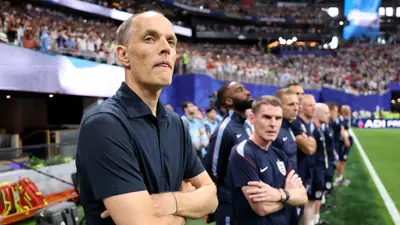
That reality helps explain why England manager Thomas Tuchel delivered one of the most honest assessments of the tournament after his side’s heartbreaking semi-final defeat to argentina. Ahead of England’s third-place playoff against France, Tuchel openly acknowledged what many players and coaches have quietly felt for decades.
Neither team wants to be there.
Instead of preparing for the biggest match in international football, England and France are preparing for a contest that serves as a reminder of what they narrowly missed.
While the third-place playoff remains part of FIFA World Cup tradition, Tuchel’s comments have reopened an important conversation about its value, its purpose, and the psychological challenge facing elite athletes after devastating semi-final defeats.
Why Thomas Tuchel Made the Remark
England entered the FIFA World Cup 2026 semi-final believing they had a genuine opportunity to reach their first World Cup final since 1966.
For long periods against Argentina, that dream looked achievable.
Anthony Gordon’s goal gave England a crucial lead and put the Three Lions within touching distance of history. However, Lionel Messi inspired another dramatic Argentine comeback, creating both goals as Enzo Fernandez and Lautaro Martinez turned the match around late in the second half.
The defeat was emotionally crushing.
Unlike a group-stage loss or even an earlier knockout exit, a semi-final defeat leaves teams just one victory away from competing for football’s greatest prize.
That context explains Tuchel’s blunt statement.
“None of our players and none of the French players want to play this match. They want to play the final.”
It was less a complaint and more an acknowledgment of the emotional reality elite athletes face after falling short of their biggest goal.
The Hidden Psychological Challenge of Third-Place Playoffs
One aspect often overlooked by fans is the mental recovery required after a World Cup semi-final defeat.
Physical fatigue can be managed through recovery sessions, nutrition, and medical support.
Emotional disappointment is far more complicated.
Players spend years dreaming about a World Cup final.
Many dedicate entire careers to that objective.
When that dream disappears, motivation naturally becomes difficult to maintain just days later.
Sports psychologists frequently describe this phenomenon as an “emotional crash” following a major setback. The closer athletes come to achieving a goal, the stronger the emotional impact when they fail.
For England and France, the challenge is not fitness.
It is finding purpose after losing the opportunity they truly wanted.
England’s World Cup Journey: Progress or Missed Opportunity?
Tuchel’s comments also highlight a larger debate surrounding England’s tournament.
On paper, reaching the semi-finals is a significant achievement.
Only four teams out of 48 remain alive at that stage.
Many traditional football powers failed to reach that point.
However, expectations change when success feels within reach.
England supporters are not evaluating the campaign against nations eliminated in the group stage.
They are evaluating it against the possibility of reaching the final.
That distinction explains why many fans have reacted negatively despite England’s deep tournament run.
How France Finds Itself in a Similar Situation
France’s disappointment may be even greater in some respects.
Les Bleus entered the tournament as one of the favorites and possessed arguably the most talented squad in world football.
Their semi-final defeat to Spain ended hopes of adding another World Cup title to their collection.
For veteran players and outgoing manager Didier Deschamps, the loss represented the end of a significant chapter.
Now, like England, France must quickly shift focus toward a match that offers pride rather than glory.
Do Third-Place Matches Still Matter?
The debate surrounding third-place playoffs has existed for decades.
Supporters argue that these matches still carry significant value.
- A World Cup medal remains a prestigious achievement.
- Players can end the tournament on a positive note.
- Younger stars gain valuable experience.
- National rankings and reputation can be improved.
- Fans receive one final opportunity to watch their team.
Critics, however, view the fixture differently.
- It often feels like a consolation prize.
- Players may lack motivation.
- Injury risks remain significant.
- The match can struggle to generate the intensity of knockout games.
Tuchel’s comments have effectively become the latest evidence supporting the second argument.
England’s Tactical Debate Continues
Beyond the third-place playoff itself, attention remains focused on England’s semi-final collapse.
Tuchel has faced criticism for his tactical decisions after Anthony Gordon opened the scoring against Argentina.
Several former players and pundits believe England became overly defensive too early.
The decision to prioritize protecting the lead rather than extending it allowed Argentina to control possession and momentum.
Eventually, Messi’s creativity proved decisive.
Although Tuchel has defended his approach, the discussion is unlikely to disappear anytime soon.
What Lionel Messi’s Argentina Exposed About England
The defeat revealed both England’s strengths and weaknesses.
Defensively, England remained organized for large portions of the match.
Offensively, they created opportunities against one of the tournament’s strongest teams.
However, Argentina demonstrated something England has often lacked in major tournaments: the ability to seize decisive moments under maximum pressure.
When opportunities emerged late in the match, Argentina capitalized.
England did not.
That difference ultimately separated the finalists from the eliminated side.
The Recovery Disadvantage Tuchel Highlighted
Another important point raised by Tuchel involves scheduling.
England has one fewer day of recovery than France before the third-place match.
While professional athletes are accustomed to short turnarounds, every recovery day becomes valuable during a month-long tournament.
Fatigue accumulates.
Minor injuries increase.
Mental exhaustion becomes more pronounced.
Although not an excuse, the scheduling difference adds another layer of complexity to England’s preparation.
Why the Match Still Matters for England
Despite Tuchel’s honesty, the third-place playoff still carries importance.
A victory would provide England with several benefits.
| Potential Benefit | Why It Matters |
|---|---|
| Third-Place Finish | England’s best World Cup finish since reaching the latter stages consistently in modern tournaments |
| Positive Momentum | Creates confidence heading into future competitions |
| Squad Development | Gives younger players experience in a high-pressure environment |
| Fan Satisfaction | Ends the tournament with a victory rather than consecutive defeats |
| National Pride | Provides a tangible achievement despite missing the final |
While it may not be the game players dreamed about, it remains meaningful.
A Unique Perspective Many Are Missing
Most coverage of Tuchel’s comments focuses on whether he was right or wrong.
The more interesting question is why football continues to treat third-place matches differently from other sports.
In events like the Olympics, bronze medals are celebrated enthusiastically because they represent a podium finish.
In football, third-place games often feel overshadowed by the final itself.
This difference is largely psychological.
World Cup semi-finalists are not thinking about finishing third. They are thinking about finishing first.
Everything else can feel like failure, even when it objectively represents an extraordinary achievement.
Prediction: Expect a More Open Match Than Usual
Third-place playoffs frequently produce entertaining football.
Without the pressure associated with knockout elimination, teams often play with greater freedom.
Managers may rotate squads, experiment tactically, and give opportunities to players who featured less during the tournament.
As a result, England versus France could become one of the more attacking matches of the World Cup’s final weekend.
The emotional burden of the semi-finals may eventually give way to a desire to finish the tournament positively.
Conclusion
Thomas Tuchel’s admission that neither England nor France wants to play the FIFA World Cup 2026 third-place playoff offers a rare glimpse into the mindset of elite competitors after heartbreaking semi-final defeats. While fans often focus on tactics, statistics, and results, his comments highlight the emotional reality of coming so close to football’s biggest stage only to fall short.
Yet despite the disappointment, the match still carries significance. A third-place finish remains an achievement, particularly in a tournament featuring the world’s strongest national teams. For England, it represents an opportunity to show resilience, respond to criticism, and conclude the World Cup with a victory.
Whether the third-place playoff remains relevant is a debate that will continue long after FIFA World Cup 2026 ends. What is certain is that both England and France would rather be preparing for the final. The challenge now is finding motivation in a match neither expected to play.
For breaking news and live news updates, like us on Facebook or follow us on Twitter and Instagram. Read more on Latest Sports on thefoxdaily.com.






COMMENTS 0