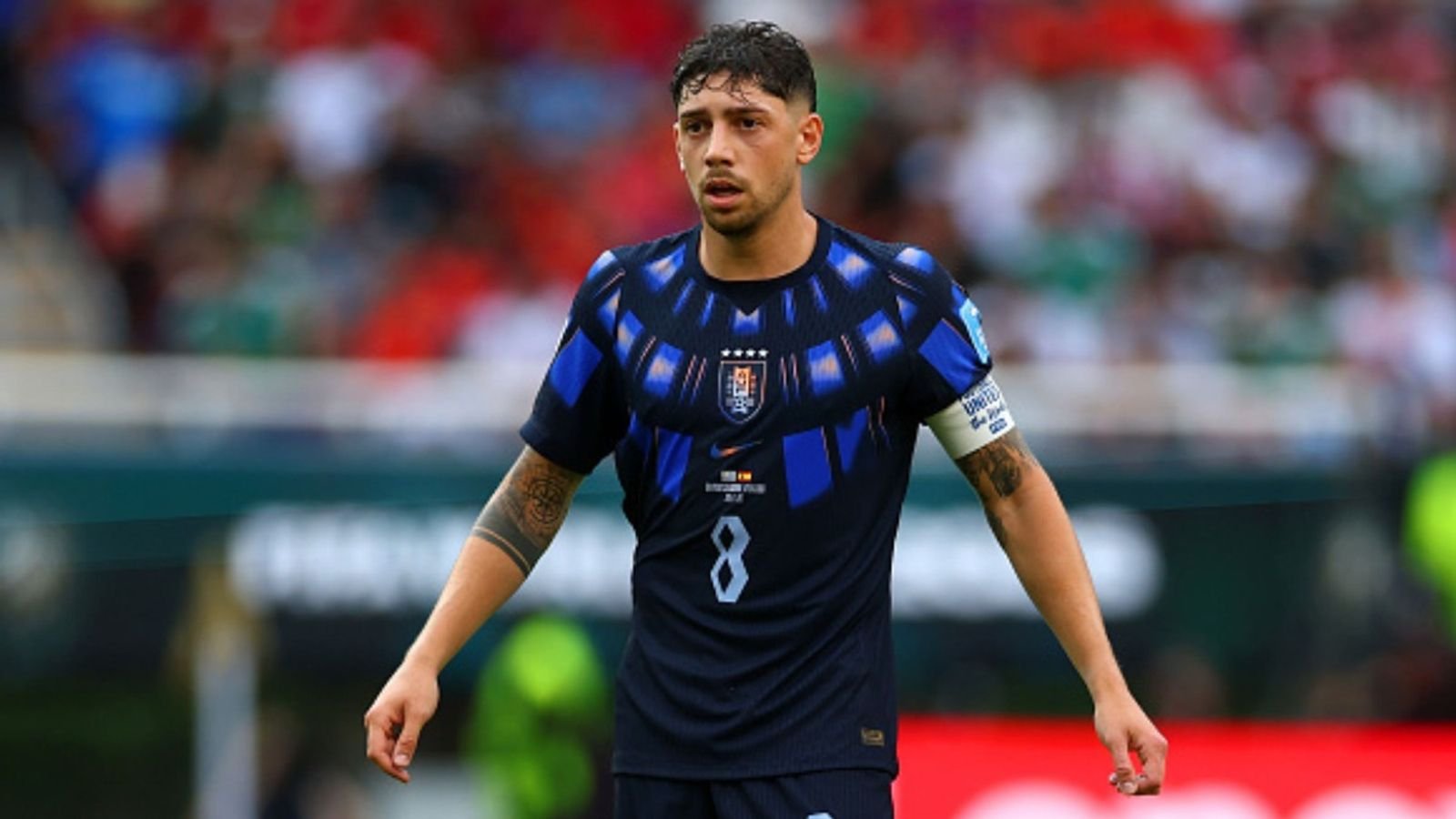
The Uruguay World Cup 2026 exit has taken another dramatic turn after reports revealed that the Uruguayan Football Association (AUF) cancelled the team’s planned charter flight home following their disappointing group-stage elimination.
Instead of travelling together from their base camp in Mexico on a private aircraft, Uruguay players will reportedly return to Montevideo through separate commercial flights. The decision came shortly after La Celeste suffered a 1-0 defeat against Spain, a result that confirmed their early departure from the tournament.
The move has created debate among fans and football analysts, with some viewing it as a message of accountability after a poor campaign, while others believe such a decision could create unnecessary tension within the squad.
| Topic | Details |
|---|---|
| Team | Uruguay national football team |
| Tournament | FIFA World Cup 2026 |
| Reason for decision | Reported response to disappointing group-stage elimination |
| Previous plan | Players returning together on a charter flight |
| New arrangement | Separate commercial flights back to Montevideo |
| Main debate | Accountability vs team unity |
What happened after Uruguay’s World Cup elimination?
Uruguay entered the 2026 FIFA World Cup with a strong football reputation and high expectations. Known for their competitive spirit, defensive organisation, and history of producing elite players, La Celeste were expected to challenge for a place in the knockout stages.
However, their campaign ended earlier than expected after a 1-0 defeat against Spain confirmed their elimination from the group stage.
The result created disappointment among supporters, especially because Uruguay have traditionally been considered one of South America’s strongest football nations.
Following the exit, reports emerged that the AUF decided to cancel the team’s scheduled charter flight. The association has not released an official explanation, but the timing of the decision has led many observers to connect it with frustration over the tournament performance.
Why did Uruguay cancel the charter flight?
The exact reason behind the AUF decision has not been officially confirmed. However, reports suggest that the move was linked to disappointment with the team’s World Cup campaign.
In football, post-tournament decisions often reflect more than just results. They can represent frustration over preparation, expectations, performances, or internal evaluations.
A charter flight is usually arranged to provide comfort, convenience, and team unity after major competitions. Cancelling it changes the normal routine and has been interpreted by some as a symbolic response rather than only a logistical decision.
The situation has created two different viewpoints:
- Supporters of the decision believe players and staff must accept consequences after failing to meet expectations.
- Critics argue that public pressure and punishment-style decisions may damage morale instead of helping the team improve.
Marcelo Bielsa under pressure after Uruguay’s disappointing campaign
The result has also increased attention on coach Marcelo Bielsa, who took charge of Uruguay with expectations of building an exciting and competitive team.
Bielsa is known worldwide for his attacking philosophy, intense training methods, and tactical ideas. However, major tournaments often judge managers by results rather than long-term plans.
Uruguay’s elimination has raised questions about whether the team successfully adapted to Bielsa’s approach and whether further changes are needed before future competitions.
The challenge for any coach at an international level is balancing tactical identity with tournament realities. World Cups are short competitions where one bad result can completely change the narrative.
Uruguay’s football history makes the exit more disappointing
Uruguay’s frustration is understandable because the country has one of football’s richest traditions.
The two-time World Cup winners have produced legendary players and memorable tournament moments throughout history. Their national team is famous for fighting spirit, defensive toughness, and the ability to compete against larger football nations.
Because of that history, early elimination creates bigger disappointment compared to teams with lower expectations.
For Uruguay, the question is not only why they exited but also how they rebuild for the next international challenge.
The bigger issue: Does punishment improve football performance?
The charter flight controversy highlights a larger debate in professional sports: whether punishment after failure leads to improvement.
Successful teams usually combine accountability with a positive environment. While players must accept responsibility, maintaining trust and unity is also important for future success.
Football history has shown examples where teams responded to disappointment by rebuilding successfully. It has also shown cases where internal tension created longer-term problems.
A failed tournament does not define a team permanently, but the response after failure often determines the next chapter.
Comparison: Different approaches after tournament disappointment
| Approach | Possible Benefit | Possible Risk |
|---|---|---|
| Strict accountability measures | Shows high standards and responsibility | Can affect team morale |
| Supportive rebuilding approach | Encourages long-term improvement | May be viewed as accepting failure |
| Immediate squad changes | Creates fresh competition | Can disrupt stability |
What this means for Uruguay’s future
The focus now shifts toward rebuilding. Uruguay have talented players and a strong football culture, but their next steps will determine whether this World Cup exit becomes a setback or a turning point.
The team must evaluate several areas:
- Squad balance between experienced players and younger talent
- Tactical adjustments for future tournaments
- Consistency in important matches
- Maintaining confidence after disappointment
International football moves quickly, and teams that respond effectively after failure often return stronger.
Fan reaction and online debate
The cancellation of the charter flight created significant discussion among supporters. Some fans argued that representing Uruguay carries enormous responsibility and that players must face consequences after poor performances.
Others questioned whether changing travel arrangements would actually solve football problems. They suggested that improvement requires deeper analysis, better preparation, and tactical solutions rather than symbolic actions.
The debate reflects how emotionally connected supporters are to national teams, especially in countries where football is part of national identity.
Future outlook: Can Uruguay bounce back?
Uruguay’s next challenge will be turning disappointment into progress. The country has a history of rebuilding successful teams after difficult moments.
The current generation still contains quality players, and the experience of a major tournament exit can become valuable for future competitions.
The most important decision will not be the cancelled flight itself but how Uruguay responds in the months ahead.
Conclusion
The reported cancellation of Uruguay’s charter flight after their FIFA World Cup 2026 elimination has become one of the most unusual stories of the tournament.
The decision has sparked debate about accountability, leadership, and how teams should respond after disappointment.
While the World Cup campaign ended earlier than expected, Uruguay’s football future will depend on the lessons learned from this setback. The next phase of rebuilding will determine whether this moment becomes a crisis or the beginning of a stronger comeback.
For breaking news and live news updates, like us on Facebook or follow us on Twitter and Instagram. Read more on Latest Sports on thefoxdaily.com.






COMMENTS 0