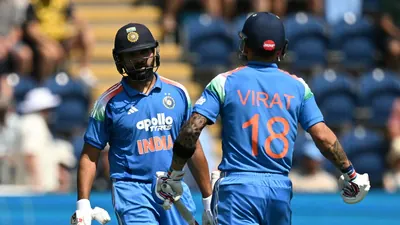
For more than a decade, Rohit Sharma and Virat Kohli have been the defining faces of Indian cricket. Together, they have broken records, won major tournaments, carried enormous expectations, and helped shape one of the most successful eras in the country’s cricketing history. Fans affectionately called them “RoKo,” treating them as inseparable pillars of India’s batting lineup.
However, as preparations intensify for the 2027 ODI World Cup, reports indicate that Indian cricket’s decision-makers may now be viewing the two legends through very different lenses.
According to multiple reports, selectors and team management remain fully committed to Virat Kohli’s inclusion in India’s World Cup plans, while Rohit Sharma’s place appears increasingly uncertain. The development has sparked intense debate across the cricketing world and raised important questions about performance, longevity, succession planning, and how elite teams manage generational transitions.
More importantly, it offers a fascinating glimpse into how India intends to build a squad capable of competing for cricket’s biggest prize in 2027.
Why Virat Kohli and Rohit Sharma Are Being Evaluated Differently
At first glance, treating two modern greats differently may seem surprising. Both players belong to the same generation, both have achieved legendary status, and both have been central to India’s success for years.
However, modern selection decisions are rarely based on reputation alone.
Selectors typically evaluate players using a combination of factors:
- Current form
- Fitness levels
- Consistency
- Role within the team
- Projected performance through the next tournament cycle
- Availability and workload management
Reports suggest that India’s management remains convinced that Kohli continues to satisfy all of these requirements, while concerns have emerged regarding Rohit’s long-term role in a team preparing for the next World Cup.
Whether that assessment ultimately proves correct remains to be seen, but it helps explain why the two veterans are currently being viewed differently.
Virat Kohli’s Continued Importance to India’s ODI Setup
Virat Kohli’s standing within the ODI format remains exceptional.
Few players in cricket history have demonstrated the same level of consistency across different conditions, opposition attacks, and tournament environments.
Even in the later stages of his career, Kohli continues to provide something every championship-winning team values: reliability.
His ability to manage run chases, absorb pressure, and construct innings remains among the best in world cricket.
Unlike power hitters who rely heavily on physical explosiveness, Kohli’s game is built around technique, timing, fitness, decision-making, and adaptability. These qualities often allow elite batters to remain effective well into the latter stages of their careers.
That may be one reason selectors continue viewing him as a key component of India’s future plans.
The Statistical Difference Driving the Conversation
While selectors consider far more than statistics, recent performances inevitably influence decision-making.
Reports indicate that Rohit’s recent ODI returns have raised concerns regarding consistency heading into another World Cup cycle.
Meanwhile, Kohli has continued producing significant contributions across major series.
| Selection Factor | Virat Kohli | Rohit Sharma |
|---|---|---|
| Recent Form | Strong and consistent | Mixed results |
| Fitness Perception | Highly rated | Under increased scrutiny |
| Role in Team | Middle-order anchor | Opening batter |
| World Cup Planning | Viewed as core player | Future reportedly under review |
| Competition for Position | Relatively stable | Facing pressure from emerging openers |
The contrast does not necessarily diminish Rohit’s achievements. Instead, it highlights how selectors often evaluate different positions differently when planning for the future.
The Yashasvi Jaiswal Factor Is Impossible to Ignore
No discussion about Rohit’s future is complete without mentioning Yashasvi Jaiswal.
The young opener has rapidly emerged as one of India’s most exciting batting prospects. His fearless approach, ability to score quickly, and long-term potential make him an attractive option for selectors building toward 2027.
Unlike many young players, Jaiswal has already demonstrated an ability to perform under pressure and convert starts into major scores.
For selectors, this creates a difficult but important question:
Should India continue backing an established veteran, or should it accelerate the development of a player who could potentially lead the batting unit for the next decade?
That dilemma appears to be influencing current selection discussions.
Why Kohli’s Role Is Harder to Replace
One overlooked aspect of this debate is the nature of Kohli’s role within the batting lineup.
Explosive openers are rare, but India currently possesses several promising options capable of filling that position.
Middle-order anchors with Kohli’s consistency, however, are considerably harder to find.
Modern ODI cricket increasingly values players who can control innings during difficult phases, manage pressure situations, and adapt to changing match conditions.
Kohli has spent much of his career mastering exactly those skills.
This may explain why selectors continue viewing him as indispensable despite his advancing age.
The Gambhir-Agarkar Vision for 2027
Every major tournament cycle requires a clear strategic vision.
The current management group appears focused on balancing proven performers with emerging talent.
The objective is not merely qualifying for the World Cup but building a squad capable of winning it.
That process often involves difficult decisions regarding senior players.
Successful teams regularly make tough calls years before major tournaments to ensure younger players gain enough experience before the event arrives.
Australia, England, and New Zealand have all followed similar approaches during previous World Cup cycles.
India appears to be implementing a comparable strategy.
What Rohit Sharma Still Offers India
Despite reports regarding his future, writing off Rohit Sharma would be premature.
Elite athletes have repeatedly demonstrated an ability to respond when their place is questioned.
Rohit’s value extends beyond statistics.
- Massive big-match experience
- Leadership knowledge
- Understanding of ODI tactics
- Ability to dominate bowling attacks
- Mentorship for younger players
History shows that experienced players can often reinvent themselves during the later stages of their careers.
One strong run of performances could significantly alter the conversation surrounding his future.
How Great Teams Manage Generational Change
The Rohit-Kohli discussion reflects a challenge faced by every successful sporting nation.
Eventually, every team must transition from one generation of stars to the next.
The key question is not whether change will happen but how it will happen.
Some teams delay difficult decisions and struggle afterward. Others transition too quickly and lose valuable experience.
The most successful teams usually find a middle ground.
India’s selectors appear determined to avoid both extremes.
The Mental Strength That Sets Kohli Apart
One factor frequently highlighted by coaches and former players is Kohli’s mental resilience.
Throughout his career, he has repeatedly responded to criticism with performances rather than statements.
His ability to maintain intensity, discipline, and fitness standards remains among the highest in international cricket.
These qualities become increasingly valuable during World Cup tournaments, where pressure can overwhelm even highly talented players.
For selectors, proven mental strength often carries significant weight.
The Unique Insight Most Discussions Are Missing
Much of the public debate focuses on whether Kohli deserves his place and whether Rohit should continue.
But the deeper story is actually about India’s extraordinary depth.
Many cricketing nations struggle to identify one world-class batter capable of leading a World Cup campaign.
India finds itself in a position where it must choose between established legends and highly talented young players.
That is not a selection crisis.
It is a reflection of the strength of India’s cricketing ecosystem.
The emergence of players like Yashasvi Jaiswal means selectors now have genuine alternatives rather than forced replacements.
This gives India flexibility that many rival teams would envy.
Could the Current Situation Change Before the World Cup?
Absolutely.
International cricket evolves rapidly.
Form fluctuates. Injuries occur. Young players develop. Veterans rediscover peak performance.
The period leading up to the 2027 World Cup still contains numerous ODI matches that could influence selection decisions.
Selectors will continue monitoring performances closely before finalizing long-term plans.
For that reason, no player’s position can be considered completely guaranteed until the tournament approaches.
What This Means for India’s World Cup Ambitions
Ultimately, every selection decision will be judged through one lens: whether it improves India’s chances of winning the World Cup.
The management appears convinced that Virat Kohli remains central to that objective.
At the same time, they seem increasingly focused on preparing younger players for larger responsibilities.
If executed correctly, this strategy could provide India with the ideal balance of experience and youth.
If mishandled, however, it could create unnecessary instability during an important transition period.
Conclusion: A New Chapter Is Beginning for Indian Cricket
The contrasting situations of Virat Kohli and Rohit Sharma highlight a pivotal moment in Indian cricket’s evolution.
Reports suggesting Kohli remains an automatic selection for the 2027 ODI World Cup while Rohit’s future is under review reveal how selectors are prioritizing long-term planning alongside current performance.
Regardless of what happens next, both players have already secured their places among the greatest cricketers India has ever produced.
Yet international sport is always looking forward, not backward. As India prepares for another World Cup campaign, the focus is increasingly shifting toward building the strongest possible squad for the future.
Whether Rohit remains part of that journey or not, the decisions being made today could shape Indian cricket’s fortunes for years to come.
For breaking news and live news updates, like us on Facebook or follow us on Twitter and Instagram. Read more on Latest Sports on thefoxdaily.com.






COMMENTS 0