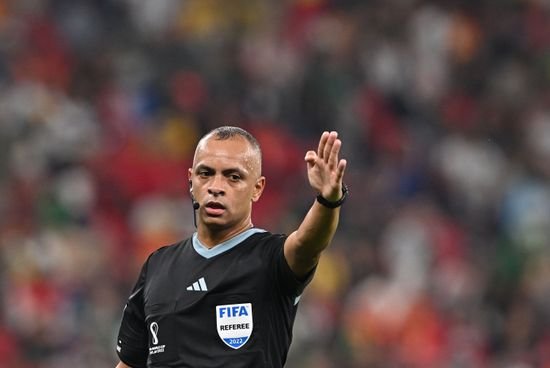
Players usually dominate the headlines at a FIFA World Cup. Goals, assists, dramatic saves, and tactical masterclasses often define the conversation. Yet on the opening night of the 2026 FIFA World Cup, it was neither Mexico’s goalscorers nor South Africa’s struggling defenders who captured global attention.
Instead, Brazilian referee Wilton Sampaio unexpectedly became one of the tournament’s biggest viral stars.
From a futuristic communication headset that sparked thousands of memes to a dramatic performance involving three red cards, Sampaio found himself at the center of one of the most chaotic World Cup openers in recent memory. As Mexico defeated South Africa 2-0 at the historic Estadio Azteca, social media buzzed with discussions about the man carrying the whistle rather than the players carrying the ball.
But who exactly is Wilton Sampaio, and why has he become one of football’s most recognizable referees?
Who Is Wilton Sampaio?
Wilton Pereira Sampaio is one of South America’s most experienced football referees and has spent more than a decade officiating some of the biggest matches in world football.
Born in Teresina de Goiás, Brazil, in 1981, Sampaio built his reputation through consistent performances in Brazilian domestic football before earning international recognition. His rise through the officiating ranks was relatively rapid, reflecting his ability to handle high-pressure matches and maintain authority in emotionally charged environments.
After making his mark in Brazil’s top division, he received his FIFA referee badge in 2013, opening the door to elite international competitions.
| Wilton Sampaio Profile | Details |
|---|---|
| Full Name | Wilton Pereira Sampaio |
| Nationality | Brazil |
| Year of Birth | 1981 |
| FIFA Badge Awarded | 2013 |
| Major Tournaments | World Cup, Copa America, Club World Cup |
| Known For | Strict officiating and disciplinary control |
A Referee With World Cup Experience
Unlike many officials making their tournament debut, Sampaio arrived at the 2026 FIFA World Cup with extensive experience on football’s biggest stages.
He previously officiated matches during both the 2018 and 2022 FIFA World Cups, establishing himself among FIFA’s trusted referees.
His international résumé includes:
- FIFA World Cup tournaments.
- Copa America competitions.
- Copa Libertadores matches.
- Copa Sudamericana fixtures.
- FIFA Club World Cup games.
- World Cup qualifying campaigns.
These appointments reflect FIFA’s confidence in his ability to manage high-stakes encounters involving some of the world’s biggest football nations.
By the time the 2026 World Cup began, Sampaio was already considered one of South America’s most accomplished active referees.
Why Did Wilton Sampaio Go Viral?
Interestingly, Sampaio’s viral fame initially had nothing to do with controversial decisions or disciplinary actions.
Before fans began discussing red cards, they were talking about technology.
Viewers watching the opening match quickly noticed the referee’s advanced communication equipment. The oversized over-ear headset connected to FIFA’s officiating system gave Sampaio a distinctly futuristic appearance.
Social media users wasted little time creating jokes and memes.
Comparisons ranged from professional esports players to science-fiction characters and even RoboCop. Screenshots spread rapidly across multiple platforms as fans speculated about the new officiating technology being used during the tournament.
What started as lighthearted humor soon evolved into something much bigger as the match itself descended into chaos.
The Three Red Cards That Changed the Conversation
While the headset generated early attention, Sampaio’s decisions during the match ultimately pushed him into the global spotlight.
The Mexico versus South Africa opener produced three red cards, making it one of the most dramatic World Cup matches in recent years.
First Red Card: Sphephelo Sithole
South Africa’s troubles intensified shortly after halftime when midfielder Sphephelo Sithole was dismissed for denying a clear goalscoring opportunity.
The decision significantly altered the balance of the match, leaving South Africa with ten players and an uphill battle against the hosts.
Second Red Card: Themba Zwane
Later in the contest, VAR became a major factor.
After reviewing an incident involving a strike to Roberto Alvarado’s face, Sampaio issued a straight red card to Themba Zwane. The decision reduced South Africa to nine players and effectively ended any realistic hopes of a comeback.
Third Red Card: Cesar Montes
Just when it appeared the drama was over, Mexico defender Cesar Montes received a red card in stoppage time after bringing down Khuliso Mudau.
The dismissal ensured that both teams finished the match with fewer players than they started, adding another chapter to an already chaotic evening.
| Player | Team | Reason |
|---|---|---|
| Sphephelo Sithole | South Africa | Denying a goalscoring opportunity |
| Themba Zwane | South Africa | Violent conduct after VAR review |
| Cesar Montes | Mexico | Professional foul in stoppage time |
Sampaio’s Reputation for Strict Discipline
For those familiar with South American football, the number of cards shown was not entirely surprising.
Sampaio has long been known for adopting a strict approach to discipline. Throughout his career in Brazilian domestic football and continental competitions, he has demonstrated a willingness to issue cards when matches threaten to spiral out of control.
Supporters often have differing opinions about such referees. Some praise their consistency and authority, while others argue they can become too involved in the game.
Regardless of perspective, one thing remains clear: Sampaio rarely allows matches to drift beyond his control.
The World Cup opener against South Africa provided another example of his firm management style.
The Technology Behind the Viral Headset
One aspect competitors covering this story have largely overlooked is the broader significance of the communication equipment that attracted so much attention.
Modern refereeing has undergone a technological revolution over the past decade.
Today’s officials rely on sophisticated communication systems that allow instant contact with assistant referees, VAR officials, and fourth officials. These systems improve decision-making speed and accuracy while reducing misunderstandings during critical moments.
What appeared unusual to many viewers was actually part of football’s ongoing technological evolution.
The viral headset may have inspired jokes, but it also symbolized how officiating continues to evolve alongside the sport itself.
The England Connection: Why Some Fans Already Knew His Name
Although many casual fans were introduced to Sampaio during the 2026 World Cup opener, dedicated football followers were already familiar with him.
His performance during England’s quarter-final defeat to France at the 2022 FIFA World Cup generated significant debate among players, pundits, and supporters.
Several controversial moments from that match led to criticism from sections of the football community, increasing his global profile long before the tournament in North America began.
That previous experience may have contributed to the intense online reaction whenever his name appeared during Mexico’s victory over South Africa.
How Does This Match Compare to the Most Infamous World Cup Encounters?
Despite the three red cards, Mexico versus South Africa does not hold the record for the most dismissals in a World Cup match.
That distinction still belongs to the infamous “Battle of Nuremberg” during the 2006 FIFA World Cup.
| Match | Red Cards | Yellow Cards |
|---|---|---|
| Portugal vs Netherlands (2006) | 4 | 16 |
| Mexico vs South Africa (2026) | 3 | Multiple |
The Portugal-Netherlands clash remains one of the most ill-tempered games in World Cup history, featuring four dismissals and an astonishing sixteen yellow cards.
However, Mexico versus South Africa comfortably ranks among the most chaotic World Cup openers of the modern era.
Why Referees Are Becoming Bigger Characters in Modern Football
One fascinating trend emerging in modern football is the increasing visibility of referees.
Historically, officials operated largely in the background. Today, VAR reviews, advanced technology, microphone systems, and social media have transformed referees into highly visible figures.
Every major decision is analyzed instantly by millions of viewers. Every controversial call generates debates across television, podcasts, and social platforms.
As a result, referees are becoming recognizable personalities in ways that were almost unimaginable two decades ago.
Sampaio’s viral World Cup moment perfectly illustrates this shift.
Conclusion
Wilton Sampaio arrived at the 2026 FIFA World Cup as one of football’s most experienced referees. By the end of the opening night, he had become one of the tournament’s most talked-about figures.
A futuristic headset sparked the first wave of online attention, but three red cards and a dramatic performance ensured his name dominated conversations long after the final whistle.
While Mexico celebrated a successful start to their World Cup campaign, Sampaio unexpectedly emerged as one of the event’s central characters. Whether fans viewed him as a strict disciplinarian, a controversial decision-maker, or simply the referee who looked like a science-fiction hero, one thing was undeniable: the opening day of the 2026 FIFA World Cup belonged almost as much to Wilton Sampaio as it did to the players on the pitch.
For breaking news and live news updates, like us on Facebook or follow us on Twitter and Instagram. Read more on Latest Sports on thefoxdaily.com.






COMMENTS 0