The FIFA World Cup has traditionally marked the end of an era. Coaches depart, veteran players retire, and national teams begin rebuilding for the next cycle. The 2026 tournament has followed that trend in many ways, with multiple managerial changes and several legendary players announcing the end of their international careers.
However, a closer look at the remaining semi-finalists reveals a different story. While iconic figures such as Lionel Messi, Cristiano Ronaldo, Luka Modric, and Manuel Neuer are approaching or have reached the end of their international journeys, countries like France, Spain, and England possess young squads capable of competing at the highest level for many years.
World Cup 2026 Brings Major Coaching Changes
The tournament has already witnessed significant changes on the sidelines. Several national teams have parted ways with their managers, while France boss Didier Deschamps has confirmed that he will step down after the competition.
Coaching turnover is common after World Cups, as federations assess performances and begin planning for the future. Yet, despite these managerial shifts, many of the leading nations have built foundations strong enough to survive changes in leadership.
Veteran Stars Near the End of Historic Careers
The 2026 World Cup has been notable for the number of experienced players still competing at the highest level. Veterans such as Lionel Messi, Cristiano Ronaldo, Luka Modric, and Guillermo Ochoa have continued to inspire their nations despite advancing age.
Messi, who turned 39 during the tournament, remains argentina’s inspirational leader. Ronaldo’s World Cup dream ended with Portugal’s elimination, while Modric has officially brought his international career to a close.
These departures symbolize the gradual transition from one football generation to the next.
Spain’s Golden Generation Is Just Getting Started
Spain may have one of the brightest futures in international football. The majority of their key players are still in their early or mid-20s, giving the team enormous potential heading toward the 2030 World Cup.
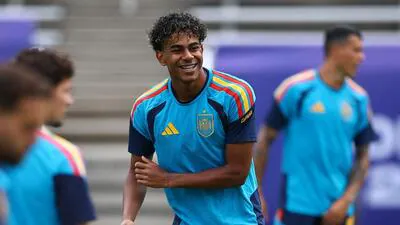
Teenage sensation Lamine Yamal continues to establish himself as one of football’s biggest stars, while young talents such as Pau Cubarsi, Pedri, Nico Williams, and Alex Baena form the core of an exciting squad.
With manager Luis de la Fuente contracted through 2028 and a clear footballing identity already in place, Spain appear well-equipped to remain among the strongest teams in world football.
France Built Around Mbappe’s Prime Years
France have consistently produced elite talent, and their current squad reflects that strength. Kylian Mbappe, still only 27 years old, is entering the peak years of his career and remains one of the sport’s most influential players.
Alongside Mbappe, France possess a remarkable group of young stars including Michael Olise, Desire Doue, Warren Zaire-Emery, Bradley Barcola, Malo Gusto, and William Saliba.
Even after Didier Deschamps steps down, France’s next manager will inherit one of the deepest and most talented squads in international football.
England’s Youth Movement Continues
England have also successfully blended experience with youth. Players such as Jude Bellingham, Bukayo Saka, Morgan Rogers, Elliot Anderson, Kobbie Mainoo, and James Trafford represent the future of the national team.
Thomas Tuchel has already begun shaping a squad capable of competing at future major tournaments, and England’s investment in youth development continues to produce elite talent.
The presence of multiple young players with experience in major international tournaments gives England a strong platform heading into the next World Cup cycle.
Argentina Face a More Complex Transition
Argentina may face the biggest challenge among the leading nations. While Messi’s eventual departure will create a significant void, the world champions still possess a talented core capable of carrying the team forward.
Players such as Julian Alvarez, Enzo Fernandez, Alexis Mac Allister, Lautaro Martinez, Thiago Almada, and Jose Manuel Lopez are all entering their prime years.
Replacing a player of Messi’s stature is impossible, but Argentina have repeatedly demonstrated an ability to evolve and remain competitive on the global stage.
Modern Football Extends Careers
Advances in sports science, nutrition, fitness, and recovery have dramatically extended the careers of elite footballers. Today’s players are able to maintain peak performance levels well into their 30s and, in some cases, beyond.
This trend has changed how national teams approach long-term planning, allowing experienced stars to remain influential while younger talents gradually assume greater responsibility.
Looking Ahead to World Cup 2030
Although World Cup 2026 may mark the end of an era for several legendary players, it does not necessarily signal the end of the current football powers. France, Spain, and England possess youthful squads capable of remaining contenders for years to come, while Argentina continue to build around a strong core of emerging stars.
As one generation prepares to step aside, another is already ready to take center stage. The road to FIFA World Cup 2030 has effectively begun, and many of today’s semi-finalists appear perfectly positioned to remain among football’s elite.
For breaking news and live news updates, like us on Facebook or follow us on Twitter and Instagram. Read more on Latest Sports on thefoxdaily.com.






COMMENTS 0