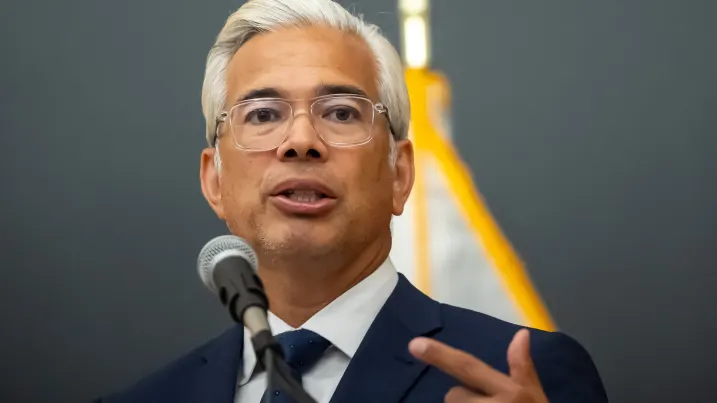
California has launched an investigation into Nvidia over concerns that its advanced Artificial Intelligence chips or confidential company information may have reached China, potentially violating US export restrictions. State Attorney General Rob Bonta has served an investigative subpoena on the chipmaker, seeking information about its dealings with Singapore-based technology company Megaspeed and the circumstances surrounding the departure of former chief executive Jensen Huang.
The investigation will examine whether Nvidia or Huang’s actions allowed restricted technology or sensitive information to reach China and whether the company misled investors and the public about potential risks. The development adds another layer of regulatory and national security scrutiny to a scandal that has already triggered Huang’s resignation and raised questions about the semiconductor industry’s exposure to foreign intelligence operations.
Bonta announced the subpoena on Thursday, November 19, saying the allegations raised serious concerns about corporate accountability. However, the investigation is still at an early stage, and the subpoena does not establish that Nvidia violated export-control laws or deliberately transferred confidential information to China.
Why California Has Opened an Investigation Into Nvidia
The California Department of Justice is examining whether Nvidia’s business relationships and the conduct of its former chief executive created a pathway through which China could obtain advanced semiconductor technology or confidential corporate information.
Announcing the investigation, Bonta said the circumstances surrounding Nvidia and Huang raised what he described as “bright red flags”, particularly over whether investors had received accurate information about the risks facing the company.
“The conduct of Nvidia and its former chief executive raises bright red flags, including about the ways in which the company may have misled investors,” Bonta said.
He added that the investigation would assess whether the company had misled investors and the public about the possibility that restricted chips or confidential information could have reached China.
The focus on investor disclosures is significant because companies listed on US stock exchanges have legal obligations to provide accurate information about material risks that could influence investment decisions. If investigators establish that a company knowingly concealed important information or made misleading statements, it could face consequences under securities laws.
California’s inquiry will therefore examine two connected but distinct questions: whether sensitive technology or information reached China and whether Nvidia adequately disclosed the risks associated with its business relationships and internal circumstances.
How the Jensen Huang and Alice Huang Connection Triggered the Controversy
The investigation follows reports about an extramarital relationship between Jensen Huang and Alice Huang, a former executive at Megaspeed International. The two are not related.
Alice Huang has attracted scrutiny from US authorities over suspicions that she may have connections to Chinese intelligence. Those suspicions have not been publicly established as proof that she worked for the Chinese government, and allegations of espionage remain separate from the investigation into potential semiconductor diversion.
Jensen Huang’s relationship with her became a major controversy because Megaspeed had developed significant commercial ties with Nvidia. The Singapore-based company purchased billions of dollars’ worth of Nvidia chips and related hardware over recent years, placing it at the centre of questions about how advanced American technology was being distributed through international supply chains.
Reports have suggested that Megaspeed may have helped restricted Nvidia chips reach Chinese customers despite US export controls. Authorities in the United States and Singapore have examined the company’s activities, including its purchases and the possible movement of advanced computing equipment.
The personal relationship between the two Huangs has intensified scrutiny because of the potential overlap between private connections, commercial dealings and national security concerns. Investigators are seeking to establish whether the relationship had any bearing on Nvidia’s business decisions, access to sensitive information or the handling of export-control risks.
However, the existence of a personal relationship does not by itself demonstrate that corporate information was shared or that restricted chips were illegally transferred. Those questions require separate evidence.
What Is Megaspeed and Why Is It Under Scrutiny?
Megaspeed International is a Singapore-based technology company involved in data-centre infrastructure and computing hardware. Its business included purchasing Nvidia chips and equipment used in advanced computing systems.
The company has become a central part of the controversy because of the scale of its reported purchases and concerns that some of the technology could have been diverted to China.
US export restrictions are designed to prevent certain advanced semiconductor products and related technologies from reaching prohibited destinations or users without the required government authorisation. The rules are particularly important for high-performance artificial intelligence processors, which can support large-scale AI development, scientific computing and other strategically sensitive applications.
Investigators are examining whether Megaspeed’s business activities complied with these restrictions and whether any equipment purchased through the company ultimately reached unauthorised Chinese recipients.
Megaspeed has rejected suggestions that it operated unlawfully. The company has described itself as a legitimate business and said it conducts lawful operations. It has also stated that Alice Huang left the organisation in August 2025 and no longer holds a position there.
Nvidia’s relationship with Megaspeed reportedly ended in June 2025, when the chipmaker placed the company on its no-sell list following scrutiny of its activities.
The distinction is important: Megaspeed’s reported purchases, the possibility of subsequent diversion and Nvidia’s knowledge of any alleged misconduct are separate matters. Investigators will need to establish what happened to the equipment, who controlled its destination and whether Nvidia complied with its legal obligations.
Could Nvidia Have Violated US Export Restrictions?
The investigation comes amid wider US efforts to prevent advanced semiconductor technology from being transferred to China without authorisation.
Washington has imposed restrictions on exports of certain high-performance chips and related computing technology because of concerns about their potential use in advanced military systems, artificial intelligence development and other strategic applications.
Companies involved in international semiconductor sales must follow licensing requirements and restrictions governing customers, destinations and end users. These obligations can become complicated when products move through distributors, cloud-computing providers or companies operating across multiple countries.
A company may sell hardware to a customer in one country, but investigators can still examine whether the equipment was subsequently transferred to a restricted destination. This is why end-user verification and supply-chain monitoring are important parts of export-control compliance.
In Nvidia’s case, the central question is whether advanced chips purchased through Megaspeed reached Chinese entities in circumstances that breached US restrictions. Investigators will also examine whether any confidential information was obtained or transferred through the relationship involving Huang and Alice Huang.
There is currently no basis to treat the allegations as a final finding of wrongdoing by Nvidia. The investigation must establish whether restricted equipment was diverted, whether the company knew or should have known about any improper transfers and whether its disclosures complied with applicable laws.
California Attorney General Also Examines Potential Investor Misleading
One of the most important aspects of Bonta’s investigation is its focus on whether Nvidia misled investors about the risks surrounding its business relationships and potential exposure to Chinese technology diversion.
Corporate securities laws require publicly traded companies to disclose material information that investors may need when evaluating a business. This can include significant regulatory investigations, legal exposure, business risks and developments that could affect the company’s financial position.
If a company makes statements that create a misleading impression about a material risk, regulators may examine whether those disclosures violated securities laws.
Bonta said the investigation would assess whether Nvidia or Huang’s actions resulted in China obtaining advanced chips or confidential information and whether the company misled investors and the public about that possibility.
The inquiry does not mean California has already concluded that Nvidia concealed information. Instead, the subpoena is intended to obtain documents and other evidence that can help investigators determine what happened and whether any legal violations occurred.
The distinction matters for shareholders because the potential consequences could extend beyond export-control enforcement. If investigators uncover evidence of misleading corporate disclosures, Nvidia could face a separate securities-related challenge.
Jensen Huang’s Resignation Adds Pressure on Nvidia
The California investigation follows Huang’s departure from Nvidia, where he served as co-founder and chief executive for decades. His resignation on November 12 came after reports of multiple extramarital relationships, including one involving Alice Huang.
The controversy quickly expanded beyond his personal life because of the national security questions surrounding Megaspeed and its reported business relationship with Nvidia.
Huang’s departure left the company facing questions about leadership, corporate governance and the extent to which senior executives understood the risks associated with the chipmaker’s international operations.
He subsequently indicated that he would be honoured to return if the board believed it was in the company’s best interests. However, Nvidia chairman Harvey Jones said the company had no intention of reinstating him.
The board has also faced pressure to establish what company officials knew about Huang’s relationship with Alice Huang and whether the situation created risks for Nvidia’s operations or confidential information.
The leadership dispute has become particularly sensitive because Nvidia is one of the world’s most important suppliers of advanced AI processors. Any uncertainty surrounding its management, export compliance or internal controls can attract attention from investors, customers and government authorities.
Nvidia Shares Face Pressure as Investors Assess the Fallout
The controversy has also affected Nvidia’s stock market performance. Reports surrounding Huang’s relationships and the possible links between Megaspeed and China have contributed to a sharp decline in the company’s share price.
The fall has raised concerns among investors about the potential financial consequences of regulatory investigations, export restrictions and uncertainty over the company’s leadership.
For shareholders, the risks extend beyond any immediate financial penalty. If investigators establish that restricted chips were improperly transferred, Nvidia could face additional compliance requirements, restrictions on certain commercial relationships and reputational damage.
Any finding that the company misled investors could create further legal exposure. It could also prompt shareholders to question whether Nvidia’s internal controls were sufficient to identify and manage risks involving sensitive technology and overseas customers.
However, market movements alone do not establish corporate wrongdoing. Nvidia’s valuation can also be influenced by broader technology-sector trends, expectations for AI spending, competition and changes in investor sentiment.
Congressional Testimony Could Bring More Details to Light
Huang is expected to testify before several US congressional committees on December 1 as lawmakers examine the potential national security implications of the controversy.
The hearings are expected to focus on questions surrounding Nvidia’s relationship with Megaspeed, the company’s export-control safeguards and whether sensitive technology or information could have reached China.
Lawmakers have been seeking answers about the risks posed by foreign intermediaries in the semiconductor supply chain. They are particularly concerned about whether companies can use international commercial relationships to obtain advanced chips that would otherwise be restricted from direct export to China.
Huang’s testimony could provide lawmakers with an opportunity to question him about his knowledge of Megaspeed’s activities, his interactions with Alice Huang and Nvidia’s procedures for monitoring customers and potential end users.
However, congressional testimony and California’s investigation are separate processes. The state attorney general’s office is examining potential violations of California law, while federal lawmakers are assessing wider national security and export-control concerns.
What Happens Next in the Nvidia Investigation?
The investigative subpoena is an early step in California’s inquiry. Nvidia will be expected to respond to the information requests, allowing the attorney general’s office to examine relevant business records, communications and other material.
Investigators will need to determine whether any restricted chips or confidential information reached China, whether Megaspeed or other intermediaries played a role and what Nvidia executives knew about the potential risks.
They will also have to assess whether the company’s public statements and disclosures accurately represented its exposure to those risks.
Several separate investigations and reviews are now converging around the same controversy, involving US authorities, Singaporean officials, congressional committees and Nvidia’s own corporate governance processes.
For Nvidia, the challenge is no longer limited to the departure of a prominent chief executive. The company must also address questions about the security of its technology, the reliability of its international supply chain and the adequacy of its investor disclosures.
California’s investigation could establish whether any of those concerns resulted in violations of state law. Until the evidence is examined, however, allegations of chip diversion, espionage and misleading investors must remain allegations rather than conclusions.
For breaking news and live news updates, like us on Facebook or follow us on Twitter and Instagram. Read more on Latest Technology on thefoxdaily.com.






COMMENTS 0