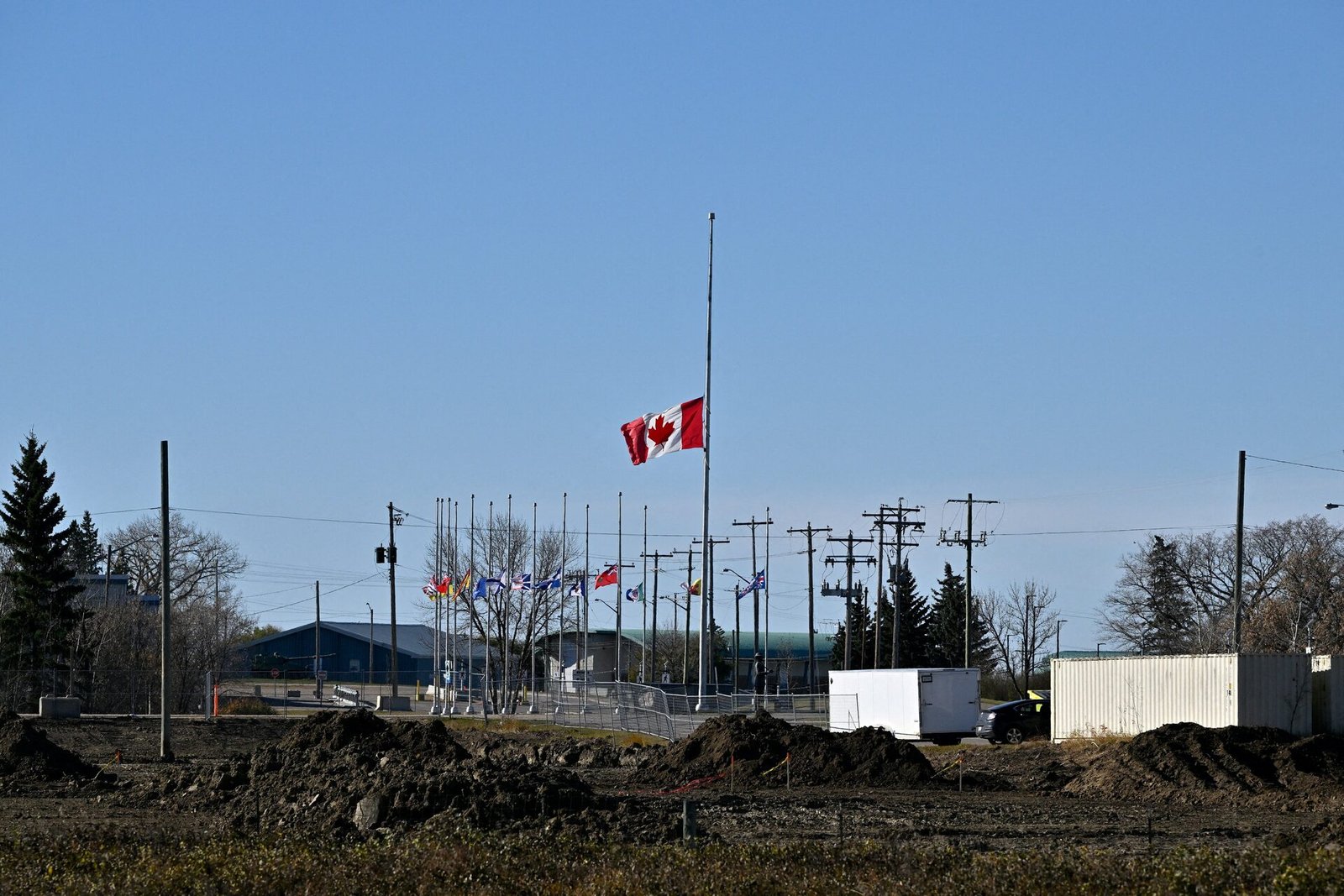
Canadian Prime Minister Mark Carney said on Monday, October 19, that the cause of a deadly fire at a military training area in Alberta remains unknown. The blaze, which broke out on Saturday, killed at least four military members and left dozens of others injured.
Addressing Parliament, Carney described how soldiers and reserve members were conducting live-fire exercises at an army base in Wainwright while a fire was burning in the training area. According to his account, ferocious winds drove the flames rapidly towards a group of military personnel gathered nearby.
Canadian authorities have launched an investigation involving the army and the Royal Canadian Mounted Police (RCMP) to determine how the disaster occurred. Carney said 50 investigators were on the ground examining the incident.
The fire has raised urgent questions about the circumstances in which military personnel were caught in the blaze, the speed at which the flames spread and the safety measures in place during training activities.
Strong Winds Drove Fire Towards Soldiers, Carney Says
Carney told Parliament that the fire spread with extraordinary speed as strong winds pushed it across the training area.
“Driven by ferocious winds, the fire jumped nearly a kilometer in less than a minute to where soldiers were gathered,” he said.
The account highlights the difficulty of responding to a rapidly advancing grass fire, particularly when dry vegetation and strong winds allow flames and burning embers to travel quickly across open ground.
According to the prime minister, soldiers and reserve members were carrying out live-fire exercises at the Wainwright base when the fire was burning in the training area. However, officials have not established the cause of the blaze, and the available information does not confirm whether the military exercises played any role in starting it.
The distinction is important as investigators work to reconstruct the sequence of events. Establishing where the fire began, how it spread and what conditions were present at the time will be central to understanding how personnel came to be caught in its path.
Carney said the investigation would seek to determine how the disaster happened. The presence of investigators from both the army and the RCMP indicates that authorities are examining the incident through a coordinated inquiry.
At Least Four Dead as Dozens Remain Hospitalised
The fire killed at least four military members and injured dozens of others. Officials said 39 people remained in hospital, with 19 in critical condition, underscoring the severity of the incident.
The condition of those receiving treatment remains a central concern as authorities assess the consequences of the blaze. The number of people in critical condition also means the impact of the fire could continue to evolve as medical teams treat the injured.
Carney acknowledged the wider national significance of the deaths, saying: “This loss touches every corner of the nation.”
The victims were members of the military community, and the incident has drawn attention to the risks faced by personnel during training exercises. Military training can involve live ammunition, vehicles and demanding outdoor conditions, making effective safety planning and emergency responses essential.
However, the available information does not establish whether a specific safety procedure failed or whether any individual or organisation was responsible for the fire. Those questions will depend on the findings of the ongoing investigation.
Army and RCMP Investigators Examine Cause of Disaster
Carney said 50 investigators from the army and the RCMP were working at the scene to determine how the fire started and how it spread towards the soldiers.
The investigation will need to distinguish between the source of ignition and the factors that caused the fire to advance so quickly. Even when the initial spark is small, strong winds and dry vegetation can transform a localised fire into a dangerous emergency within a short period.
Investigators may need to establish the fire’s point of origin, assess environmental conditions and examine activities taking place in the training area. They will also need to reconstruct the timeline of the incident and determine what information was available to personnel as the flames approached.
The involvement of the RCMP alongside military investigators brings federal police expertise into the inquiry. The initial statements, however, do not specify which investigative methods are being used or when authorities expect to announce their findings.
Until the investigation establishes the cause, possible explanations remain unconfirmed. Carney’s statement that the cause is still unknown means that no definitive conclusion about the origin of the fire can yet be drawn from the information released publicly.
Could Dry Conditions and Wind Have Accelerated the Fire?
Kent Moore, a professor of atmospheric physics at the University of Toronto, said embers from grass fires can spread extremely quickly in dry conditions. He also noted that there did not appear to have been rain in the area, making lightning a less likely explanation in his assessment.
Moore’s comments offer context for how a fire can move rapidly through grassland. When vegetation is dry, it can ignite readily, while strong winds can carry burning material ahead of the main fire. These embers can start additional fires beyond the original area of combustion, allowing flames to spread across a wider area.
Strong winds can also make firefighting more difficult by changing the direction and speed of a fire with little warning. A blaze that initially appears confined to one section of a training area can quickly threaten people or facilities farther away.
However, weather conditions alone cannot establish how the Alberta fire began. Investigators will need to determine whether an ignition source was present and assess the evidence before reaching a conclusion.
Expert Raises Possibility of Human Error
Moore said the strength of the winds suggested that only a small ignition source might have been needed to start a fire under the conditions he described. He speculated that human activity could have been involved, mentioning possible sparks from vehicles or live-fire exercises, as well as a discarded cigarette.
These possibilities remain speculation rather than established findings. Neither Carney’s statement nor the information released by officials confirmed that the fire was caused by a vehicle, military ammunition, a cigarette or any other specific source.
The reference to live-fire exercises is particularly relevant because soldiers were conducting such activities at the base while the fire was burning in the training area. Nevertheless, the fact that the exercises were taking place does not prove that they caused the blaze.
Determining whether the fire was linked to military activity will require evidence about the location and timing of the initial ignition, the activities underway and the conditions in the area. Investigators will also need to consider whether other potential sources could explain how the fire began.
Moore’s assessment highlights the importance of environmental conditions when examining possible causes of grass fires. A small spark can have consequences far beyond its immediate surroundings when dry vegetation and powerful winds combine, but the specific cause of this incident remains unresolved.
Military Personnel Were Preparing to Deploy to Latvia
The soldiers and reserve members caught up in the fire were preparing to deploy to Latvia, where Canadian forces conduct their largest international military operation, according to the information provided by officials.
Canada’s military presence in Latvia forms part of its international defence commitments. Personnel preparing for an overseas deployment typically undertake training to ensure they are ready for their assigned responsibilities, although the available information does not specify the roles of the individuals affected by Saturday’s fire.
The incident has therefore struck a group of military personnel preparing for an international mission. The deaths and injuries could have consequences for the affected unit, its members and their families, while the immediate priority remains the treatment of those injured and the investigation into the blaze.
The precise effect on the planned deployment has not been detailed in the initial account. Authorities would need to assess personnel availability and other operational considerations before any conclusions could be drawn about potential changes to deployment plans.
Fire Raises Questions About Safety During Military Training
The Alberta disaster highlights the hazards that can arise when military training takes place in open areas under challenging environmental conditions. Live-fire exercises involve specific risks, while grass fires can develop independently or be intensified by weather and the availability of dry vegetation.
Strong winds are a particularly important factor because they can accelerate the spread of flames and carry embers into areas that were not initially threatened. When personnel are gathered for training, a rapidly changing fire can reduce the time available to identify danger and move people to safety.
The investigation may help establish whether the fire’s development could have been anticipated and what measures were available to protect those in the training area. It could also clarify whether the incident was connected to an identifiable ignition source or resulted from a combination of environmental and human factors.
It would be premature, however, to conclude that military safety procedures were inadequate or that the training exercises caused the fire. Such assessments require evidence from the investigation rather than assumptions based solely on the presence of live-fire activities.
What Happens Next?
The immediate priorities are the recovery of those affected, the treatment of injured personnel and the establishment of the facts surrounding the incident. With 39 people still hospitalised and 19 reported to be in critical condition, medical outcomes remain a significant concern.
At the same time, investigators from the army and the RCMP are working to determine how the fire began and why it spread so rapidly towards the soldiers. Their findings could clarify the role of weather conditions, possible ignition sources and the circumstances in which military personnel were exposed to the blaze.
The investigation will also be important for identifying whether any changes to training arrangements or emergency procedures may be warranted. Any recommendations, however, would depend on what the evidence reveals about the incident.
Conclusion
Canadian Prime Minister Mark Carney has confirmed that the cause of the deadly fire at the Wainwright military base in Alberta remains unknown. At least four military members died, dozens were injured and 39 people remained in hospital, including 19 in critical condition, according to officials.
Carney said powerful winds drove the fire nearly a kilometre in less than a minute towards soldiers gathered in the training area. An investigation involving 50 army and RCMP investigators is now examining how the disaster occurred.
While an atmospheric physics expert has highlighted dry conditions, strong winds and possible human-related ignition sources as factors worth considering, no cause has been confirmed. The investigation’s findings will be crucial to understanding what happened and whether measures are needed to reduce the risk of similar incidents during future military training.
For breaking news and live news updates, like us on Facebook or follow us on Twitter and Instagram. Read more on Latest World on thefoxdaily.com.





COMMENTS 0