- Who Is Nahid Islam and Why His Comments Matter
- Why the Matua Community Is Politically Important
- The Citizenship Question Behind the Controversy
- Cross-Border Political Messaging Is Increasing
- Why West Bengal Remains Central to India-Bangladesh Dynamics
- The Minority Politics Dimension
- The Bigger Political Calculation
- How Social Media Amplified the Speech
- What Critics Are Likely to Question
- A Comparison With Earlier Regional Political Trends
- The Diplomatic Sensitivity Around Bengal
- The Unique Insight Most Coverage Misses
- What Happens Next?
- Conclusion: More Than Just a Viral Speech
Political remarks made across borders often fade quickly. But when they involve religion, citizenship, voting rights, and neighbouring countries with a deeply intertwined History like India and Bangladesh, the impact can travel far beyond a single speech.
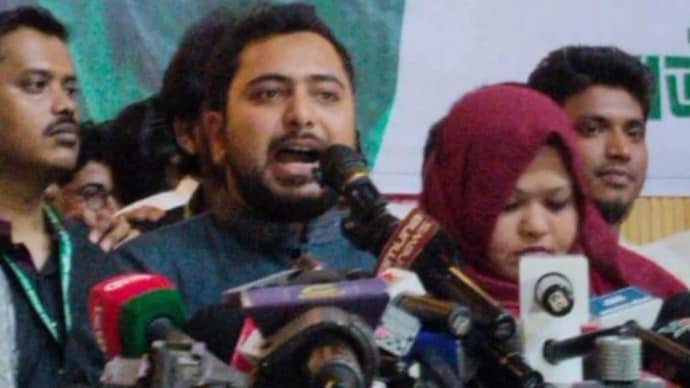
That is precisely what happened after Bangladesh National Citizen Party (NCP) MP and Opposition Chief Whip Nahid Islam alleged that Muslims and members of the Matua community in West Bengal were denied voting rights and faced persecution after elections. Speaking during a political programme in Chittagong, Nahid claimed that lakhs of people, particularly Muslims and Matuas, were deprived of democratic participation and subjected to post-election targeting.
While he acknowledged that elections in West Bengal are India’s “internal matter,” his comments quickly drew attention because they touched on highly sensitive issues: citizenship, minority rights, communal identity, and electoral politics in eastern India.
The Controversy has now evolved into more than just a speech. It has become part of a wider geopolitical and political conversation involving India-Bangladesh relations, minority narratives, border-state politics, and the growing role of regional rhetoric in domestic political campaigns.
Who Is Nahid Islam and Why His Comments Matter
Nahid Islam is a prominent opposition figure in Bangladesh and serves as an MP and Opposition Chief Whip of the National Citizen Party (NCP). Though not part of Bangladesh’s ruling establishment, his comments carry political weight because Bangladesh’s domestic discourse increasingly intersects with developments in neighbouring India, especially West Bengal.
West Bengal occupies a unique place in Bangladesh’s political imagination. Shared language, cultural overlap, migration history, and decades of cross-border movement have made Bengal politics emotionally resonant inside Bangladesh.
This is why remarks about Muslims, Matuas, or citizenship issues in West Bengal often attract attention across the border faster than developments in many other Indian states.
In his speech, Nahid Islam claimed:
- Large numbers of voters were denied rights before elections
- Many affected people belonged to Muslim and Matua communities
- Minorities allegedly faced persecution even after the elections
- Bangladesh should ensure equal protection for all communities to set an example in South Asia
He also warned against communal provocation and “anti-Bangladesh” narratives while urging political unity within his own party.
Why the Matua Community Is Politically Important
One of the most striking parts of Nahid Islam’s remarks was his reference to the Matua community. For anyone unfamiliar with eastern Indian politics, that detail is significant.
The Matuas are a large Hindu refugee community with roots in present-day Bangladesh, formerly East Pakistan. Many migrated to India after Partition and during later periods of communal and political unrest.
Today, the Matua population holds substantial political influence in several districts of West Bengal, particularly in border regions.
Their concerns often revolve around:
- Citizenship documentation
- Refugee identity
- Voting rights
- Social recognition
- Economic inclusion
Because of their electoral importance, nearly every major political party in West Bengal actively courts Matua voters.
This makes any external political commentary involving the community especially sensitive.
| Issue | Why It Matters Politically |
|---|---|
| Citizenship | Connected to refugee identity and legal recognition |
| Voting Rights | Directly affects electoral influence in Bengal |
| Border Politics | Links India-Bangladesh migration debates |
| Religious Identity | Often tied to communal narratives in elections |
| CAA Debate | Many Matua groups supported citizenship protections |
The Citizenship Question Behind the Controversy
Although Nahid Islam did not explicitly mention India’s Citizenship Amendment Act (CAA), his remarks indirectly touched upon one of the most politically explosive issues in Bengal politics.
The CAA became a major talking point because it aimed to provide a citizenship pathway for persecuted minorities from neighbouring countries including Bangladesh, Pakistan, and Afghanistan.
Supporters argued the law protected vulnerable refugee communities such as Matuas. Critics claimed it created religious divisions and raised fears about documentation requirements linked to citizenship verification.
Over the years, debates surrounding citizenship in West Bengal have become deeply emotional and politically polarised.
This is why Nahid Islam’s allegations immediately resonated within existing political fault lines.
Cross-Border Political Messaging Is Increasing
One important angle often missed in mainstream coverage is how political narratives are increasingly crossing national borders in South Asia.
Indian political developments frequently influence conversations in Bangladesh, Nepal, Pakistan, and Sri Lanka. Similarly, domestic politics in neighbouring countries often becomes material for Indian political debate.
In the age of viral clips and social media amplification, even regional speeches can rapidly become international political talking points.
Nahid Islam’s speech is part of a broader trend where:
- Domestic political speeches target international audiences indirectly
- Minority rights become geopolitical talking points
- Border-state politics gains regional significance
- Social media accelerates political polarisation
This shift is transforming how political narratives spread across South Asia.
Why West Bengal Remains Central to India-Bangladesh Dynamics
West Bengal is not just another Indian state in the context of Bangladesh relations. It shares:
- A long international border with Bangladesh
- Strong linguistic and cultural overlap
- Migration and refugee history
- Trade and river-sharing concerns
- Shared historical memory of Partition and 1971
Because of this, political developments in West Bengal often receive unusually high attention in Bangladesh.
Similarly, comments from Bangladeshi leaders about Bengal politics tend to attract sharper reactions inside India compared to remarks about other regions.
This interconnectedness creates a unique political Environment where local electoral rhetoric can quickly acquire diplomatic undertones.
The Minority Politics Dimension
Nahid Islam framed his remarks around minority protection and coexistence. He argued that Bangladesh should become a regional example of equal protection for all communities, including Muslims, Dalits, and Matuas.
That framing is politically strategic.
Minority protection has become a major diplomatic and political narrative in South Asia. Governments and opposition groups alike increasingly use minority-related issues to strengthen moral positioning both domestically and internationally.
However, such rhetoric can also become controversial because accusations involving religious persecution or voting suppression carry serious implications.
These statements can:
- Inflame communal tensions
- Influence diplomatic discourse
- Trigger political counterattacks
- Shape international perceptions
This is why cross-border comments on minority treatment are often viewed through both political and diplomatic lenses.
The Bigger Political Calculation
Beyond the headlines, Nahid Islam’s remarks may also reflect broader political calculations inside Bangladesh.
Opposition parties frequently attempt to position themselves as defenders of democratic values, minority rights, and regional stability. Referencing developments in neighbouring countries can help reinforce those narratives.
At the same time, invoking West Bengal Politics can resonate strongly with Bangladeshi audiences because of shared cultural familiarity.
There is also another strategic layer: discussing India-related issues can sometimes unify domestic political constituencies in Bangladesh, particularly during periods of internal political competition.
In other words, speeches like these are rarely aimed at just one audience.
How Social Media Amplified the Speech
The remarks gained traction largely because clips from the speech spread rapidly online.
Social media now plays a decisive role in shaping political controversies across borders. A local political speech that might once have remained confined to a party gathering can now become an international flashpoint within hours.
This amplification creates three major effects:
- Statements lose local context when clipped and shared
- Political reactions become faster and more emotional
- Cross-border outrage cycles intensify rapidly
In South Asia’s highly connected digital ecosystem, political rhetoric increasingly behaves like viral content rather than traditional diplomacy.
What Critics Are Likely to Question
Critics of Nahid Islam’s remarks are likely to raise several counterpoints.
First, they may argue that commenting on another country’s electoral or citizenship processes risks interfering in internal matters.
Second, questions may arise regarding evidence behind claims involving widespread denial of voting rights or persecution.
Third, critics could accuse political figures of using emotionally charged issues involving religion and minorities to gain political visibility.
These criticisms matter because allegations involving democracy and minority rights carry international sensitivity.
Without verified institutional findings, such claims often become politically contested narratives rather than universally accepted facts.
A Comparison With Earlier Regional Political Trends
This is not the first time leaders in South Asia have referenced minority treatment across borders.
Over the years:
- Indian politicians have commented on minority conditions in Bangladesh and Pakistan
- Bangladeshi leaders have reacted to communal incidents in India
- Pakistani politicians have referenced religious tensions in India
- Regional political parties have increasingly internationalised local identity politics
What is different today is the speed and scale of digital amplification.
Political rhetoric that once stayed within national boundaries now travels instantly, often without nuance or full context.
The Diplomatic Sensitivity Around Bengal
India and Bangladesh currently share relatively stable diplomatic ties compared to many other regional relationships in South Asia.
Both countries cooperate on:
- Trade
- Security coordination
- Border management
- Counterterrorism
- Connectivity projects
However, issues involving migration, citizenship, border identity, and religion remain deeply sensitive.
That is why comments involving Muslims, Matuas, citizenship, or voting rights can easily acquire diplomatic significance even if made during domestic political events.
In South Asia, local politics and regional diplomacy often overlap more than governments publicly acknowledge.
The Unique Insight Most Coverage Misses
Most reports focus only on the controversy itself. But the deeper story may actually be about how border-state politics is becoming increasingly international.
West Bengal is emerging as a geopolitical political space, not just a state-level electoral battleground.
Why?
- Its politics intersects with migration history
- Citizenship debates have cross-border implications
- Religious narratives resonate regionally
- Communities like Matuas connect directly to Partition-era displacement
- Bangladesh politics increasingly references developments there
This means Bengal politics now operates simultaneously at three levels:
- Local electoral politics
- National ideological politics
- Regional geopolitical politics
That transformation is one of the most important but under-discussed shifts in eastern South Asian politics.
What Happens Next?
Whether Nahid Islam’s remarks lead to any formal diplomatic response remains uncertain. Such controversies often flare up online before fading from official discourse.
However, the broader themes involved are unlikely to disappear.
Citizenship debates, minority politics, migration narratives, and identity-based electoral mobilisation are expected to remain central issues in both Indian and Bangladeshi politics for years.
Political speeches touching on these themes will likely continue to attract regional attention, especially as social media further blurs national political boundaries.
Conclusion: More Than Just a Viral Speech
Nahid Islam’s comments about Muslims and Matuas in West Bengal may appear at first glance to be just another Political Controversy. But the reaction to his remarks reveals something much larger.
The incident highlights how deeply interconnected politics has become across South Asia especially in border regions shaped by Partition, migration, religion, and shared history.
It also shows how rapidly local political narratives can evolve into regional flashpoints in the digital era.
At the heart of the controversy lies a larger truth: issues involving citizenship, identity, voting rights, and minority protection are no longer confined within national borders. They increasingly shape regional politics, diplomacy, and public opinion simultaneously.
And in that environment, even a single speech in Chittagong can quickly become part of a much bigger geopolitical conversation.
For breaking news and live news updates, like us on Facebook or follow us on Twitter and Instagram. Read more on Latest World on thefoxdaily.com.






COMMENTS 0