- What Was Operation Sindoor?
- Chinese Engineers Reveal On-Site Support Role
- Why This Disclosure Matters Strategically
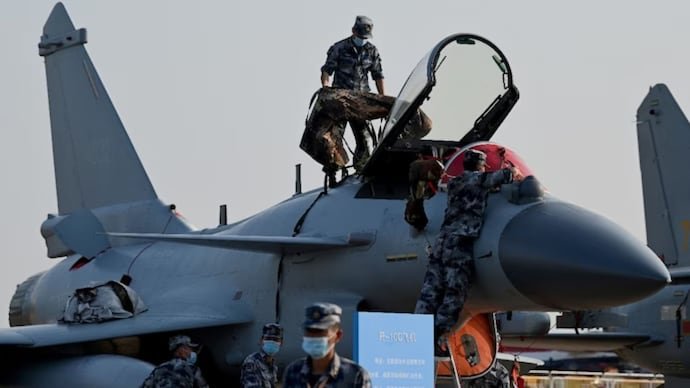
- The Role of the J-10CE Fighter Jet
- China-Pakistan Defence Ties Have Deepened Quietly for Years
- The Hidden Battlefield: Data, Intelligence and Electronic Warfare
- Why China Publicly Allowed This Disclosure
- India’s Strategic Challenge Is Growing
- A Unique Insight Competitors Are Missing
- Could This Trigger a Regional Arms Race?
- Future Outlook: A New Security Reality in South Asia
- Conclusion
For the first time since Operation Sindoor reshaped South Asia’s security landscape in May 2025, Chinese personnel have openly acknowledged providing on-site technical support to Pakistan during the four-day Military confrontation with India. The disclosure, made by engineers linked to china’s state-owned aviation sector, represents a major strategic revelation with implications far beyond the battlefield.
The admission confirms what many defence analysts had long suspected: China was not merely an arms supplier to Pakistan during Operation Sindoor, but an active operational enabler supporting Pakistani military systems during live combat conditions.
The revelation came through an interview aired by Chinese state broadcaster CCTV, where engineers from the Aviation Industry Corporation of China (AVIC) described their experiences assisting the Pakistan Air Force (PAF) during the conflict. Their remarks are significant because Beijing has historically avoided publicly acknowledging direct involvement in regional military confrontations involving Pakistan.
The disclosure also reinforces a growing reality for India’s security establishment future military escalations with Pakistan may increasingly involve integrated Chinese systems, technical support, intelligence coordination and electronic warfare assistance.
What Was Operation Sindoor?
Operation Sindoor was India’s retaliatory military campaign launched in May 2025 following major terror attacks linked to Pakistan-based groups. The operation targeted terror infrastructure and strategic military-linked assets inside Pakistan and Pakistan-occupied Kashmir (POK).
The conflict rapidly escalated into a high-intensity four-day military confrontation involving:
- Air combat operations
- Drone warfare
- Precision missile strikes
- Electronic warfare systems
- Cross-border intelligence operations
- Advanced radar and air defence deployment
Unlike earlier India-Pakistan skirmishes, Operation Sindoor showcased the increasing role of modern battlefield technologies, especially Chinese-origin systems operated by Pakistan.
The latest disclosure now indicates those systems were not functioning independently Chinese engineers were physically present and actively supporting operational readiness.
Chinese Engineers Reveal On-Site Support Role
Zhang Heng, an engineer associated with AVIC’s Chengdu Aircraft Design and Research Institute, described the conditions faced while assisting the Pakistan Air Force during the conflict.
According to the televised interview, Zhang and his team worked at operational support facilities amid air raid sirens, fighter jet deployments and extreme weather conditions.
“At the support base, we frequently heard the roar of fighter jets taking off and the constant wail of air-raid sirens,” Zhang said during the CCTV interview.
His remarks are important because they go beyond routine defence cooperation. They suggest Chinese personnel were embedded close enough to operational zones to directly assist combat aircraft and systems during active military engagement.
Another engineer, Xu Da, compared the Chinese-made J-10CE fighter jet to a “child” that had finally faced a “major test” under battlefield conditions.
The symbolism of those remarks matters. China effectively viewed the conflict as a real-world validation Environment for its military hardware.
Why This Disclosure Matters Strategically
This revelation changes the perception of the China-Pakistan military relationship in several ways.
1. China Was Not Just Supplying Weapons
China has long been Pakistan’s largest defence supplier. However, supplying equipment is very different from actively supporting combat operations.
The disclosure suggests Chinese technical teams were helping maintain, troubleshoot or optimise Pakistani military assets during combat conditions.
That marks a shift from transactional defence exports to operational military integration.
2. Pakistan Has Become a Testing Ground for Chinese Weapons
Modern warfare increasingly depends on real-world combat testing. Simulations cannot fully replicate battlefield unpredictability.
Operation Sindoor gave China something invaluable:
- Live combat performance data
- Electronic warfare feedback
- Missile engagement analysis
- Aircraft survivability assessment
- Radar performance under pressure
- Pilot-system integration results
This makes Pakistan strategically useful not only as an ally, but also as a combat laboratory for Chinese military technologies.
3. India Now Faces a Dual-Layer Threat
One of the biggest implications for India is that future conflicts with Pakistan may no longer remain bilateral in practical terms.
Even if Chinese troops are not directly deployed, Chinese:
- Satellite intelligence
- Technical experts
- Electronic warfare systems
- Cyber capabilities
- Battlefield analytics
- Weapon optimisation teams
could operate behind the scenes.
This creates a far more complex strategic environment for Indian military planners.
The Role of the J-10CE Fighter Jet
The Chinese engineers specifically referred to the J-10CE fighter aircraft the export version of China’s advanced J-10C multirole fighter.
Pakistan remains the only known foreign operator of this aircraft.
The J-10CE is considered one of China’s most advanced export fighters and includes:
- AESA radar systems
- Advanced electronic warfare suites
- Beyond-visual-range missile capability
- Network-centric warfare integration
- High-speed air combat performance
The aircraft is also compatible with the PL-15 missile, one of China’s most sophisticated long-range air-to-air missiles.
Reports during Operation Sindoor indicated Pakistan deployed PL-15 missiles during aerial operations against Indian assets.
| System | Country of Origin | Role in Conflict | Strategic Importance |
|---|---|---|---|
| J-10CE Fighter Jet | China | Air combat operations | Modern Chinese combat aviation export |
| PL-15 Missile | China | Beyond-visual-range engagement | Long-range aerial dominance capability |
| AESA Radar | China | Target tracking and electronic warfare | Improved detection and survivability |
| Technical Support Teams | China | Operational readiness assistance | Direct battlefield integration |
China-Pakistan Defence Ties Have Deepened Quietly for Years
The latest revelation did not emerge in isolation. It is the culmination of years of expanding military cooperation between Beijing and Islamabad.
Over the last decade, Pakistan has increasingly shifted away from Western defence dependence and moved closer to Chinese military ecosystems.
According to global defence tracking data, over 80 percent of Pakistan’s military imports in recent years have originated from China.
These include:
- Fighter aircraft
- Air defence systems
- Drones
- Submarines
- Missile systems
- Surveillance technologies
- Electronic warfare infrastructure
The relationship has evolved beyond simple procurement. Pakistan’s defence architecture is gradually becoming interoperable with Chinese systems.
That interoperability matters enormously during conflict.
The Hidden Battlefield: Data, Intelligence and Electronic Warfare
One under-discussed aspect of Operation Sindoor is the invisible layer of modern warfare.
Today’s conflicts are not fought only with jets and missiles. They are fought through:
- Satellite surveillance
- Signal interception
- Electronic jamming
- AI-assisted targeting
- Real-time battlefield networking
- Cyber operations
China possesses advanced capabilities in all these areas.
If Chinese teams were physically assisting Pakistan during Operation Sindoor, the possibility of broader technical coordination becomes more credible.
This includes potential:
- Radar calibration support
- Electronic warfare optimisation
- Missile targeting assistance
- Aircraft systems diagnostics
- Battlefield communication enhancement
While no official evidence confirms every element above, the strategic trajectory clearly points toward deeper military integration.
Why China Publicly Allowed This Disclosure
Perhaps the most intriguing question is not whether China helped Pakistan but why China is now openly acknowledging it.
Historically, Beijing maintained plausible deniability during regional conflicts.
This shift suggests several possibilities.
Strategic Signaling to India
The disclosure may serve as a warning that future India-Pakistan conflicts will carry indirect Chinese involvement.
It subtly raises the cost of escalation for India.
Global Defence Marketing
Combat performance is the best advertisement for weapons manufacturers.
China’s defence industry is aggressively expanding in global export markets. Demonstrating that Chinese systems operated effectively during real combat enhances their credibility.
Domestic Nationalism
Chinese state media frequently uses military achievements to strengthen domestic nationalism and showcase technological advancement.
Presenting Chinese engineers supporting an ally during wartime aligns with that narrative.
India’s Strategic Challenge Is Growing
For India, the implications are serious and long-term.
The challenge is no longer limited to Pakistan’s conventional military strength. India must increasingly account for:
- Chinese-origin weapons ecosystems
- Integrated battlefield technologies
- Joint intelligence coordination
- Cross-border electronic warfare
- Rapid military technology transfer
This could accelerate India’s own defence modernisation efforts.
Areas likely to receive greater focus include:
- Domestic fighter aircraft development
- Advanced missile defence systems
- Drone warfare capabilities
- Cyber defence infrastructure
- Satellite warfare preparedness
- Electronic warfare resilience
A Unique Insight Competitors Are Missing
Most coverage of this revelation focuses narrowly on the presence of Chinese engineers.
But the deeper story is about the future of warfare itself.
Modern conflicts are no longer purely national.
Countries increasingly fight through interconnected military-industrial networks involving:
- Foreign technology partners
- Shared intelligence systems
- Integrated communications infrastructure
- Remote battlefield support
- AI-assisted military analytics
Operation Sindoor may ultimately be remembered not just as an India-Pakistan confrontation, but as a preview of how proxy-enabled technological warfare will shape future conflicts.
In that sense, the battlefield was larger than geography. It involved competing military ecosystems.
Could This Trigger a Regional Arms Race?
The answer is increasingly yes.
China’s visible operational backing of Pakistan could push India toward faster strategic partnerships with countries such as:
- The United States
- France
- Israel
- Japan
- Australia
India may also intensify investment in indigenous defence Manufacturing under long-term strategic autonomy goals.
The result could be an accelerated technological competition across Asia involving:
- Next-generation fighter jets
- Hypersonic weapons
- AI-enabled combat systems
- Drone swarms
- Cyber warfare tools
- Space-based defence infrastructure
Future Outlook: A New Security Reality in South Asia
The public acknowledgment by Chinese engineers marks a turning point in regional security dynamics.
It confirms that China and Pakistan are no longer operating merely as defence partners they are evolving toward coordinated military ecosystems.
For India, this means future strategic calculations must increasingly factor in indirect Chinese operational involvement even during Pakistan-focused confrontations.
For the wider world, the episode highlights how modern warfare is becoming increasingly networked, technological and multinational behind the scenes.
Conclusion
The disclosure that Chinese engineers provided on-ground support to Pakistan during Operation Sindoor is far more than a symbolic admission. It reveals the depth of the China-Pakistan military relationship and signals a new phase of operational integration in South Asia.
What once appeared to be a bilateral India-Pakistan conflict increasingly resembles a broader geopolitical contest shaped by competing military alliances, technology ecosystems and strategic partnerships.
The real significance of the revelation lies not only in what happened during Operation Sindoor but in what it suggests about the future.
Key Takeaways:
- China has officially acknowledged operational support to Pakistan during Operation Sindoor
- Chinese engineers assisted Pakistan Air Force systems during active conflict
- The J-10CE fighter and PL-15 missile played key roles
- Pakistan is becoming a live testing ground for Chinese military technology
- India may increasingly face indirect Chinese involvement in future conflicts
- Modern warfare is evolving into interconnected technological conflict ecosystems
Ultimately, the revelation underscores a growing reality in global Geopolitics: wars are no longer fought by nations alone they are increasingly fought by alliances, technologies and integrated defence networks operating together behind the scenes.
For breaking news and live news updates, like us on Facebook or follow us on Twitter and Instagram. Read more on Latest World on thefoxdaily.com.





COMMENTS 0