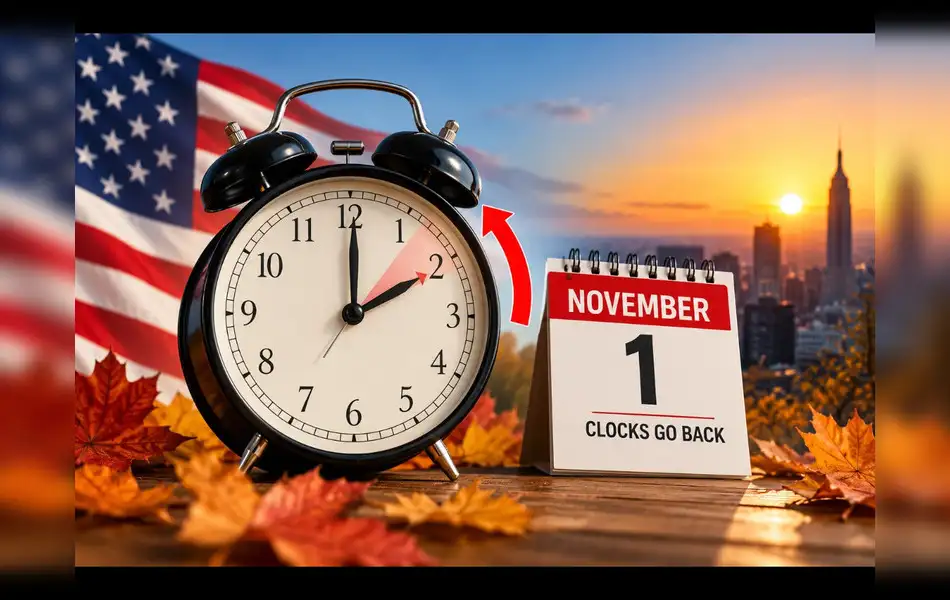
Daylight Saving Time officially ended across most of the United States on Sunday, November 1, 2026, as clocks moved back by one hour at 2 a.m. local time. Americans gained an extra hour overnight, giving people an additional 60 minutes before standard time began, while sunrise and sunset times shifted earlier on the clock.
The annual autumn clock change marks the return to standard time after months of longer evening daylight. People in areas that observe the change were advised to turn their clocks back before going to bed on Saturday night, October 31, although smartphones, computers and other internet-connected devices generally adjust automatically.
The change also renews the debate over whether the United States should continue switching clocks twice a year. The Sunshine Protection Act of 2025 passed the House of Representatives in July 2026 but has not yet completed the Senate process. Until federal legislation changes the existing rules, most Americans will continue observing the seasonal clock adjustments. :chatgpt-content-reference{index=”0″}
Did We Gain or Lose an Hour When the Clocks Went Back?
Americans gained an hour when Daylight Saving Time ended on November 1, 2026. At 2 a.m. local daylight time, clocks were turned back to 1 a.m. standard time, meaning the hour between 1 a.m. and 2 a.m. occurred twice.
For people who went to bed before the change, this meant an additional hour of potential sleep. Those who stayed awake through the transition experienced the clock moving from 1:59 a.m. back to 1:00 a.m.
The change is commonly described as “fall back”, a phrase used to remember that clocks move backwards by one hour when Daylight Saving Time ends in autumn.
The opposite happens in spring. When Daylight Saving Time begins, clocks move forward by one hour, from 2 a.m. to 3 a.m. This removes an hour from that particular day.
The National Institute of Standards and Technology confirms that the 2026 autumn transition took place at 2 a.m. on November 1. Under the existing US schedule, the clock moves back to 1 a.m. standard time, creating an extra hour in the day. :chatgpt-content-reference{index=”1″}
What Happens After Daylight Saving Time Ends?
The most noticeable effect of the clock change is the shift in daylight hours according to local clock time. After November 1, sunrise and sunset occur approximately one hour earlier on the clock compared with the previous day.
People may notice brighter mornings, but evenings become darker earlier. For example, an evening activity that previously took place while it was still light may now happen closer to sunset or after dark.
The shift can affect everyday routines, including commuting, school schedules, outdoor exercise and evening activities. It can also require adjustments to work schedules and appointments for people coordinating with others across different US time zones.
Although the clock change provides an extra hour on the night of the transition, it also marks the beginning of the standard-time period, which continues through the winter months.
Do All Americans Change Their Clocks?
No. Most of the United States observes Daylight Saving Time, but some areas do not participate in the seasonal clock changes.
Hawaii and most of Arizona remain on standard time throughout the year. The Navajo Nation, which extends across parts of Arizona, Utah and New Mexico, observes Daylight Saving Time, making its arrangements different from most of the surrounding state of Arizona.
US territories including Puerto Rico, Guam, American Samoa, the Northern Mariana Islands and the US Virgin Islands also do not observe the seasonal clock changes.
For residents of areas that do not observe Daylight Saving Time, November 1 did not bring a one-hour clock adjustment. Their local clocks continued following the same time standard.
Why Are Americans Still Changing Their Clocks?
Daylight Saving Time remains in place because federal law continues to establish a seasonal system in which clocks move forward in March and return to standard time in November.
The current schedule follows changes introduced under the Energy Policy Act of 2005. Since 2007, Daylight Saving Time in most of the country has begun on the second Sunday in March and ended on the first Sunday in November.
The system is intended to shift more daylight into the evening during the warmer months. By moving clocks forward in spring, people get more daylight during conventional evening waking hours, while the return to standard time in autumn brings earlier sunrises and sunsets.
However, the twice-yearly adjustment has remained controversial. Supporters of changing the system argue that repeated clock adjustments can disrupt sleep patterns and daily routines. Others favour retaining seasonal changes because they provide more evening daylight during summer.
The debate has led to several legislative efforts to establish a permanent time arrangement, but changing the federal system requires congressional action.
What Is the Sunshine Protection Act?
The Sunshine Protection Act is legislation intended to make Daylight Saving Time permanent across the United States, ending the annual practice of moving clocks forward in spring and back in autumn.
The proposal has received attention from lawmakers who argue that maintaining the same clock throughout the year would simplify schedules and remove the disruption associated with twice-yearly changes.
In 2026, the Sunshine Protection Act of 2025, introduced as H.R. 139, passed the US House of Representatives on July 14. The House approved the measure by a vote of 308 to 117. It was subsequently received in the Senate on July 15 and referred to the Senate Committee on Commerce, Science, and Transportation.
As of November 1, 2026, the legislation has not completed the Senate process. Therefore, the existing federal clock-change schedule remains in effect, and the November 1 transition went ahead as planned. :chatgpt-content-reference{index=”2″}
When Will Daylight Saving Time Return in 2027?
Daylight Saving Time is scheduled to return in the United States on Sunday, March 14, 2027. At 2 a.m. local standard time, clocks in participating areas will move forward to 3 a.m., marking the beginning of the next daylight-saving period.
Unlike the November adjustment, the spring transition means losing one hour. The change shifts daylight towards the evening, allowing people to enjoy more light later in the day.
Under the current federal schedule, Daylight Saving Time will then continue until Sunday, November 7, 2027, when clocks are scheduled to move back one hour again.
These dates apply to most US locations that observe Daylight Saving Time. Hawaii, most of Arizona and US territories that remain on standard time throughout the year will not follow the seasonal clock adjustments. :chatgpt-content-reference{index=”3″}
How to Prepare for the Time Change
Although the November clock adjustment gives people an additional hour, the transition can still affect sleep schedules and everyday routines. A few simple steps can make the adjustment easier.
- Check your clocks: Confirm that wall clocks, car clocks, watches and other devices display the correct standard time.
- Allow time for sleep adjustment: Maintain a consistent bedtime and wake-up routine as your body adapts to the change.
- Check morning and evening schedules: Earlier sunsets can affect commuting, outdoor activities and family routines.
- Review appointments: Confirm meeting times, travel arrangements and schedules, particularly when coordinating across different time zones.
- Check safety equipment: The seasonal clock change can serve as a reminder to test smoke alarms and carbon monoxide detectors and review household emergency supplies.
Will the US Stop Changing Clocks Permanently?
The future of Daylight Saving Time in the United States remains dependent on congressional action. Although the Sunshine Protection Act passed the House in July 2026, it still needs to move through the Senate before it can become law.
Until that happens, the existing system will continue to apply in most of the country. Americans will move their clocks forward in March and back in November according to the federal schedule.
For now, the November 1, 2026, transition means Americans in participating areas have gained an hour, returned to standard time and entered the period of earlier sunsets. The next scheduled clock change will take place on March 14, 2027, when Daylight Saving Time returns.
For breaking news and live news updates, like us on Facebook or follow us on Twitter and Instagram. Read more on Latest World on thefoxdaily.com.






COMMENTS 0