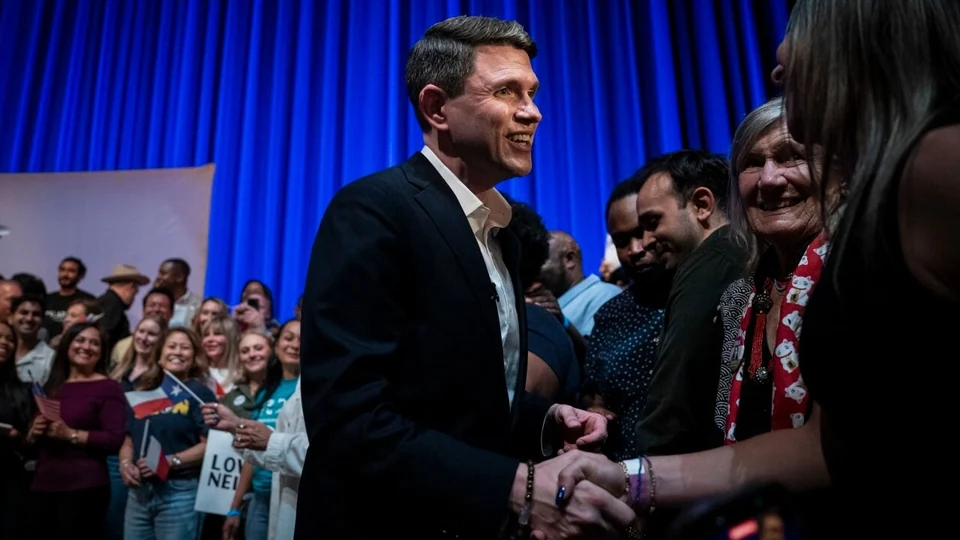
Democrats secured control of both chambers of Congress and a majority of governorships in the 2026 midterm elections, delivering a major electoral setback to President Donald Trump and the Republican Party. A central factor in their campaign strategy was a shared focus on affordability, with candidates across the party’s ideological spectrum concentrating on rising living costs, fuel prices and food expenses.
The party’s economic message helped candidates maintain a common campaign theme despite ongoing disagreements over its political direction. Centrists and progressives largely kept their attention on household costs and the impact of Trump’s policies, avoiding the culture-war debates that have created difficulties for Democrats in previous elections.
The results also reflected changing voter preferences among groups that had supported Trump in 2024, including younger and Latino voters. Democrats made gains in several traditionally Republican states, while their victories across key battlegrounds potentially reshaped the political map ahead of the 2028 presidential election.
However, the scale of the victory does not necessarily represent a broad endorsement of the Democratic Party‘s entire policy agenda. The party now faces the challenge of maintaining its coalition, managing ideological disagreements and demonstrating that its economic message can translate into governing priorities.
Affordability Becomes the Common Ground for Democrats
The Democratic campaign strategy centred on a message that connected directly with voters’ everyday concerns: the rising cost of living. Candidates repeatedly argued that Trump’s economic policies were making it harder for households to manage expenses, particularly as fuel and food prices remained major concerns.
According to the Voter Poll conducted for The Associated Press and major television and cable news networks, 89% of voters said the cost of living was a crucial or major factor in their decision when voting for Congress. This made affordability one of the most significant issues shaping the midterm results.
Rather than allowing disagreements over immigration, social issues or the party’s ideological direction to dominate their campaigns, Democrats largely concentrated on economic pressures. Candidates from moderate and progressive backgrounds delivered variations of the same central argument: voters wanted relief from rising household expenses.
The strategy also helped the party avoid being drawn into culture-war debates that had damaged its appeal in previous elections. By keeping the discussion focused on economic concerns, Democrats created a common campaign platform without resolving their deeper disagreements over policy.
The approach echoed the affordability-focused campaign of New York City Mayor Zohran Mamdani, who had made the cost of living a central issue in his political messaging. Although moderate Democrats and democratic socialists have substantially different ideas about how to address economic problems, affordability provided a shared political theme.
Cost of Living Emerges as a Major Election Issue
High fuel and food prices were among the leading concerns for voters during the midterm elections. Democrats used these pressures to argue that the administration’s policies were increasing the financial burden on ordinary households.
The economic message extended beyond urban voters. Rural communities were also facing higher fuel and fertiliser costs, with the impact of Trump’s trade policies and the war in Iran becoming important issues in several agricultural states.
Democratic candidates highlighted how these costs affected farmers, workers and families. Instead of presenting affordability as an issue limited to lower-income households, they framed it as a broader concern affecting people across different economic backgrounds.
The message was particularly important in states where Republicans had previously enjoyed comfortable electoral advantages. Democrats argued that voters concerned about their household budgets had reasons to reconsider their support for the Republican Party.
The election results suggested that the economic argument resonated beyond the traditional Democratic electorate. The party made gains in states that Trump had won by substantial margins in 2024, including Iowa, Kansas and Texas.
Democrats Won Despite Continued Unpopularity of Their Party
Although Democrats achieved major electoral gains, the party’s overall public image remained a challenge. The AP and network Voter Poll found that 52% of midterm voters viewed the Democratic Party unfavourably. The Republican Party received an even higher unfavourable rating of 60%.
The figures indicated that the Democratic victory was not necessarily the result of widespread enthusiasm for the party itself. Instead, dissatisfaction with Republicans and concerns about the economy appeared to create an opportunity for Democratic candidates.
Democratic strategist Lis Smith described the party’s position after the 2024 election as particularly difficult, arguing that its public image still required significant improvement.
“After 2024, the Democratic brand was in the toilet. It was really at a low point and it still needs a lot of work,” Smith said. She described the 2026 results as the beginning of a Democratic comeback and argued that the party could become a bigger-tent organisation.
The challenge now is to turn the electoral gains into lasting political support. Winning voters who were dissatisfied with the administration does not automatically mean those voters agree with every Democratic policy proposal.
Democrats Attracted Independent Voters With Diverse Candidates
Candidate selection was another important part of the Democratic strategy. The party fielded individuals with different professional backgrounds, political profiles and connections to their communities, seeking to appeal to independent voters as well as traditional Democratic supporters.
Several candidates were presented as people with direct experience in public service, local industries and community organisations. Their campaigns sought to establish credibility beyond party labels, particularly in districts where Republicans had previously been dominant.
Among the candidates highlighted were:
- Bobby Pulido in Texas: A Tejano singer and local celebrity who campaigned on affordability and presented himself as a moderate.
- Sam Forstag in Montana: A former smokejumper whose background helped shape his appeal as a candidate with practical experience.
- Brian Poindexter in Ohio: A union ironworker who represented a working-class profile.
- Two clergy members in Iowa: Candidates whose community and religious backgrounds formed part of their political appeal.
These candidates either won their races or were leading in the contests described in the election coverage. Their campaigns reflected an effort to recruit people who could connect with voters through their professional experience and local identities.
House Democratic Leader Hakeem Jeffries highlighted the range of backgrounds represented by the party’s candidates as early election results pointed towards a strong Democratic performance.
He said the party had recruited “doctors and nurses and pastors and farmers and union leaders and educators and police officers and firefighters and combat veterans” who had already demonstrated a commitment to serving their communities.
The emphasis on candidates with local connections was part of a wider effort to rebuild Democratic support among working-class voters, including people who had moved towards Trump in previous elections.
Democrats Make Major Gains Across Traditionally Republican States
The geographical spread of Democratic victories was one of the most significant features of the election. The party made advances in states that had been considered difficult territory, including Texas, Kansas and Iowa.
These results could have implications beyond the current congressional balance. Democrats are expected to enter 2027 holding the governorships in all seven battleground states that decided the 2024 presidential election. Their success in traditionally Republican areas could also encourage the party to compete more aggressively for electoral votes in states such as Texas during the 2028 presidential election.
The results showed that the party’s economic message could reach voters in different regions, although local candidates and state-specific concerns also played important roles in individual races.
Democrats Reverse Republican Gains in Maine and New Hampshire
Democrats strengthened their position in the Northeast, where the party has traditionally performed well. Republican gains during the 2024 presidential campaign in parts of New York, New Jersey and northern Maine appeared to have been reversed in the midterms.
In Maine, Democrats defeated Republican Senator Susan Collins, the longest-serving Republican woman in the Senate, and also won in the state’s rural second congressional district.
In New Hampshire, Democratic Representative Chris Pappas defeated former Senator John E. Sununu by nearly 15 percentage points in the Senate race. Sununu belonged to one of the state’s most established Republican political families.
The results demonstrated that Republican strength in parts of the Northeast was not necessarily permanent, particularly when economic concerns and candidate appeal became central issues in the campaigns.
Iowa and Kansas Deliver Major Democratic Upsets
The Midwest produced some of the most notable Democratic victories. The party won races in states that Trump had carried by double-digit margins in 2024, challenging the assumption that several traditionally Republican areas would remain difficult to contest.
In Iowa, State Auditor Rob Sand became the first Democrat in two decades to win the governorship. Sand campaigned on government accountability and presented himself as a candidate willing to criticise both Republicans and Democrats.
He won by 11 percentage points, representing a 24-point swing compared with Trump’s 13-point victory margin in Iowa in 2024.
Democratic Senate candidate Josh Turek also won in Iowa. A two-time Paralympic gold medallist in basketball, Turek presented himself as an independent-minded politician who would not automatically follow his own party’s positions.
His campaign benefited from concerns surrounding Trump’s tariffs and the Iran war, which contributed to economic pressures affecting voters in the state.
In neighbouring Kansas, Democrat Adam Hamilton ended a nearly 100-year Republican winning streak in the state’s Senate races. The Methodist pastor described himself as a “radical centrist”, positioning his campaign around a political approach intended to appeal beyond traditional party supporters.
Hamilton’s victory was particularly significant because Trump had carried Kansas by 16 percentage points in 2024.
Wisconsin, Michigan and Pennsylvania Strengthen Democratic Position
Democrats also won open-seat gubernatorial races in Wisconsin and Michigan, adding to their gains across the Midwest. In Pennsylvania, Democratic Governor Josh Shapiro secured re-election by a landslide.
Shapiro’s victory is politically significant because he is considered a potential contender in the 2028 Democratic presidential primary. His re-election gives him another opportunity to build a national political profile ahead of the next presidential campaign.
The results across these states further strengthened the Democratic position in regions that are expected to remain important in future presidential elections.
Texas Turns Into a Major Democratic Breakthrough
Perhaps the most striking development came from Texas, where Democrats won both a US Senate seat and the governor’s office. The victories represented a major change in a state where Democrats had not won a statewide race since 1994, according to the supplied election account.
James Talarico won the Senate race, while Gina Hinojosa defeated three-term Republican Governor Greg Abbott. Their campaigns focused on affordability, corruption and criticism of concentrated wealth and political influence.
Hinojosa’s victory was particularly significant because Abbott had been a prominent Republican figure and an ally of Trump. The result ended his bid for another term and placed the governorship in Democratic hands.
Both candidates used economic concerns to connect with voters. Their messaging included criticism of the cost of living and an emphasis on challenging powerful interests that they argued were not addressing ordinary people’s needs.
The Texas results could reshape expectations about the state’s political future. A Democratic victory in both the Senate and gubernatorial contests creates the possibility that the party could compete more seriously for Texas in the 2028 presidential election.
Latino Voters Shift Back Towards Democrats
The election also revealed a notable shift among Latino voters, particularly in Texas and other parts of the Southwest. Many Latino voters who had supported Trump in 2024 moved back towards Democratic candidates in the midterms.
The change was especially visible in South Texas, where Republicans had targeted Democratic-held congressional seats following mid-decade redistricting designed to make those districts more favourable to the GOP.
Despite the redistricting effort, Democrats held both targeted seats and flipped a Republican-held seat in a neighbouring district that Trump had won by 18 percentage points in 2024.
Bobby Pulido, the Tejano singer who ran as a moderate Democrat, won the neighbouring district. His campaign placed affordability at the centre of its message and sought to distance itself from conventional partisan politics.
His slogan, “Not team red, not team blue. Team you,” reflected an approach designed to appeal to voters who were dissatisfied with both major parties.
Pulido’s victory demonstrated how a candidate’s local recognition and personal connection with voters could complement a broader economic message. His campaign also reflected the Democratic effort to regain support among Latino voters who had shifted towards Republicans in the previous presidential election.
Democratic Moderates and Progressives Disagree Over the Meaning of the Results
Although affordability helped unite Democratic candidates during the campaign, the election results have not resolved the party’s ideological divisions. Moderates and progressives are already offering different interpretations of what voters expect from the new Democratic majorities.
Moderate Democrats argue that the results validate a strategy centred on practical economic concerns, independent-minded candidates and a willingness to distance campaigns from unpopular positions associated with the party.
Jonathan Cowan, president of the centrist Democratic group Third Way, warned that progressives could misinterpret the election results by focusing too heavily on their own victories.
“There is one fact that just can’t be argued away: moderates made both the Senate and House majority,” Cowan said.
He pointed to the Senate seats flipped by Democrats, arguing that most of the successful candidates were moderates. Troy Jackson’s victory in Maine was identified as an exception.
Progressives, however, have highlighted their own victories as evidence that the party should move further to the left. They point to the Senate wins of Jackson, Abdul El-Sayed in Michigan and Minnesota Lieutenant Governor Peggy Flanagan as examples of progressive candidates succeeding in competitive statewide contests.
El-Sayed used his victory speech to argue that winning a Senate seat was not the ultimate objective but a means of changing the country’s political system.
“Winning a single U.S. Senate seat was never the goal. The goal is to use that seat to transform our politics,” he said.
He repeated his campaign slogan, “Money out of politics. Money in your pocket. Medicare for all,” highlighting the progressive priorities he intends to advance.
The disagreement reflects a wider question facing Democrats: whether the election should be interpreted as support for moderate candidates and economic pragmatism or as an opportunity to pursue more ambitious progressive policies.
Democrats Warn Against Repeating Mistakes After the 2022 Midterms
Some Democratic strategists and former lawmakers have warned the party against allowing its election victory to turn into an immediate internal struggle. They argue that the party must remain focused on the concerns that helped it win support rather than shifting its attention towards ideological disputes.
Former Representative Cheri Bustos, a centrist Democrat who repeatedly won a western Illinois congressional district with strong Trump support, urged the party not to waste its new majority.
“The celebration over the victory should last all of one minute,” Bustos said. She warned Democrats against “divisive nonsense that fuels the base, but ignores the real needs of everyday people.”
Her comments reflected concerns that Democrats could repeat mistakes made after the 2022 midterm elections, when Joe Biden was president. According to the supplied account, decisions made during that period contributed to political conditions that helped Trump win the 2024 presidential election.
Strategists also warned that the party should not treat its victories as permission to focus exclusively on issues that energise its most committed supporters.
Jamal Simmons, a Democratic strategist who advised former Vice President Kamala Harris, said the party needed to agree on its broader direction before arguing over ideological approaches.
“The risk for Democrats is that we start arguing about which ideological car we’re going to drive before we have agreement on where we’re going,” Simmons said.
Democrats Face Questions Over Their 2027 Agenda
The new congressional majorities will give Democrats greater influence over legislation, government oversight and the political direction of Washington. Their victories also provide an opportunity to challenge Trump’s agenda during the remaining years of his presidency.
However, the party’s success will depend partly on whether its leaders can maintain the coalition that brought together moderates, progressives, independents and voters who had previously supported Republicans.
Cowan argued that the results should not be interpreted as a mandate for impeachment or for more extreme policy proposals, including the Green New Deal and Medicare for All. He said Democrats would be better served by continuing to concentrate on the issues that helped them win.
Progressives are likely to continue pushing for a more ambitious policy agenda, while centrists are expected to emphasise economic pragmatism and the importance of retaining independent voters.
The party must also demonstrate that its affordability message can produce practical results. Voters who supported Democrats because of concerns about fuel, food and household expenses will expect the new majority to address those problems.
2026 Midterm Results Could Reshape the 2028 Presidential Map
The geographical breadth of the Democratic victories could have consequences beyond the immediate change in congressional control. Starting in 2027, Democrats are expected to hold the governorships in all seven battleground states that determined the 2024 presidential election.
The party’s gains in states such as Texas and Kansas could also expand the range of places where Democrats consider themselves competitive in 2028. Texas, in particular, has long been a central part of the Republican presidential electoral map.
However, midterm victories do not automatically guarantee success in a presidential election. The candidates, issues and political conditions in 2028 will be different, and Democrats will need to maintain the support of the diverse coalition that contributed to their 2026 results.
The party’s upcoming presidential primary could also bring ideological disagreements into sharper focus. Potential candidates will have to explain whether they favour a centrist approach, a progressive agenda or a combination of policies designed to address economic concerns.
Conclusion: Affordability United Democrats, but Governing Will Test the Coalition
The 2026 midterm elections showed how a shared economic message can bring together a politically diverse party. Democrats secured control of Congress, won a majority of governorships and made gains in states that had strongly supported Trump two years earlier.
Affordability provided the common ground. Candidates focused on the cost of living, fuel prices, food expenses and the economic consequences of administration policies, allowing moderates and progressives to campaign around a recognisable set of voter concerns.
The victories also reflected the importance of candidate selection, local credibility and changing support among independent and Latino voters. From Iowa and Kansas to Texas, Democratic candidates used different political identities while maintaining a common emphasis on household economic pressures.
But the election has not settled the party’s internal debate. Moderates see the results as evidence that practical economic messaging can win competitive races, while progressives argue that their victories justify a more ambitious political programme.
As Democrats prepare to take control of both chambers of Congress in 2027, their central challenge will be turning electoral success into effective governing while keeping their coalition together. The affordability message helped them win the midterms; whether it can provide a lasting foundation for the party ahead of 2028 remains an open question.
For breaking news and live news updates, like us on Facebook or follow us on Twitter and Instagram. Read more on Latest World on thefoxdaily.com.






COMMENTS 0