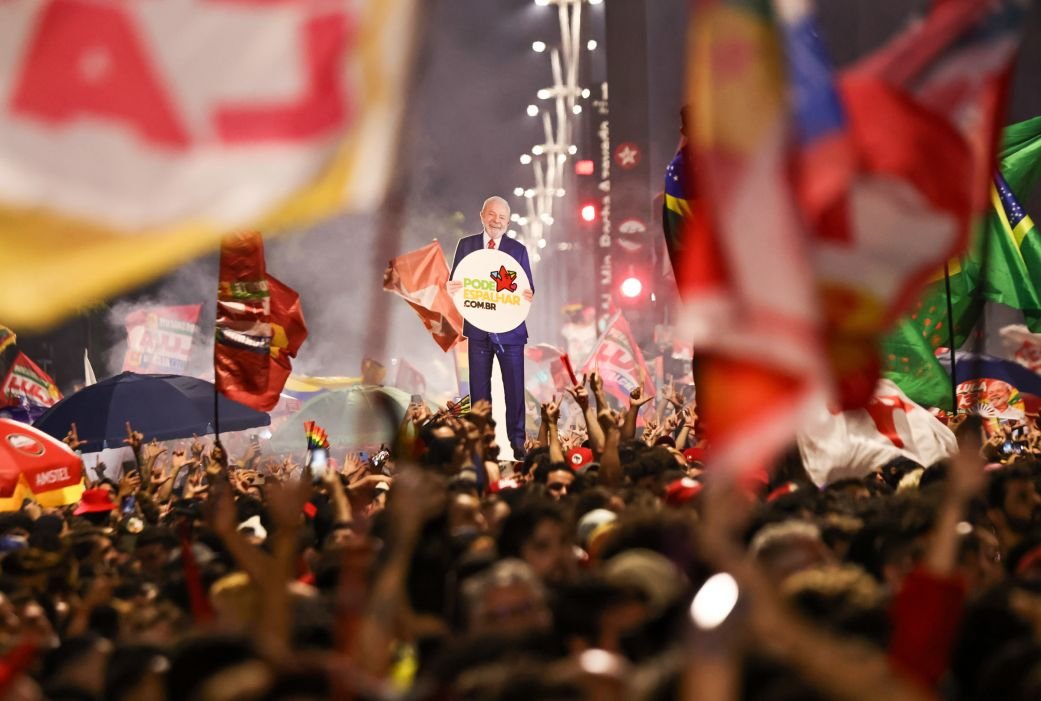
Brazil’s political left adopted a digital campaigning strategy long associated with the country’s right-wing movement to mobilise supporters and help President Luiz Inácio Lula da Silva secure re-election. A WhatsApp-based campaign network known as “Lula’s Army” became a central part of the effort, coordinating millions of supporters during the final weeks of the presidential race.
The campaign gained momentum after Lula lost the first round of voting on October 4 to right-wing senator Flávio Bolsonaro, the son of former president Jair Bolsonaro. In the three weeks that followed, supporters received instructions to share political messages, promote hashtags, circulate videos and encourage people to vote.
Lula ultimately won the election on October 25. Political analysts have identified the digital mobilisation effort as one factor that contributed to his comeback, although the result also reflected voter participation, the redistribution of votes from eliminated candidates and changes in regional support.
How Lula’s Army Became a Digital Campaign Headquarters
One of the people who joined the mobilisation was Veridiana Cunha, a 48-year-old copy editor from São Paulo. During the final three weeks of the campaign, she regularly checked WhatsApp for instructions while continuing her regular job.
Cunha also reactivated an Instagram account she had not used since 2022 and learned how to post on X to support Lula’s campaign. She described moving repeatedly between her professional responsibilities and the campaign activities.
“I’d edit a text, then go to the army. Edit another text, then go to the army,” she told CNN, describing the WhatsApp channel that became a virtual campaign headquarters.
The channel, called “Lula’s Army”, was created by Congressman André Janones in April. Following Lula’s first-round defeat, Janones turned it into a coordination platform for supporters seeking to prevent a victory by Flávio Bolsonaro.
The network expanded rapidly. It had around 50,000 followers before the first-round vote but grew to nearly 11 million in the following three weeks, as Janones issued instructions and encouraged supporters to participate in coordinated online activities.
Why Brazil’s Left Turned to a Strategy Associated With the Right
WhatsApp has played an important role in Brazilian political campaigns, particularly since Jair Bolsonaro’s successful 2018 presidential campaign. His political movement benefited from extensive networks of private groups that circulated videos, political messages and disinformation.
Before the October 4 first-round vote, Lula’s campaign had struggled to match the right’s digital organisation. According to political analyst Lucas Fernandes of BMJ Consultores Associados, Flávio Bolsonaro’s campaign had made social media a central part of its political strategy, while the left had been slower to adapt.
Fernandes argued that the right understood the importance of digital campaigning and used it across several fronts, while the left had not made a similar transition. He identified social media as one of the factors behind Flávio’s first-round performance.
After Lula’s defeat, Janones helped change that approach by giving supporters a central place to receive instructions and coordinate their activities.
André Janones Emerges as the Digital Campaign’s Organiser
Janones, a congressman from the state of Minas Gerais, became a prominent organiser of the online mobilisation. Known for his combative political style, he adopted tactics associated with Bolsonarism, including provocative language, emotionally charged messages and direct attacks on political opponents.
Fluminense Federal University professor Viktor Chagas, who researches political communication, described Janones as a politician who “fights the far right with the same resources it uses”. Chagas also raised concerns about the use of aggressive messaging and content of questionable origin.
Janones presented himself as the campaign’s “general” and assigned daily “missions” to supporters. These tasks included promoting hashtags, commenting on livestreams, sharing videos, liking posts, publishing photographs making the “L” hand gesture associated with Lula and recruiting additional members.
Supporters were also encouraged to take campaign activities beyond their own social media accounts and reach people in their personal networks.
Coordinated Missions and Digital Activism
The campaign used a highly organised system in which supporters received specific instructions about what to publish and how to engage with online content.
Janones called for a panelaço, a traditional Brazilian protest in which people bang pots and pans, during Flávio Bolsonaro’s widely anticipated interview on TV Globo. The proposed action was intended to disrupt the broadcast environment and draw attention to the opposition campaign.
He also advised supporters not to comment on opponents’ social media posts, warning that engagement could increase the visibility of those posts through platform algorithms.
The instructions sometimes demanded an intense level of participation. On October 17, Janones told followers that anyone taking a break should arrange for another supporter to replace them.
“If there is a substitute soldier, the change is authorized. Pass him the cell phone. Rest and come back in ten minutes.”
Professor Chagas described the approach as a form of “gamification”, in which campaign activities were organised into missions that gave participants a shared purpose.
Unlike strategies centred on a small number of prominent influencers, Lula’s Army encouraged thousands of ordinary supporters to create and distribute their own content alongside official campaign messages.
Leonardo Magalhães Firmino, chief executive of research firm IPSE Global, compared the method to training thousands of small social media managers. The approach gave supporters both a political message and practical instructions on how to spread it.
Online Campaign Raises Concerns About Misinformation
The rapid expansion of Lula’s digital campaign also raised questions about the accuracy and authenticity of some content circulated online.
One widely shared image appeared to show Brazilian football legend Ronaldo wearing a national team jersey displaying Lula’s ballot number, 13, while making the “L” hand gesture associated with the president.
However, Brazilian fact-checking outlet Agência Lupa reported that the image had been manipulated using artificial intelligence and posted by a Colombian artist. Ronaldo’s representatives said the image had been used without his authorisation.
Chagas warned that although Janones’ tactics were directed towards democratic political objectives, the approach could also weaken public debate by turning complex political discussions into continuous confrontation.
Janones has previously denied spreading disinformation. CNN contacted him for comment on the campaign strategy.
WhatsApp Channel Temporarily Suspended
The campaign’s activities also attracted legal scrutiny. On October 11, a Supreme Court judge ordered the suspension of the WhatsApp group following a complaint from Bolsonaro’s campaign alleging disinformation.
The suspension was later overturned, allowing the digital mobilisation to continue.
The episode highlighted the political and legal tensions surrounding large-scale messaging networks, particularly when campaign organisers use them to coordinate political content across social media platforms.
Did Lula’s Army Change the Election Result?
Political analysts have pointed to Lula’s online mobilisation as an important part of his campaign, but the digital strategy was not the only factor behind the election result.
Voter participation, the redistribution of support from candidates eliminated in the first round and geographical changes in voting patterns also influenced the final outcome.
Firmino argued that Janones’ mobilisation was fundamental to Lula’s comeback. In his assessment, the congressman gave supporters a coordinated method for turning political enthusiasm into organised campaign activity.
“I have no doubt. Without that, I don’t think the comeback would have happened,” Firmino told CNN.
He said the strategy was not primarily designed to persuade undecided voters directly through the WhatsApp channel. Instead, it focused on people who already supported Lula and encouraged them to spread campaign messages among family members, friends and acquaintances.
That approach also targeted people considering abstaining from the election, according to Firmino. Supporters were expected to carry the campaign beyond the digital group and into their personal networks.
How Ordinary Supporters Became Part of Lula’s Campaign
For Cunha, joining Lula’s Army was connected to both politics and personal circumstances. Her mother, a longtime Lula supporter, became seriously ill in August. Cunha spent several weeks with her in Minas Gerais and did not vote in the first round.
After returning to São Paulo for work, she found a sense of purpose in the digital campaign. Participating in the activities also helped her feel connected to her mother and the political cause they shared.
“The Army saved Brazil, it saved Lula and it saved me a little too,” she said.
One of her most satisfying experiences came on election day, when a friend who had been considering abstaining ultimately went to the polls and voted for Lula.
“I managed to change a vote,” Cunha said.
Her experience illustrates how the campaign sought to turn online supporters into participants who could influence conversations within their own communities. However, it is not possible to determine how many individual interactions translated into additional votes nationwide.
After the Election, Supporters Want More Missions
Lula’s victory brought the three-week mobilisation effort to an end, but the intensity of the campaign left some participants struggling to return to their usual routines.
Cunha said that after spending much of her time carrying out campaign tasks, returning to normal life felt unexpectedly difficult. She described the experience as emotionally exhausting while also expressing a desire to continue participating in future activities.
“I think we’re living through a kind of post-traumatic stress from the Army, like we’ve really gone to war,” she said. “We’re exhausted, but we want more missions. We feel like we can conquer the world.”
The campaign demonstrated how Brazil’s political left adapted digital mobilisation methods previously associated with its opponents. By combining centralised instructions with content created and shared by ordinary supporters, Lula’s Army gave progressive activists a more coordinated online presence during the decisive weeks of the election.
Although the precise electoral impact of the WhatsApp network remains difficult to measure, its rapid growth and the participation of millions of supporters made it a prominent feature of Lula’s successful campaign.
For breaking news and live news updates, like us on Facebook or follow us on Twitter and Instagram. Read more on Latest World on thefoxdaily.com.




COMMENTS 0