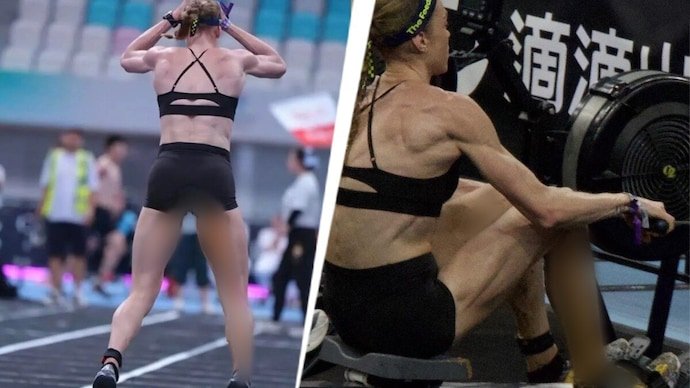
Hyrox has apologised and acknowledged that it mishandled a controversial incident involving Australian athlete Joanna Wietrzyk, who continued competing after soiling herself during a race in Beijing. The episode triggered intense criticism online and prompted the Fitness-racing organisation to announce immediate changes to its event procedures and rules.
The controversy is about more than an embarrassing moment during a demanding fitness competition. It has raised questions about what organisers should do when an athlete experiences a bodily incident that could affect their own Health, the safety of other competitors and the volunteers working around the course.
Hyrox co-founder Moritz Fürste accepted responsibility for the organisation’s handling of the situation. In a statement posted on Instagram, he apologised to people affected by the incident and admitted that Hyrox “did not handle the situation like we should have.”
He said the organisation had made a mistake by not reacting immediately during the race and confirmed that changes to event processes and the rulebook had already begun.
The response came as footage of Wietrzyk’s race circulated widely on Social Media, turning an unusual sporting incident into a broader debate about competition standards and athlete welfare.

What happened during the Hyrox race in Beijing?
Wietrzyk was competing in a Hyrox indoor fitness race in Beijing when she soiled herself midway through the event. Rather than stopping, she continued through the remaining stages and completed the competition.
Hyrox races combine endurance running with functional exercises. Competitors typically alternate between one-kilometre runs and stations involving exercises such as sled pushes, burpee broad jumps, rowing, lunges and weighted movements.
The format is deliberately demanding. Athletes are required to maintain a high level of physical effort while repeatedly switching between running and strength-based exercises.
That intensity is central to Hyrox’s appeal, but it also means organisers must have procedures for unexpected medical or hygiene-related situations.
In Wietrzyk’s case, the decision to allow her to continue became the central issue after video from the event spread online.
Why Hyrox apologised
Fürste said the organisation should have responded immediately when the incident occurred.
His admission is significant because it shifts the focus away from whether Wietrzyk personally chose to continue and toward the responsibilities of the event organiser.
An athlete competing at maximum intensity may make a decision based on finishing a race, protecting a result or simply refusing to give up. Organisers, however, have a different responsibility. They have to consider the wider competition environment, including other athletes, course conditions, officials and volunteers.
Fürste said it was his responsibility to anticipate potential incidents but acknowledged that he had failed to do so in this case.
He also said Hyrox had already begun improving its event processes and changing its rulebook, with new procedures put in place to prevent similar situations from happening again.
The organisation has not simply treated the episode as an isolated embarrassment. Its response suggests that the incident exposed a gap in the rules and operational procedures governing what happens when bodily waste contaminates a competition area.
The debate is about safety, not just disqualification
Much of the online reaction focused on whether Wietrzyk should have been disqualified. But the controversy raises a wider question: what should happen when an athlete’s physical condition creates a potential hygiene or safety issue during competition?
There are several groups whose interests have to be considered.
The athlete may be exhausted, embarrassed or physically unwell. Other competitors may have to use the same equipment or pass through the same area. Volunteers and event workers may be required to clean contaminated surfaces. Organisers must also ensure that the competition remains fair and that the venue is safe for everyone.
Those responsibilities can conflict with the sporting principle of allowing athletes to push themselves to their limits.
In an ordinary race, an athlete who falls or suffers a minor setback may be encouraged to continue if they are physically capable. A contamination incident is different because its effects can extend beyond the individual competitor.
That distinction appears to be one of the lessons Hyrox is now trying to incorporate into its rules.
Wietrzyk defended her decision to finish
Wietrzyk did not publicly present the decision to continue as something she regretted.
In a now-deleted Instagram story, she wrote “Go hard or go home” and said that a win is a win. She also thanked people who supported her and indicated that she intended to return to competition.
Her response illustrates the competitive mindset that can drive endurance and functional-fitness athletes to continue despite extreme physical discomfort.
For an elite competitor, abandoning a race after Investing months of training can be emotionally difficult. The desire to finish can become particularly strong when an athlete believes they are capable of physically completing the course.
But an individual athlete’s willingness to continue cannot necessarily determine whether organisers should permit them to remain in the competition.
That is where event rules matter. Clear regulations allow organisers to make decisions based on predefined safety standards rather than trying to improvise in the middle of a high-pressure race.
Hyrox warns against threats and online abuse
As the controversy spread, Wietrzyk became the target of intense online criticism. Some users called for her disqualification, while others went further and directed abusive messages at the athlete.
Hyrox responded by drawing a firm line between criticism of a sporting decision and threats against an individual.
The organisation said there was “no place in our community for threats of violence or encouragement to harm an athlete” and warned that people identified as making such threats through comments, direct messages or other social-media channels could be permanently banned from Hyrox events.
The warning is important because the controversy quickly moved beyond questions about race rules. Once an athlete’s identity becomes widely known online, criticism can escalate into harassment that has little connection with legitimate discussion of the sporting incident.
Organisers have a responsibility to enforce their competition rules, but they also have a responsibility to protect participants from threats and targeted abuse.
Why the incident became such a divisive issue
The reaction among members of the Hyrox community exposed a sharp disagreement about where individual determination ends and collective responsibility begins.
Supporters of Wietrzyk’s decision can view her actions through the traditional sporting lens of perseverance. Athletes are often celebrated for finishing despite pain, exhaustion or adversity, and the willingness to continue can be considered part of competitive character.
Critics, however, focused on what happened to the competition environment after the incident.
Some argued that volunteers were required to clean up human waste and questioned whether they had adequate protection. Others raised concerns about competitors encountering contaminated surfaces, equipment or flooring while continuing to race.
Another criticism was that allowing the athlete to finish could create an unfair competitive environment, particularly if other competitors would have been removed from the course under similar circumstances.
These arguments are not necessarily mutually exclusive. An athlete can demonstrate extraordinary determination while organisers can still conclude that the athlete should have been removed for health, hygiene or competition-integrity reasons.
The volunteer question is particularly important
One of the less visible aspects of large sporting events is the workforce that operates behind the athletes.
Volunteers and event staff often handle tasks that spectators never see, from moving equipment and directing competitors to cleaning and maintaining competition areas.
When an unusual incident occurs, these workers can suddenly be exposed to responsibilities that were not obvious when they agreed to participate.
The criticism surrounding the Beijing event therefore raises a legitimate operational question: what protection and procedures should be available when bodily fluids or waste contaminate a competition area?
Hyrox’s decision to introduce new procedures suggests that this issue will receive greater attention in future events.
A robust protocol would ideally establish who has authority to stop an athlete, how a contaminated area is isolated and cleaned, what protective equipment workers should use and when a competitor can or cannot return to the course.
It would also reduce uncertainty for officials who may otherwise have to make a difficult decision in real time.
Clear rules could prevent similar controversies
The controversy demonstrates why sporting organisations need rules that cover unusual situations rather than relying entirely on general safety provisions.
Hyrox competitions involve a predictable set of physical challenges, but human bodies do not always behave predictably under extreme exertion. Medical emergencies, falls, vomiting, bleeding and loss of bodily control can occur in endurance and high-intensity Sports.
A clear rulebook can distinguish between incidents that require medical intervention, incidents that create contamination risks and situations where an athlete can safely continue.
It can also establish whether the appropriate response is a time penalty, disqualification, temporary removal, medical assessment or another measure.
The exact rules Hyrox will ultimately adopt will determine how effectively the organisation has addressed the gap exposed in Beijing. Fürste’s announcement that changes are already in place indicates that the organisation recognises the need for clearer guidance.
Hyrox faces a balancing act between toughness and safety
Hyrox has built its identity around demanding physical competition. Participants deliberately enter races designed to test endurance, strength and mental resilience.
That Culture can make athletes reluctant to stop, even when something goes wrong.
But a competitive environment built around toughness still needs boundaries. Safety rules exist precisely because athletes are sometimes willing to accept risks that organisers should not permit.
The responsibility of an event organiser is therefore different from that of an athlete. Competitors are responsible for their performance and decisions within the rules. Organisers are responsible for establishing and enforcing those rules while protecting the broader event environment.
The Beijing incident exposed what can happen when those responsibilities are not clearly defined.
The controversy could become a turning point for Hyrox
The incident has already produced one concrete outcome: Hyrox says it has changed its procedures and rules.
That may ultimately become the most important consequence of the controversy.
Sporting organisations often develop their safety protocols through experience. A rare incident can reveal a weakness that was not obvious during routine events. If the resulting changes are practical and consistently enforced, a controversy involving one athlete can lead to better protection for thousands of future competitors and event workers.
At the same time, Hyrox will have to communicate those rules clearly. Athletes need to understand what circumstances can result in removal or disqualification before they enter the starting area, while officials need clear instructions on how to respond during competition.
What the Hyrox apology means
Hyrox’s apology does not erase the criticism surrounding the Beijing race, nor does it settle the debate over whether Wietrzyk should have been allowed to finish.
It does, however, acknowledge that the organisation had a responsibility to act differently once the incident occurred.
Wietrzyk’s decision to continue remains part of the story, but the more consequential issue for Hyrox is how organisers respond when an athlete’s actions affect other people on the course.
The organisation has now promised changes, while also warning its community against turning legitimate sporting criticism into personal abuse or threats.
That leaves Hyrox with a clear test for its next events: whether the new rules are specific enough to protect athletes, volunteers and officials, and whether they are enforced consistently regardless of an athlete’s status or competitive position.
The Beijing controversy began with one athlete refusing to stop in an extraordinarily demanding race. It has ended up forcing Hyrox to confront a much broader question about the limits of competitive endurance: how far an athlete can push themselves is one question, but how far an organiser should allow the competition to continue is another.
For breaking news and live news updates, like us on Facebook or follow us on Twitter and Instagram. Read more on Latest World on thefoxdaily.com.


COMMENTS 0