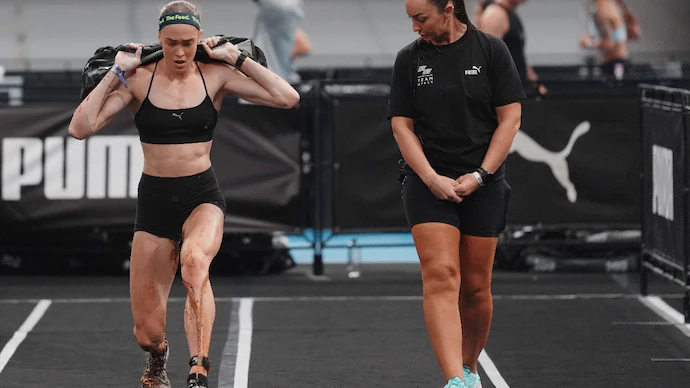
Australian endurance athlete Joanna Wietrzyk has admitted that she made the wrong decision by continuing to compete after suffering a bout of diarrhoea during a Hyrox race in Beijing, acknowledging that her actions exposed fellow competitors to a potential health and hygiene risk. The 24-year-old has apologised to those affected and is preparing to return to competition in Hamburg, Germany, on Friday, October 30.
The controversy erupted in September after Wietrzyk continued racing despite experiencing sudden gastrointestinal problems during the indoor fitness competition. Images and videos showing the athlete with faecal matter on her body and parts of the course spread widely online, prompting criticism of both her decision to continue and the organisers’ failure to intervene.
In an interview with the BBC ahead of her return, Wietrzyk accepted responsibility for what happened, explaining that her determination to win had taken priority over thinking about the safety and comfort of other participants.
“It was my decision to continue racing so I take full responsibility for that,” she said.
Reflecting on her decision, she acknowledged that she had not properly considered the consequences for people sharing the course and equipment.
“I didn’t really think about those around me. The decision that I made in hindsight was the wrong decision and I’m truly sorry for everyone that I did affect,” she added.
Wietrzyk described the incident and the intense reaction that followed as traumatic. She revealed that the experience had made her consider leaving the sport altogether. However, after several weeks of reflection, she has decided to resume competing, hoping that the Beijing controversy will not become the defining part of her sporting career.
What Happened During Joanna Wietrzyk’s Hyrox Race in Beijing?
Wietrzyk was competing in the women’s elite competition at a Hyrox event in Beijing on September 12 when she suddenly developed gastrointestinal problems approximately halfway through the race. The Australian athlete later said she had suffered a bacterial infection linked to food poisoning, although she felt physically well before the competition began.
According to her account, the symptoms appeared unexpectedly during the event. She had entered the competition feeling prepared and in good condition, but the sudden illness changed the situation while she was already racing.
“It wasn’t until about halfway through the race where everything did transpire,” she told the BBC, explaining that her competitive instincts took over at that moment.
Wietrzyk said her immediate focus was on completing the event rather than considering whether continuing was appropriate. As an elite athlete with a strong competitive mindset, she was concentrating on racing and making the most of her preparation.
That decision became the central issue after images of the incident circulated online. The footage showed her continuing through the competition despite visible contamination, raising concerns about the condition of the running surface, workout stations and shared equipment used by other participants.
Hyrox events bring athletes into close contact with common training equipment and competition areas. Consequently, the incident was not viewed simply as a personal medical problem. It raised wider questions about hygiene, participant welfare and the responsibility of organisers to stop a race when an athlete’s condition creates a potential risk to others.
Wietrzyk eventually apologised publicly and withdrew her result retrospectively, forfeiting the victory and points she had earned in Beijing. Her decision followed widespread criticism from competitors, spectators and members of the fitness community.
Why Did Wietrzyk Continue Racing Despite Becoming Ill?
Wietrzyk’s explanation has focused on the intense competitive mindset associated with elite sport. Athletes spend months preparing for major events, following demanding training schedules and making sacrifices to reach peak physical condition. For competitors at the highest level, the desire to perform well can become an overwhelming priority.
In Beijing, Wietrzyk said she was concentrating almost entirely on the race. She did not stop to consider how continuing might affect people around her, a point she has since acknowledged as a serious mistake.
Her comments highlight a difficult distinction in endurance sport: the determination to push through physical discomfort can be valuable, but it should not override medical judgement or the safety of other participants.
Endurance athletes sometimes experience gastrointestinal distress during prolonged physical activity. Running, intense exertion, changes in blood flow and food-related illness can all contribute to digestive problems. However, symptoms that create a contamination risk in a shared indoor competition environment require a different response from ordinary fatigue or muscle discomfort.
Wietrzyk’s experience has therefore become part of a broader discussion about how elite competitors, event organisers and medical personnel should respond when an athlete becomes unwell during a race.
She also said that nobody had encouraged her to leave the course at the time. While she has accepted responsibility for choosing to continue, the absence of immediate intervention raised questions about the procedures available to race officials and whether existing rules were sufficiently clear.
Hyrox Apologises and Introduces New Contamination Rules
The controversy placed the event organisers under considerable pressure. Hyrox co-founder Moritz Fürste subsequently acknowledged that the organisation should have intervened immediately rather than allowing Wietrzyk to continue competing.
Fürste issued an apology to people directly and indirectly affected by the incident, accepting that Hyrox had made a mistake in its handling of the situation. He also said the organisation would improve its event procedures and introduce changes to prevent similar incidents in the future.
The response resulted in an update to the competition rulebook. Under the revised provision, a race director can withdraw a participant on medical grounds if the athlete’s blood, vomit, urine or faeces creates a welfare or contamination risk to themselves or other competitors.
Such a withdrawal is recorded as a Did Not Finish, commonly known as a DNF, rather than allowing an athlete to continue in circumstances that could compromise the event’s hygiene standards.
The change gives race directors a clearer basis for intervening when bodily fluids create a potential risk. It also establishes that protecting participants and maintaining safe competition conditions must take priority over allowing an athlete to complete a race.
The Beijing incident exposed a gap between the demands of elite competition and the responsibilities involved in organising large indoor fitness events. Hyrox competitions combine running with repeated use of shared equipment, making hygiene procedures particularly important when hundreds or thousands of people participate in the same venue.
Fürste’s apology also acknowledged that the organisation had not reacted quickly enough. The revised rules are intended to give officials clearer authority to act when a participant’s condition threatens the welfare of others.
Hyrox China Offers Refunds to Affected Competitors
The response to the Beijing incident extended beyond changes to the global competition rulebook. Hyrox China also addressed concerns raised by participants who had been exposed to the affected competition area.
The organisation reportedly offered refunds to competitors whose participation was affected by the incident. The refund arrangements covered specified groups of athletes based on their start and finish times during the event.
The controversy had raised concerns among participants who paid to compete in an organised sporting event and expected the venue, equipment and race environment to meet appropriate hygiene standards. Some competitors questioned why they had been required to use areas and equipment after the incident had occurred.
Hyrox also faced criticism over the way the situation was managed during the competition. The organisation’s subsequent response included acknowledging the failure to intervene immediately and reviewing procedures for handling similar situations.
At the same time, the company warned against abuse and threats directed at Wietrzyk. Although her decision to continue racing attracted legitimate questions about responsibility and participant safety, organisers said that people sending abusive messages or threats would face bans from future competitions.
The distinction became important as the controversy moved from criticism of an athlete’s decision to widespread personal attacks on social media. The incident raised questions about sporting accountability, but it also demonstrated how quickly online reactions can become disproportionate and hostile.
What Is Hyrox? Understanding the Fitness Competition
Hyrox is an indoor fitness racing competition that combines endurance running with functional workout stations. Founded in Hamburg, Germany, in 2017, the sport has expanded internationally, attracting professional athletes, fitness enthusiasts and recreational competitors.
The standard Hyrox format consists of eight one-kilometre running sections, each followed by a workout station. Participants must complete all eight running segments and eight exercises, making the competition a test of cardiovascular endurance, strength, stamina and the ability to maintain performance under fatigue.
The workout stations include exercises such as sled pushes, sled pulls, burpee broad jumps, rowing, farmers carries, sandbag lunges and wall balls. The combination requires competitors to switch repeatedly between running and physically demanding movements.
Unlike competitions that focus exclusively on running or weightlifting, Hyrox tests several fitness abilities within a single event. Athletes must manage their pace, distribute their energy and complete each station while dealing with accumulated fatigue.
The sport’s standardised format has helped it expand across different countries. Because competitors face the same general sequence of running distances and exercises, performances can be compared across events and seasons.
However, the same structure also creates logistical challenges for organisers. Large numbers of participants may use the same running lanes, workout equipment and indoor facilities. Maintaining cleanliness and responding quickly to medical incidents are therefore essential parts of event management.
Wietrzyk Says the Backlash Was Traumatic
Although Wietrzyk has accepted responsibility for continuing the Beijing race, she has also spoken about the personal impact of the controversy. The circulation of images and videos exposed her to widespread criticism, with the incident attracting attention well beyond the Hyrox community.
She described the experience and the reaction that followed as traumatic. The scale of the public scrutiny reportedly made her question whether she wanted to continue competing in the sport.
For an athlete whose career has been built around training, performance and competition, becoming internationally recognised because of a controversial incident was a difficult experience. Wietrzyk said she did not want the episode to define her identity or overshadow the work she had put into her sporting career.
“I don’t want it to become my identity,” she told the BBC.
She also reflected on the mindset of elite competitors, explaining how athletes can become so focused on winning and demonstrating the results of their training that they sometimes fail to consider other factors.
Her comments do not remove responsibility for the decision she made in Beijing. Instead, they offer an explanation of the pressure and competitive thinking that influenced her actions, while acknowledging that her judgement was wrong.
The experience has also highlighted the importance of maintaining perspective in competitive sport. Winning a race is an achievement, but it cannot come at the expense of the safety and welfare of fellow participants.
Joanna Wietrzyk Prepares for Her Return in Hamburg
Wietrzyk is returning to competition in Hamburg on Friday, October 30, marking her first race since the Beijing controversy. The event is particularly significant because Hamburg is the city where Hyrox was founded and will provide the setting for the next stage of her competitive career.
The 24-year-old admitted that she felt nervous about returning to the course. The incident remains widely discussed, and she is aware that spectators and other competitors may remember what happened in Beijing.
However, she has decided that stepping away from the sport permanently is not the answer. After weeks of reflection, she wants to focus on competing again and rebuilding her career through her performances.
Her return also comes after she publicly apologised to those affected. In her earlier statement, she acknowledged that she should have stepped off the course and accepted that continuing had caused discomfort and disruption to others.
Before the Hamburg competition, Wietrzyk also expressed gratitude to people who had supported her during the difficult period. She said the support she received from individuals and her team had helped her navigate the experience.
She remains determined to continue competing despite having considered retirement. The return represents an opportunity to move forward, although the controversy is likely to remain part of the conversation surrounding her career for some time.
Can the Beijing Incident Change How Hyrox Handles Athlete Safety?
The Beijing controversy has raised important questions about the responsibilities of athletes and organisers during high-intensity competitions. While Wietrzyk has accepted that she should have stopped racing, the incident also demonstrated why event officials need clear procedures for responding to medical and hygiene-related problems.
In a competition involving shared equipment and large numbers of participants, an athlete’s decision to continue can affect people beyond the individual competitor. Race directors therefore need the authority and practical procedures to assess situations quickly and remove participants when necessary.
The revised contamination rule represents a formal response to one of the most widely discussed incidents in Hyrox’s recent history. It gives officials a clearer basis for withdrawing athletes when bodily fluids create a potential welfare or hygiene risk.
However, the effectiveness of the change will depend on how consistently it is applied at events. Officials must be able to recognise potential risks, communicate with medical teams and take timely action without allowing competitive pressure to influence safety decisions.
The incident also offers a lesson for athletes. Competitive determination is an important part of endurance sport, but knowing when to stop is equally important. Medical problems that could affect other participants should not be treated as obstacles that must simply be overcome to reach the finish line.
A Difficult Chapter as Wietrzyk Returns to Competition
Joanna Wietrzyk’s return in Hamburg marks an important moment after a controversy that affected both her personal life and the wider Hyrox community. Her admission that she made the wrong decision has addressed one of the central criticisms surrounding the Beijing race, while her apology has acknowledged the impact on fellow competitors and spectators.
The incident also prompted Hyrox to accept responsibility for its response and introduce clearer rules allowing race directors to withdraw athletes when contamination creates a safety or welfare concern.
For Wietrzyk, the immediate challenge is returning to competition while managing the attention surrounding the incident. She has made clear that she does not want one mistake to define her identity or end a career in which she has achieved significant success.
Her comeback does not erase what happened in Beijing, but it gives her an opportunity to move forward after accepting responsibility. The wider test for Hyrox will be whether the rule changes and improved procedures help ensure that participant safety takes priority when similar situations arise in future competitions.
For breaking news and live news updates, like us on Facebook or follow us on Twitter and Instagram. Read more on Latest World on thefoxdaily.com.




COMMENTS 0