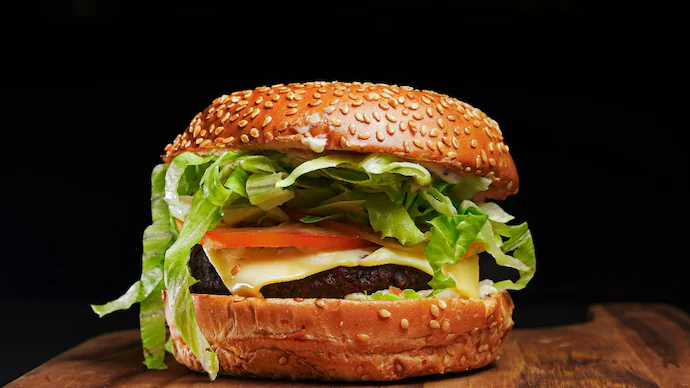
A $13 chicken sandwich has sparked a debate over economic inequality in Lebanon, where many households continue to struggle with the cost of basic necessities while some consumers can still afford premium dining. The controversy centres on The Glow Paradise, a restaurant in Beirut that sold more than 20,000 of its “Chic Taouk” sandwiches in just 11 days, according to managing partner Hrag Jeghalian.
Priced at nearly twice the cost of a regular shish taouk wrap in the city, the sandwich has become a focal point for wider concerns about Lebanon’s Economic Crisis. While critics accuse the restaurant of charging excessive prices, others argue that businesses can cater to customers who have the means to pay for premium products.
The debate reflects a broader divide in a country still dealing with the consequences of its 2019 financial collapse, rising living costs, unreliable public electricity and water supplies, and repeated conflicts. For economists, the popularity of an expensive menu item does not necessarily indicate that the wider population is recovering financially.
Why a $13 Sandwich Has Sparked Controversy
The Glow Paradise’s “Chic Taouk” is marketed as a healthier version of the popular shish taouk wrap. The restaurant reportedly sold more than 20,000 sandwiches over an 11-day period, according to managing partner Jeghalian.
At approximately $13, the sandwich costs nearly twice as much as a regular version in Beirut. Its price prompted criticism on social media, with some users questioning whether the restaurant was overcharging customers during a prolonged economic crisis.
Others defended the business, arguing that premium-priced food can find customers even when many households face financial hardship. Jeghalian described the controversy as “natural marketing”, suggesting that the online attention had helped draw attention to the product.
The debate illustrates how a single consumer product can become a symbol of a much larger economic divide. The issue is not simply whether one sandwich is worth its price, but what its popularity reveals about the different financial realities experienced by people living in the same city.
Restaurant Crowds Do Not Reflect the Whole Economy
Economist Sami Nader of Saint Joseph University of Beirut cautioned against interpreting busy restaurants as evidence that Lebanon’s economy is doing well. He told Reuters that visible consumer spending can conceal the difficulties faced by businesses and households elsewhere.
“So you see people in the restaurant, but what you don’t see is that 22 restaurants closed last month,” Nader said.
His observation highlights an important distinction between the spending power of some consumers and the overall health of the economy. A restaurant may attract customers willing to pay premium prices while other businesses struggle with operating costs, weak demand or unreliable infrastructure.
In a country affected by a prolonged financial crisis, the existence of high-end consumption does not mean that financial hardship has disappeared. Instead, different groups can experience the same economy in sharply different ways.
Lebanon’s Economic Crisis Continues Years After the 2019 Collapse
Lebanon’s financial crisis began in 2019 and has had lasting consequences for households, businesses and the country’s broader economic structure. According to the World Bank figures cited in the supplied report, the economy has shrunk by nearly 40% since that year.
The crisis followed decades of corruption and excessive government spending, while subsequent conflicts added further pressure. The 2020 Beirut port explosion was another major shock, and Lebanon has endured two wars in less than two years, according to Nader’s account in the report.
These overlapping crises have eroded financial security and placed pressure on the middle class. Nader described Lebanon’s middle class as having “disappeared”, reflecting the scale of the economic disruption experienced by households that once had greater capacity to cover ordinary expenses.
The effects extend beyond income and purchasing power. Higher operating costs, unreliable public services and uncertainty about the economy can affect how businesses function and how families allocate their money.
Inflation and Rising Costs Put More Pressure on Households
Inflation remains another source of concern. The World Bank expects inflation to reach 17.5%, according to the supplied report, as higher global energy and shipping costs push up prices.
When prices rise, households must spend more to maintain the same standard of living. The impact can be particularly difficult for people whose earnings have not increased at the same pace as the cost of food, transport, electricity and other essentials.
For businesses, inflation and higher input costs can also make it more expensive to operate. Restaurants must account for the cost of ingredients, energy and other expenses when setting menu prices, although the supplied information does not detail the costs behind The Glow Paradise’s sandwich.
The $13 price has therefore become part of a wider argument about affordability. For consumers with sufficient disposable income, the sandwich may be an optional premium purchase. For households struggling to cover basic necessities, the same price can represent a significant expense.
Electricity Costs Add to Lebanon’s Financial Burden
Unreliable electricity supply has added another layer of pressure for households and businesses. Grid outages have forced many people to rely on private generators to maintain power, often at substantial cost.
According to the supplied report, private generator rates rose by nearly 20% in August and were almost 60% higher than in February. The increases have made dependable electricity more expensive for people who cannot rely on the public grid alone.
Round-the-clock power can cost several hundred dollars a month, while the minimum wage in Lebanon is $400, the report states. That comparison illustrates the scale of the burden facing households and businesses that need continuous electricity.
Electricity costs also affect commercial operations. Businesses that rely on refrigeration, kitchen equipment, lighting and other electrical systems may have to absorb additional expenses or account for them in their prices. However, the available information does not specify how much generator costs contribute to The Glow Paradise’s operating expenses.
Water Shortages and Conflict Add to Public Frustration
The sandwich controversy has also drawn criticism because it is unfolding while Lebanon continues to face shortages of essential services and security challenges. Some social media users questioned why an expensive food item was receiving so much attention when parts of the country were dealing with electricity and water shortages and Israel’s occupation of large areas of southern Lebanon.
These reactions show that the debate extends beyond restaurant pricing. For some people, the sandwich has become a symbol of the contrast between discretionary spending and the difficulties faced by communities struggling to access reliable services.
Such criticism reflects frustration with the country’s broader conditions rather than providing a complete picture of every consumer’s financial circumstances. Some people may still have the means to spend on premium dining, while others are forced to prioritise basic necessities.
What the Sandwich Debate Reveals About Inequality
The controversy surrounding The Glow Paradise highlights the limits of using visible consumption as a measure of economic recovery. A popular restaurant or a premium product can attract significant demand without demonstrating that the wider population has regained financial stability.
When economic hardship is widespread, differences in purchasing power become more visible. Consumers who can afford expensive meals may continue spending, while others cut back on discretionary purchases or struggle to meet basic expenses.
The contrast can also influence how people view businesses and consumer behaviour. Critics may see premium prices as out of touch with the public’s financial difficulties, while supporters may regard them as a normal part of a market serving customers with different budgets.
Neither the sandwich’s sales figures nor the online debate alone can measure the full extent of inequality in Lebanon. However, the controversy has drawn attention to the coexistence of premium consumption and widespread financial pressure.
Can Restaurant Sales Indicate Economic Recovery?
The reported sales of more than 20,000 sandwiches in 11 days show that The Glow Paradise found substantial demand for its product. They do not, by themselves, establish whether Lebanon’s overall economy is recovering or whether household living standards are improving.
To understand the broader economic picture, restaurant sales must be considered alongside indicators such as inflation, employment, income, business closures, access to public services and the cost of essential goods. Nader’s comments about restaurant closures underline why crowded dining venues may tell only part of the story.
The available figures point to an economy still facing significant challenges. The reported contraction since 2019, rising generator costs and the World Bank’s inflation forecast all provide context for why a premium sandwich has become a subject of public debate.
Conclusion: A Premium Sandwich, a Wider Economic Divide
The $13 “Chic Taouk” has become more than a menu item in Beirut. Its popularity and the reaction to its price have exposed competing perceptions of life in Lebanon, where some consumers continue to spend on premium products while many households face rising costs and unreliable essential services.
The Glow Paradise’s sales demonstrate demand for the sandwich, but they do not erase the wider economic difficulties described by economists and reflected in the country’s recent economic history. As Lebanon continues to grapple with inflation, infrastructure problems and the consequences of successive crises, the debate serves as a reminder that visible consumer spending does not necessarily reflect the financial reality of the entire population.
For breaking news and live news updates, like us on Facebook or follow us on Twitter and Instagram. Read more on Latest World on thefoxdaily.com.



COMMENTS 0