US Ambassador to Israel Mike Huckabee has strongly condemned an attack on Washington Post photojournalist Heidi Levine, describing the assault by masked Israeli settlers as a “despicable act of terror” and calling for a full investigation, arrests and prosecution. The incident has drawn attention to the safety of journalists covering the Israeli-Palestinian conflict and the response of Israeli authorities to violence against media workers.
Levine, a 63-year-old award-winning photographer who has covered the region for more than four decades, was reportedly beaten while documenting Palestinian olive harvesting activities last Friday. According to her account, masked settlers used clubs and other weapons against Palestinians attempting to harvest olives, with Levine among those attacked.
The journalist suffered broken ribs, injuries to her hands and other physical harm that required hospital treatment and surgery. She said the attackers continued kicking her after knocking her to the ground, adding that her protective helmet and flak jacket may have prevented even more serious injuries.
Huckabee’s response was notably forceful. He called the attack an act of terror and demanded that those responsible face the full consequences of the law. Israeli Prime Minister Benjamin Netanyahu also condemned violence but described the assault as alleged and said the circumstances remained unclear, a response Levine said left her shocked and insulted.
The incident has placed renewed focus on the risks faced by journalists working in conflict-affected areas, the protection of Palestinian communities during the olive harvest and the responsibility of authorities to investigate attacks regardless of the victims’ identities or professions.
What Happened to Washington Post Photographer Heidi Levine?
Heidi Levine was covering Palestinian olive harvesting when she was attacked by masked Israeli settlers on Friday, according to the supplied report. The incident took place as Palestinians were attempting to gather olives, an activity that can become a source of tension in parts of the occupied West Bank.
Levine said the attackers pushed her to the ground and repeatedly kicked her. She sustained broken ribs, injuries to her hands and other injuries that required hospital treatment, including surgery on her hand.
The photographer said her flak jacket and helmet may have protected her from more serious harm. She described being attacked for more than 10 minutes, underscoring the severity of the assault as she experienced it.
Levine is an experienced journalist who has covered the region for more than 40 years. Her work has involved documenting conflict, political developments and the lives of people affected by violence. The attack therefore raises concerns not only about her individual safety but also about the risks confronting reporters and photographers documenting sensitive events.
Her account also highlights the particular vulnerability of journalists who work close to confrontations. Photographers often need to remain near unfolding events to document them accurately, but proximity can expose them to physical danger when demonstrations or disputes become violent.
The supplied report does not provide a detailed independent reconstruction of the incident or identify the individuals responsible. Those questions remain important to any investigation, particularly given the seriousness of the injuries and the calls for criminal accountability.
Mike Huckabee Calls Attack a ‘Despicable Act of Terror’
US Ambassador to Israel Mike Huckabee issued a strong condemnation of the assault, calling it a “despicable act of terror carried out by masked cowards”. He also said the United States had called for a full investigation and for anyone involved to be arrested and prosecuted to the fullest extent of the law.
Huckabee’s statement places the emphasis on accountability rather than treating the incident simply as a confrontation connected to the wider Israeli-Palestinian conflict.
He specifically condemned the attack on a female photographer, making clear that the seriousness of the incident warranted a formal investigation and legal consequences for those found responsible.
The ambassador’s remarks are significant because they publicly communicate Washington’s concern about violence against a journalist working in Israel and the Palestinian territories. However, the supplied information does not establish whether the United States has taken any additional diplomatic measures beyond the stated call for an investigation and prosecution.
Huckabee’s statement also raises a broader issue about the protection of journalists covering conflict. Media workers must be able to document events without being subjected to violence because of their profession, their presence at a particular location or the activities they are reporting on.
At the same time, establishing individual criminal responsibility requires evidence and a proper investigation. Huckabee has called for those involved to be held accountable through the legal system, while the precise circumstances of the assault remain a matter for investigators to establish.
Heidi Levine Says the Attack Has Not Broken Her Spirit
Levine described the assault in a statement that conveyed both the physical impact of the attack and her determination to continue. She said she had been pushed to the ground and repeatedly kicked, adding that her protective equipment may have saved her life.
She also reflected on her long career covering the region, saying she had never seen the country in such a state during her more than four decades of work there.
Levine said she had invested decades of effort in documenting events across the region. Despite the injuries she sustained, she expressed determination not to allow the assault to break her spirit.
Her remarks illustrate the personal risks that can accompany frontline journalism. Reporters and photographers may face threats while documenting political tensions, community disputes and violence, even when their purpose is to report on events rather than participate in them.
The incident also underscores the importance of distinguishing between the work of journalists and the actions of the people or groups they cover. Attacking a photographer does not simply injure an individual; it can also obstruct the documentation of events that are of public interest.
Levine’s recovery will be an immediate concern following her hand surgery and other injuries. The investigation into the assault will determine what evidence is available and whether those responsible can be identified and prosecuted.
How Has Benjamin Netanyahu Responded to the Attack?
Israeli Prime Minister Benjamin Netanyahu condemned violence against people but described the incident involving Levine as an alleged attack, saying the circumstances remained unclear.
His response differed in tone from Huckabee’s statement, which directly described the incident as a terror attack and demanded arrests and prosecution.
Levine said Netanyahu’s remarks left her “shocked and insulted”. Her reaction reflects dissatisfaction with the way the assault was characterised while she was recovering from injuries that required hospital treatment and surgery.
The difference between the two responses highlights the diplomatic and political sensitivity of violence involving Israeli settlers, Palestinians and international journalists. Public officials may condemn violence while also waiting for investigators to establish the facts, but the language used can influence how victims and the wider public interpret the seriousness of an incident.
Netanyahu’s statement, as described in the supplied report, did not identify the individuals involved or provide details of an investigation. Nor does the available information establish what evidence Israeli authorities had reviewed when he made his remarks.
It is therefore important to separate the prime minister’s public response from the factual questions that an investigation must resolve. Determining who carried out the assault, what weapons were used and whether criminal offences occurred requires evidence rather than political characterisation alone.
Why the Attack Raises Concerns About Press Freedom and Journalist Safety
Journalists working in conflict zones face risks that can include physical assault, threats, restrictions on movement and interference with their ability to document events. These dangers become particularly acute when reporters work near confrontations involving civilians, security forces or armed groups.
Levine’s case demonstrates how a journalist covering an activity such as olive harvesting can become a victim of violence while documenting events involving local communities.
Her injuries also show why protective equipment, although important, cannot eliminate the risks faced by frontline reporters. A helmet and flak jacket may reduce the severity of certain injuries, but they do not make journalists immune to attacks involving repeated blows or other forms of physical violence.
The incident raises questions about whether journalists can work safely and independently in areas affected by political tension. If media workers fear being attacked while documenting public events, their ability to gather information and provide a reliable record of what happens may be undermined.
Investigating attacks on journalists is therefore important for more than the interests of an individual victim. It can help establish accountability, deter future violence and reinforce the principle that media workers should not be targeted for carrying out legitimate reporting activities.
In this case, the calls for an investigation from Huckabee place particular emphasis on identifying those responsible and pursuing legal action. Whether the investigation leads to arrests or prosecutions will depend on the evidence collected and the decisions made by the relevant authorities.
Why the Palestinian Olive Harvest Is a Sensitive Issue
The attack occurred while Palestinians were attempting to harvest olives, according to the supplied report. Olive harvesting is an important seasonal agricultural activity for Palestinian communities, with olive trees holding economic and cultural significance across parts of the West Bank.
Harvesting can also become a flashpoint in areas where Palestinian farmers face tensions involving Israeli settlers, access to land and disputes over movement or security. The presence of journalists during such activities can help document events and provide information to audiences outside the immediate area.
However, the supplied report does not identify the precise location of the attack or provide a detailed account of the circumstances that led to the confrontation. It would therefore be premature to attribute the incident to a specific land dispute or to assume that every participant had the same motivations.
What the report establishes is that Levine was attacked while covering Palestinians attempting to harvest olives and that she sustained serious injuries. Her account, Huckabee’s condemnation and Netanyahu’s response have brought the incident into the diplomatic spotlight.
The investigation will be important in clarifying the circumstances, identifying the people involved and determining whether criminal charges are warranted.
What Happens Next in the Investigation?
Huckabee has called for a full investigation, arrests and prosecution to the fullest extent of the law for anyone who participated in the assault. Those demands establish a clear expectation that the incident should be investigated and that responsibility should be determined through legal procedures.
Several questions remain central to the next stage of the case.
- Identifying the attackers: Investigators will need to establish who was involved in the assault and determine whether available evidence can identify the individuals responsible.
- Reconstructing the incident: Evidence and witness accounts may help clarify how the confrontation unfolded, where the attack occurred and what weapons were used.
- Assessing criminal responsibility: Authorities will need to determine whether the evidence supports charges against specific individuals and which offences may apply.
- Protecting journalists: The incident may renew questions about the safety measures available to media workers covering sensitive events in the region.
- Diplomatic scrutiny: Huckabee’s public statement has increased attention on the case, although the supplied report does not describe any additional diplomatic action by the United States.
The available information does not establish whether suspects have been arrested or whether formal charges have been filed. It is therefore too early to draw conclusions about the investigation’s outcome.
The most immediate priorities are Levine’s recovery and the establishment of an accurate account of the assault. Any legal action should be based on evidence and the findings of the investigation.
Other Major World News: France Faces Unrest After 2,400 Arrests
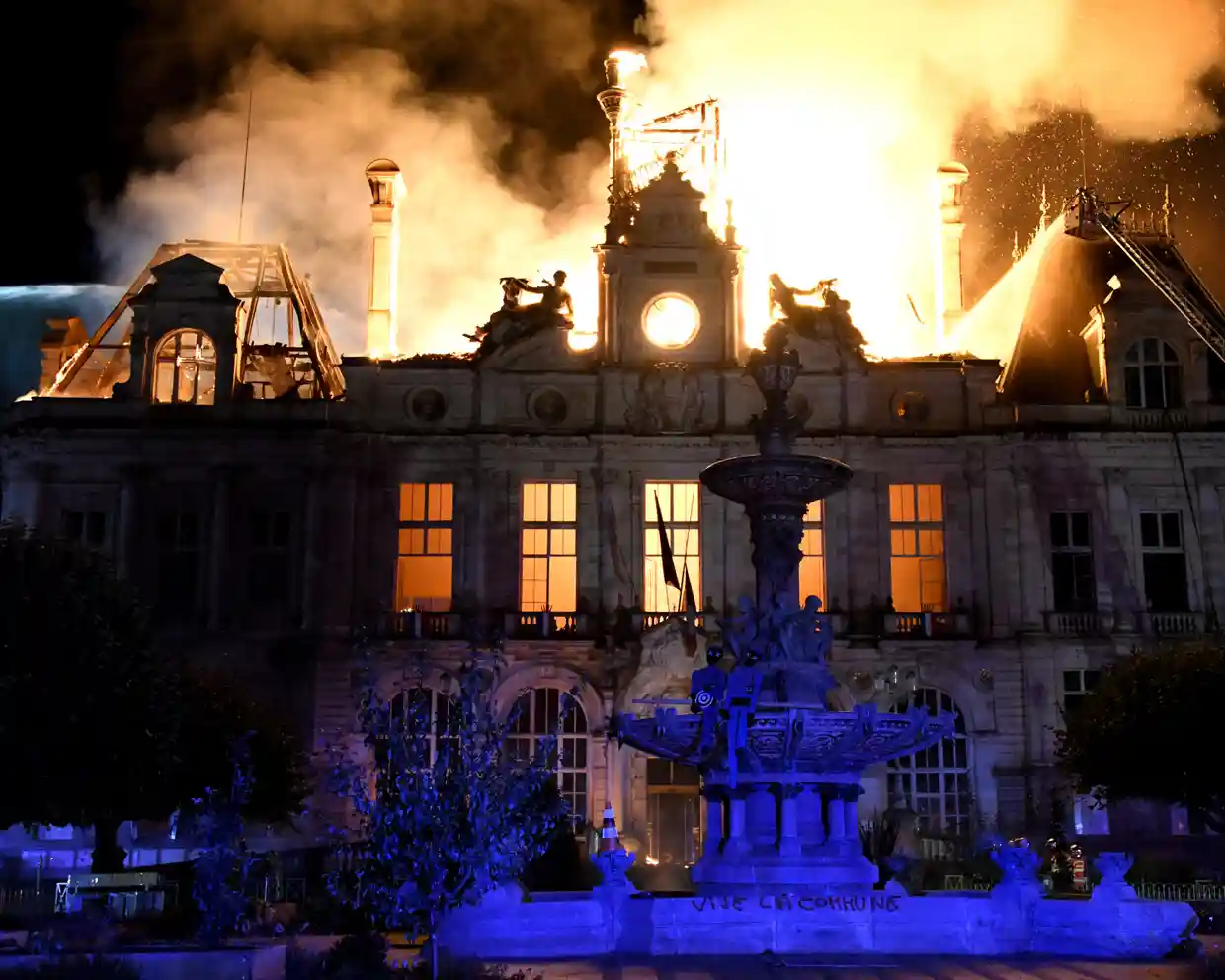
In France, President Emmanuel Macron condemned what he called “unbridled violence” following a period of unrest that reportedly left public buildings burned, hundreds of shops destroyed or looted and at least 2,400 people arrested across cities nationwide.
Macron said nothing justified violence and indicated that local state officials could prohibit certain street gatherings if they considered such measures necessary. He also criticised failures that he said had contributed to the crisis but refused the resignation of Interior Minister Laurent Nuñez.
The unrest has unfolded amid wider demonstrations in several European countries, where concerns about school conditions, housing costs and the cost of living have brought people onto the streets.
Protests in Albania against Prime Minister Edi Rama had entered their sixth day on Sunday, according to the supplied report. Demonstrators cited perceived corruption, a lack of jobs and poor education standards among their concerns.
The developments underline how governments in different parts of Europe are facing public pressure over a range of economic, social and political issues. However, the causes and circumstances of each country’s protests differ, and the demonstrations should not be treated as a single coordinated movement.
Ukraine Says the US Gave No Warning Before Russian Strikes on Kyiv
Ukrainian President Volodymyr Zelenskyy said Ukraine did not receive a warning from the United States about an impending Russian missile attack on Sunday evening.
His remarks renewed concerns about intelligence cooperation between Washington and Kyiv. According to the supplied report, Ukraine has also complained about slower deliveries of US air defence missiles, while President Donald Trump waived a sweeping package of sanctions on Russia on Friday.
Zelenskyy criticised what he described as a contradiction between restrictions on support for Ukrainian air defence and sanctions relief or delays affecting Russia. His comments reflected frustration with decisions that Kyiv believes could weaken its ability to defend itself against Russian attacks.
The report does not provide independent confirmation of the intelligence arrangements surrounding the strikes or establish why Ukraine did not receive the warning it says it expected. The distinction between Zelenskyy’s account and independently established facts remains important when assessing the state of US-Ukraine cooperation.
The episode nevertheless highlights the continuing importance of intelligence sharing, air defence supplies and sanctions policy in the war. Changes in any of these areas can have implications for Ukraine’s military planning and its relationship with international partners.
Obama Condemns Remarks About Ilhan Omar’s Citizenship
Former US President Barack Obama criticised comments by Donald Trump’s border official suggesting that the federal government could strip Democratic congresswoman Ilhan Omar of her citizenship and deport her.
Obama argued that the federal government was being used against an elected official because she had criticised the president. He urged Americans to defend Omar regardless of their political beliefs.
The dispute raises questions about citizenship, political expression and the limits of government authority. However, the supplied report does not detail the legal basis for the official’s remarks or establish that any formal action to revoke Omar’s citizenship had been initiated.
Comments about a possible government action should not be confused with an actual legal proceeding. Any such action would need to be assessed against the applicable law and the facts of the individual case.
Flydubai Captain Describes Fight to Stop Co-Pilot From Attacking Him
A flydubai captain has described how he blocked axe blows to his head and called for help after a co-pilot allegedly attacked him during a flight from Dubai to Tel Aviv last month.
Captain Smit Machchhar has been praised for his role in averting a potential disaster. According to the supplied report, the UAE attorney general said the co-pilot had attempted a suicide attack and intended to crash the aircraft into Ben Gurion airport.
The captain’s account highlights the importance of cockpit security and the risks that can arise when violence occurs aboard an aircraft. The incident also raises questions about how crew members respond to threats inside the flight deck, where access is restricted and the consequences of an attack can be severe.
The supplied information does not provide a complete account of the investigation or the legal status of the co-pilot. The description of the alleged intent is attributed to the UAE attorney general and should be understood in that context.
Other Developments From Around the World
- Kansas soccer match incident: A woman who allegedly killed two people and injured 10 others at a soccer game was released from custody without charges while further investigation continued, according to the supplied report.
- Australian MP Helen Haines: The politician was reported to be in critical condition following a suspected attack outside her office. Reports suggested she had been deliberately targeted with a vehicle.
- CBS reporter apologises: A reporter apologised and deleted a social media post praising a person who heckled Abdul El-Sayed, a Democratic candidate for the US Senate in Michigan. The exchange involved a question about whether El-Sayed would disavow the Muslim Brotherhood.
- Louisiana deacon’s excommunication: The Roman Catholic Church upheld the excommunication of a Louisiana deacon who resigned from the clergy after a priest molested his son.
- Amelia Earhart search: Researchers investigating the disappearance of the aviator left a remote atoll empty-handed after suspected aircraft debris was identified as a clump of trees.
Stat of the Day: Elizabeth Holmes Documentary Opens With $15 Million
The documentary You Can See Everything, directed by Nathan Fielder and Lance Oppenheim, reportedly opened with $15 million at the North American box office.
The film was shown on 855 screens and recorded the biggest documentary opening in North America since Fahrenheit 9/11 in 2004, according to the supplied report.
The reported opening points to a strong debut for a documentary released on a relatively limited number of screens compared with major wide-release films. However, box-office opening figures alone do not establish the film’s eventual commercial performance or its long-term cultural impact.
Culture and Society: The WNBA Pushes Back Against Anti-Trans Attacks
A report by Lex McMenamin examines how the WNBA’s pro-LGBTQ+ fanbase is responding to anti-trans rhetoric and attacks surrounding the sport.
The coverage focuses on how players and supporters have promoted inclusion in response to hostility directed at transgender people. The issue reflects a wider debate about representation, participation and the role of sports communities in public discussions about LGBTQ+ rights.
The report highlights the role of fans as well as athletes in shaping the atmosphere around professional sports. Supporters can use public statements, community organising and visible expressions of inclusion to communicate their position on social issues.
Why Some Hotels and Tourist Attractions Are Restricting Influencer Photoshoots
Some hotels, restaurants, beauty spots and tourist destinations are introducing restrictions on photography and filming as they respond to the growing use of locations for social media content creation.
The measures reportedly range from limiting filming to certain hours to introducing outright bans on particular types of photoshoots. The changes reflect tensions between visitors seeking attractive content for social media and businesses or public destinations trying to manage how their spaces are used.
Photography can provide publicity for a location, but elaborate shoots may also disrupt other visitors, occupy shared spaces or interfere with ordinary business activities. Restrictions are one way for operators to balance those competing considerations.
The debate also raises questions about privacy and the pressure to document everyday experiences online. The report points to the possibility of stepping away from social media as one response to the growing emphasis on producing and sharing content.
California Town Battles Coastal Erosion
San Clemente, California, is facing rapid coastal erosion that threatens homes and local economic activity, according to a report by Lois Beckett.
The town’s experience illustrates the practical challenges communities face as coastlines change and infrastructure becomes more exposed to erosion. Residents and local authorities must contend with the consequences for property, public access and the future of coastal areas.
The report places the problem within the wider context of the climate crisis. However, understanding the precise causes and likely progression of erosion at a specific location requires detailed local evidence, including coastal measurements and environmental assessments.
Climate Check: What to Know About COP17
The upcoming COP17 biodiversity summit in Yerevan, Armenia, is expected to focus on efforts to encourage governments to meet the 23 targets agreed at COP15 in 2022.
The summit forms part of international efforts to address biodiversity loss and protect ecosystems. Governments face the challenge of turning agreed targets into practical action, including policies, funding and implementation measures.
The effectiveness of international biodiversity commitments depends not only on setting goals but also on whether participating countries make measurable progress. Monitoring and accountability are therefore important parts of assessing whether the agreed targets are being met.
Japan Plans First-Ever Mission to Bring Samples Back From Martian Moon Phobos
Japan is preparing a space mission designed to collect samples from Phobos, one of Mars’s two natural moons, and bring them back to Earth. The project is expected to take five years, according to the supplied report.
The mission aims to help scientists understand how Phobos and its smaller sibling, Deimos, formed. Researchers also hope that the samples could provide clues about the early history of the Martian system and potentially contribute to broader questions about the origins of life in the solar system.
Collecting material directly from a planetary moon could provide scientists with evidence that is difficult to obtain through remote observation alone. Laboratory analysis of returned samples can reveal details about composition and geological history that instruments operating far from Earth may not be able to establish with the same precision.
Phobos is particularly interesting because scientists continue to investigate its origin and relationship with Mars. Samples could help test competing explanations for how the moon formed and how it has evolved over time.
The mission would also represent a major technical undertaking. A spacecraft must reach the Martian system, operate around its target, collect material and return it safely to Earth. Each stage involves navigation, engineering and operational challenges.
The supplied report describes Japan’s plan as a world-first effort to return samples from Phobos. The scientific findings, however, will depend on the mission’s execution and the analysis of any material successfully returned.
Conclusion: A Day of Diplomatic Tensions, Security Concerns and Scientific Ambition
The attack on Washington Post photojournalist Heidi Levine has drawn a strong response from US Ambassador Mike Huckabee and renewed attention to the safety of journalists covering the Israeli-Palestinian conflict. Huckabee has called for a full investigation, arrests and prosecution, while Israeli Prime Minister Benjamin Netanyahu has condemned violence but said the circumstances of the alleged assault remain unclear.
The incident highlights the importance of protecting media workers and establishing accountability when serious allegations of violence arise. Levine’s recovery and the investigation into the assault remain central to the case.
Elsewhere, France is dealing with unrest and questions about security preparedness, Ukraine is raising concerns about US intelligence and military support, and a flydubai captain has described how he responded to an alleged attack inside the cockpit.
Alongside these developments, reports on coastal erosion, biodiversity protection and Japan’s planned mission to Phobos illustrate the range of environmental and scientific challenges receiving international attention.
Together, the developments underline how questions of public safety, political accountability, international cooperation and scientific discovery continue to shape the global news agenda.
For breaking news and live news updates, like us on Facebook or follow us on Twitter and Instagram. Read more on Latest World on thefoxdaily.com.



COMMENTS 0