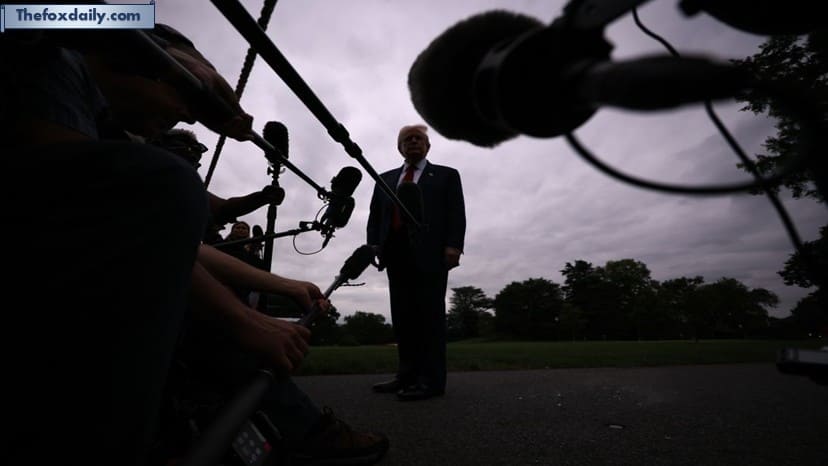
A federal judge has ordered the White House to restore access for CNN, MS NOW and Politico after President Donald Trump barred the three news organizations from the White House complex. The ruling provides temporary relief to the outlets while their lawsuit against the administration proceeds and places a broader question before the courts: how much authority does a president have to control which journalists can enter the White House when the administration objects to their reporting?
US District Judge Timothy Kelly issued a temporary restraining order early Thursday requiring the administration and its representatives to immediately return, reinstate and restore the affected press credentials. The order will remain in effect for 14 days unless the court changes it or issues a further ruling.
The decision does not resolve the underlying lawsuit. Instead, it preserves access while the court considers the competing arguments over the First Amendment, due process, National Security and the government’s authority to manage access to the White House.
The dispute began after Trump announced that CNN, MS NOW and Politico would be barred from the White House, accusing the organizations of producing what he described as false or negative coverage. The administration later argued that some of the reporting cited in the ban raised national security and security-related concerns.
The news organizations challenged the decision in federal court, arguing that their exclusion was retaliation for the content of their journalism and that their reporters were deprived of constitutionally required procedural protections.
What the judge ordered
Kelly’s ruling is narrowly focused but significant. The administration must restore the hard-pass credentials held by employees of CNN, MS NOW and Politico while the case continues.
The judge concluded that the outlets had met the demanding legal standard required for temporary emergency relief. He said the organizations were likely to succeed in showing that their credentials had been revoked without constitutionally adequate due process.
That finding does not amount to a final ruling that the administration violated the First Amendment. A temporary restraining order is designed to preserve the situation while a court examines the legal dispute more fully.
In this case, however, the order immediately changes the practical situation. Journalists who had been excluded from the White House are supposed to regain the access they previously held, rather than waiting for the entire lawsuit to be resolved.
The ruling also places limits on the government’s ability to justify the ban after the fact. Kelly examined the reasons the administration initially gave for removing the reporters and compared them with the national security arguments presented during the litigation.
Why due process became central to the case
The dispute is not only about Press Freedom. It also involves a basic constitutional question about how the government must act when it takes away an existing protected interest.
At the heart of Kelly’s reasoning was the lack of advance notice and an opportunity for the affected journalists to challenge the decision before their access was removed. The administration eventually sent letters to the organizations explaining its concerns, but those communications came after the ban had already been announced and reporters had lost access.
Due process generally requires government action affecting protected interests to follow appropriate procedures. The exact requirements can vary depending on the circumstances, which is one reason the court’s analysis matters beyond this particular dispute.
The administration’s position is that access to the White House is a privilege rather than an unrestricted right. Government lawyers argued that the president must retain significant authority over who enters the White House complex, particularly when officials believe national security or operational concerns are involved.
The news organizations, by contrast, argue that the government cannot use access decisions to punish journalists for unfavorable coverage. Their lawsuit therefore combines procedural arguments with claims involving the First Amendment’s protection of freedom of the press.
The national security argument faced scrutiny
One of the most closely watched parts of the case concerns the administration’s claim that some reporting created national security risks.
Government lawyers pointed to several stories involving sensitive information and security-related subjects. The administration cited CNN reporting concerning construction details associated with an East Wing bunker, MS NOW reporting about an alleged leak investigation and Politico’s publication of a document concerning funding for a White House ballroom that included references to planned Secret Service security improvements.
The administration also cited other reporting it characterized as false, misleading or inconsistent with the standards it expected from organizations receiving access to the White House complex.
Kelly questioned whether the evidence supported the government’s assertion that national security was the reason the credentials had originally been revoked. In his ruling, he noted that the record preceding the lawsuit did not indicate that national security concerns had motivated the initial decision.
That distinction is important. A government may have legitimate authority to protect classified information and secure presidential facilities. The legal question is whether those concerns were actually the basis for this particular access decision and whether the administration followed the required process in acting on them.
Trump initially focused on the outlets’ reporting
The timing and language surrounding the ban became another important element of the dispute.
When Trump announced the exclusion, his public statements focused heavily on what he considered false or negative coverage by CNN, MS NOW and Politico. The administration later emphasized national security and professional standards in its legal defense.
Kelly noted the difference between those explanations. The judge also found that some of the standards cited by the administration were insufficiently clear to explain exactly what type of reporting could justify removal of a White House press credential.
The question of standards could become important as the case develops. If journalists can lose access based on broadly defined concepts such as unfavorable coverage or objectionable reporting, courts may have to examine whether those standards provide enough guidance to prevent arbitrary enforcement.
That does not mean the White House has no authority over press access. Security restrictions, logistical limitations and rules governing the use of the White House complex can all require government officials to establish conditions for journalists. The dispute is over how those powers may be exercised and what limits apply when access is removed because of journalism.
The White House press pool adds another dimension
The controversy quickly expanded beyond the three organizations named in the lawsuit because CNN had a role in the Television press pool covering the president.
The White House television pool consists of major networks that share footage from presidential events with other broadcasters. The arrangement is particularly important when physical space is limited or when journalists cannot all accompany the president.
After CNN was excluded, the other major networks suspended participation in the pool. The action affected coverage of presidential events because the normal system for capturing and distributing television footage was disrupted.
The dispute therefore created an unusual situation in which a decision affecting three news organizations had consequences for other media companies as well.
Kelly’s temporary order does not resolve the separate dispute over how the television pool should operate. The court’s immediate ruling concerns the White House credentials of CNN, MS NOW and Politico.
Why White House press access matters
The White House is one of the most important reporting environments in the US government. Journalists with regular access can attend briefings, question officials, observe presidential events and report directly from the complex.
That access is particularly valuable during fast-moving events because reporters can obtain information directly from administration officials rather than relying entirely on statements issued remotely.
At the same time, access is not unlimited. The White House must manage security, physical space, classified information and the logistics of presidential Travel. The government therefore has practical reasons to establish rules governing journalists who enter the complex.
The legal dispute arises when those administrative powers intersect with editorial decisions. If a news organization is excluded because of a security violation or failure to comply with an established rule, the government has one type of justification. If the exclusion is connected to the viewpoint or content of its journalism, the constitutional analysis can be very different.
That distinction is one of the reasons the case has attracted attention from news organizations beyond the three directly involved.
The case has echoes of an earlier Trump press-access dispute
Kelly is not unfamiliar with disputes involving the Trump administration and White House press access.
He was nominated to the federal bench by Trump during the president’s first term and previously handled a case involving CNN reporter Jim Acosta’s access to the White House. That earlier dispute also raised questions about the government’s ability to revoke a journalist’s credentials and the procedural protections that apply before such action is taken.
The existence of earlier legal precedent is important because the current case is not occurring on an entirely blank legal slate. Federal courts have previously considered whether journalists can be deprived of government press access without adequate procedural safeguards.
Kelly’s latest ruling indicates that those earlier principles remain relevant as courts examine the administration’s actions involving CNN, MS NOW and Politico.
Other media organizations joined the legal debate
The dispute has drawn support from organizations across the news industry, reflecting concern that a decision affecting one group of reporters could establish rules affecting others.
Other news organizations submitted arguments urging the court to restore access while the case continued. Their involvement illustrates why the issue extends beyond the individual companies named in the lawsuit.
If the government could broadly exclude reporters because officials considered their coverage inaccurate, unfair or damaging, other news organizations could potentially face similar disputes in future administrations. Conversely, the government maintains that it needs meaningful authority to enforce standards and protect sensitive information inside a highly secure government facility.
The court will ultimately have to distinguish between legitimate administrative and security controls and restrictions that improperly burden protected journalism.
What happens during the 14-day order
The temporary restraining order gives the court and the parties additional time to litigate the case without leaving the three organizations excluded from the White House in the meantime.
The Justice Department can seek further review of the ruling, while the news organizations can continue pursuing their claims for longer-lasting relief.
The administration is expected to argue that the president retains substantial authority over White House access and that security considerations justify restrictions on journalists who violate established standards. The news organizations are expected to maintain that the ban was retaliatory and improperly based on the content of their reporting.
The next stage could therefore involve a more detailed examination of the evidence behind the administration’s decision, the procedures used to revoke the credentials and the constitutional protections applicable to White House press access.
The ruling does not end the dispute over presidential power
Kelly’s order provides a temporary answer to an immediate problem, but it leaves the larger constitutional questions unresolved.
The case raises competing principles. Presidents need authority to protect the White House, manage secure facilities and respond to genuine threats. Journalists, meanwhile, operate under constitutional protections that limit government interference with the press.
The difficult question is where those principles meet.
A government cannot simply eliminate legitimate security procedures because a news organization invokes press freedom. At the same time, the existence of security responsibilities does not automatically make every restriction on journalists lawful. The reason for the restriction, the evidence supporting it and the process used to impose it can all matter.
That is why Kelly’s emphasis on due process is important even though the case also involves the First Amendment. The court is examining not just whether the government may control access, but how it must exercise that authority.
A temporary ruling with broader implications
The immediate effect of the ruling is straightforward: CNN, MS NOW and Politico are to have their White House press access restored while the legal case continues.
The broader significance will depend on what happens next. If the case proceeds to a more permanent ruling, the courts could provide additional guidance on how presidents and their administrations may regulate press credentials, what procedures must be followed before access is revoked and how national security claims should be evaluated when they overlap with reporting.
The dispute also illustrates the practical importance of independent press access to the executive branch. White House coverage is not simply about entering a building. It determines which journalists can directly observe presidential activities, ask questions and participate in the daily process through which the administration communicates with the public.
For now, the judge’s 14-day order restores the previous arrangement while the court considers the underlying claims. It does not settle whether the administration’s ban was ultimately lawful, nor does it eliminate the White House’s authority to impose legitimate security and operational rules.
The next phase of the case will focus on those unresolved questions: whether the administration’s reasons for excluding the three outlets were supported by evidence, whether the procedures used were constitutionally sufficient, and how the government’s security responsibilities should be balanced against protections for the press.
Until those issues are resolved, the conflict between the White House and the three news organizations remains active. The latest ruling has changed the immediate access situation, but the larger legal fight over presidential authority, due process and press coverage is only beginning.
For breaking news and live news updates, like us on Facebook or follow us on Twitter and Instagram. Read more on Latest World on thefoxdaily.com.





COMMENTS 0