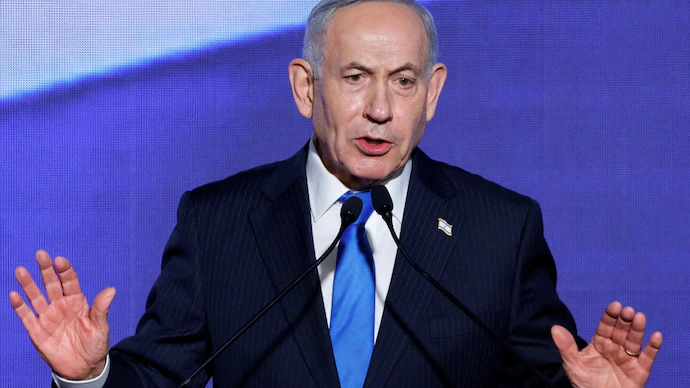
Israeli Prime Minister Benjamin Netanyahu is facing criticism from economists, political rivals and the Bank of Israel after suggesting that Cryptocurrency and blockchain technology could help the country bypass potential international sanctions. His proposal has sparked concerns about Israel’s economic future, foreign investment and its relationships with major trading partners.
In an interview with Israel’s Channel 10 on Friday, Netanyahu said his government was preparing for a scenario in which broader sanctions could be imposed on Israel, including restrictions affecting banks. He suggested that alternative financial systems could help the country maintain economic activity if conventional banking channels came under pressure.
The comments come amid growing diplomatic tensions over Israel’s settlement policy in the occupied West Bank. Britain, France and Canada said last month they would block imports from Israeli settlements, adding to a series of measures that have highlighted Israel’s increasingly strained relations with some traditional allies.
Netanyahu’s remarks have prompted a rare public response from the Bank of Israel, which warned that cryptocurrencies cannot provide a reliable route around sanctions. More than 100 economists, including former central bank officials and Nobel laureates, have also criticised the proposal, warning that economic isolation could damage living standards, investment and national security.
Netanyahu suggests cryptocurrency as a way to bypass sanctions
Netanyahu said Israel needed to prepare for the possibility of international sanctions targeting its economy and financial institutions. During the Channel 10 interview, he argued that the country might need to develop alternative ways of conducting economic transactions if conventional banking channels were restricted.
“There could be sanctions, and sanctions on banks so you need to set up a bypass economy,” Netanyahu said. “You know, there are currencies that can bypass (sanctions). We are also working on that.”
When asked whether he was referring to cryptocurrency, the prime minister replied, “Very true, very true,” and also pointed to blockchain technology as a possible option.
Cryptocurrencies are digital assets that can be transferred through blockchain-based networks. Unlike conventional bank transfers, some cryptocurrency transactions can take place without the same intermediaries involved in traditional financial systems. However, this does not mean digital currencies automatically eliminate exposure to international sanctions or restrictions.
Netanyahu’s proposal appears to reflect an effort to prepare for a potential disruption to Israel’s conventional financial relationships. The supplied report does not provide details of a specific cryptocurrency system, implementation plan, proposed digital currency or timeline for establishing the suggested alternative economy.
The distinction is important because discussing a possible financial mechanism is not the same as demonstrating that it could maintain international trade, investment and banking operations under comprehensive sanctions.
Bank of Israel warns against relying on cryptocurrency
The Bank of Israel issued a rare rebuke of Netanyahu’s proposal, arguing that cryptocurrencies cannot serve as a route to bypass sanctions. The central bank said the government’s priority should be to prevent sanctions from being imposed rather than rely on alternative financial arrangements after restrictions take effect.
“The right course for Israel’s economy is to preserve our economic relations with our main trading partners, and to focus on preventing sanctions and their negative impact on the economy,” the central bank said.
The response highlights a fundamental difference between the government’s proposed contingency and the central bank’s stated approach. Netanyahu raised the possibility of alternative financial systems if restrictions were imposed, while the Bank of Israel emphasised maintaining international economic relationships and avoiding sanctions in the first place.
International sanctions can affect more than access to ordinary bank transfers. Depending on their scope, they can restrict trade, investment, financial services and dealings with particular institutions or entities. A digital payment mechanism would not necessarily remove those broader restrictions.
Cryptocurrency transactions can also involve regulated exchanges, identifiable counterparties and services subject to legal requirements. Blockchain records may be publicly traceable, while businesses and financial institutions can face legal and commercial risks when dealing with sanctioned parties.
The Bank of Israel’s statement did not, in the supplied account, outline a technical assessment of a specific proposed cryptocurrency system. Its central message was that preserving economic relationships with major trading partners should take precedence over developing a mechanism intended to work around sanctions.
More than 100 economists warn of economic consequences
Netanyahu’s proposal drew further criticism on Sunday, when more than 100 economists signed a letter expressing alarm about the potential consequences of the approach. The signatories included former Bank of Israel officials, former central bank governor Jacob Frenkel and several Nobel laureates.
The economists warned that international economic isolation could lead to higher unemployment, reduced foreign investment and a deterioration in Israel’s position in the Global Economy.
The letter cited countries including South Africa, Iran and Russia as examples of states that have experienced sanctions or similar restrictions. It argued that an Israeli economy facing comparable pressures could see living standards fall sharply and encounter greater difficulty financing its security needs.
“As we have seen in countries that have suffered similar sanctions, such as South Africa, Iran, and Russia, the living standards of Israeli citizens would plummet dramatically, and the state’s ability to finance its security and defend itself against its enemies would be severely damaged,” the letter stated.
The signatories also questioned whether cryptocurrency could provide a meaningful solution to the economic risks they described. They accused Netanyahu of leading Israel towards boycott and international economic isolation while offering what they characterised as an inadequate response to the potential consequences.
The letter represents the signatories’ assessment of the risks associated with Netanyahu’s approach. The supplied report does not quantify the possible effect of hypothetical sanctions on Israel’s gross domestic product, employment, investment or public finances.
Nevertheless, the criticism underscores concerns that the consequences of broad sanctions could extend beyond financial transactions to affect businesses, workers, households and the government’s ability to fund public services and security requirements.
Why potential sanctions matter for Israel’s economy
International economic relationships are important to a country’s ability to trade goods, attract investment and maintain access to financial services. Restrictions imposed by major trading partners can create uncertainty for businesses and investors, particularly when they affect banking, imports or commercial relationships.
If sanctions were expanded to cover additional sectors or financial institutions, Israeli companies could face greater difficulties conducting cross-border transactions. Businesses might also have to reassess suppliers, customers, investment decisions and the legal risks associated with operating internationally.
Foreign investors could become more cautious if they believed sanctions might limit access to markets or create uncertainty around future returns. Depending on the measures adopted, the resulting pressures could affect employment, business expansion and the availability or cost of certain goods and services.
These are potential consequences rather than confirmed outcomes of the proposal. The supplied report does not establish that comprehensive sanctions have been imposed on Israel or that the specific economic effects described by the economists have already occurred.
The controversy instead centres on how Israel should prepare for the possibility of further restrictions. Netanyahu has raised alternative financial channels as a contingency, while the Bank of Israel and the economists who signed the letter have emphasised the risks of economic isolation and the importance of preserving international relationships.
West Bank settlement policy adds to diplomatic pressure
The debate over sanctions comes amid international criticism of Israel’s settlement policy in the occupied West Bank. Britain, France and Canada said last month that they would block imports from Israeli settlements, according to the supplied report.
The announcement marked another development in relations between Israel and some of its traditional allies. It also formed part of the diplomatic backdrop to Netanyahu’s warning that broader sanctions, including restrictions on banks, could become a possibility.
Measures targeting settlement-related trade and broader sanctions affecting a country’s financial system are not necessarily the same. Their scope, legal basis and economic effects can differ substantially. The report does not indicate that the three countries’ announcement amounted to a comprehensive sanctions regime against Israel’s entire economy.
However, the prospect of additional restrictions has intensified the debate over how Israel should protect its economic interests while managing diplomatic disagreements with partner countries.
The issue also highlights the relationship between foreign policy and economic stability. Decisions concerning trade, diplomacy and international cooperation can have consequences for businesses and financial markets when they affect access to overseas customers, investors or institutions.
Political rivals attack Netanyahu’s cryptocurrency proposal
The proposal has become a point of contention in Israel’s election campaign, with political rivals questioning whether a cryptocurrency-based approach could protect the country from the economic consequences of sanctions.
Gadi Eisenkot, identified in the report as Netanyahu’s main rival in the election scheduled for Tuesday, described the proposal as “madness”. He warned that what he called the “BibiCoin policy” could encourage companies to move abroad and undermine national security.
Eisenkot’s criticism centres on the possibility that businesses could lose confidence in Israel’s economic outlook if the government appeared to be preparing for prolonged international isolation. Companies considering where to invest or locate operations may take account of access to international markets, financial services and stable commercial relationships.
Opposition leader Yair Lapid also attacked Netanyahu’s remarks. Lapid said the prime minister had “gone off the rails” and warned voters about the possibility of severe economic hardship if Israel faced the type of restrictions associated with countries such as Russia and Iran.
Lapid’s comments were part of the opposition’s political response to the proposal. The supplied report does not provide an independent assessment of the likelihood of the specific shortages or living conditions he described.
The competing statements reflect a wider disagreement over how the government should respond to the risk of economic pressure from abroad. Netanyahu has emphasised contingency planning, while his opponents argue that the proposal could increase concerns about Israel’s economic direction.
Netanyahu continues to defend his record ahead of the election
Netanyahu continued to defend his record on Sunday, urging voters to support him in the election. He also said he and US President Donald Trump had two years left to work together to topple Iran’s rulers.
The remarks placed the prime minister’s economic and diplomatic arguments within a broader discussion of Israel’s security and foreign policy. His comments about Iran and his proposed response to possible sanctions come as the country faces international criticism over its settlement policy.
Netanyahu’s appeal to voters also comes amid polling that points to a possible political stalemate. According to the supplied report, opinion polls suggested that neither his ruling coalition nor an opposition alliance would secure a governing majority in parliament.
The polling points to uncertainty over the composition of the next government, rather than establishing a definitive election outcome. The report does not provide individual poll figures, sample sizes or a detailed breakdown of projected parliamentary seats.
Economic policy has become one element of the election debate, with Netanyahu’s critics questioning whether his proposed approach to potential sanctions would protect Israel’s financial stability. The prime minister’s comments have also prompted public criticism from the central bank, an institution whose stated position focuses on maintaining international economic relationships and preventing sanctions.
Can cryptocurrency protect a country from international sanctions?
Cryptocurrency can provide alternative ways to transfer digital assets, but its use does not automatically remove the legal, commercial or operational consequences of sanctions.
Traditional banking restrictions may be only one part of a sanctions regime. Depending on the measures imposed, governments can also restrict trade, investment, dealings with designated entities and access to services. Businesses and individuals operating in international markets may still face legal obligations and compliance risks when handling transactions involving sanctioned parties.
Cryptocurrency markets also depend on infrastructure that can include exchanges, payment providers, custodians and other intermediaries. Some of these services operate under regulatory requirements, while counterparties may refuse transactions they consider legally risky.
Blockchain technology can record transactions in ways that allow them to be traced and analysed. As a result, digital assets should not automatically be regarded as invisible or beyond the reach of enforcement authorities.
The feasibility of any proposed alternative financial system would depend on its design, the sanctions involved, the countries and businesses willing to participate, and the legal obligations applicable to those participants. The supplied report does not contain enough technical detail to assess Netanyahu’s proposed approach against those factors.
The Bank of Israel’s response reflects this distinction between the possibility of using alternative payment technologies and the broader challenge of maintaining an economy under international restrictions. Its stated priority is to preserve economic relations with major trading partners and prevent sanctions from harming the economy.
What happens next?
The immediate political focus is Israel’s election, with Netanyahu facing criticism from economists, political rivals and the Bank of Israel over his comments about cryptocurrency and potential sanctions.
The proposal has raised questions about whether digital financial systems could play a meaningful role in contingency planning and whether discussing such measures could affect international confidence in Israel’s economy. The available report does not establish that a specific cryptocurrency-based bypass system has been implemented or that comprehensive sanctions against Israel are imminent.
The economic debate is likely to remain tied to Israel’s diplomatic relationships, its settlement policy and the government’s approach to international criticism. For businesses and investors, the scope of any future restrictions and the country’s ability to maintain reliable access to international markets would be important considerations.
Netanyahu’s proposal has therefore opened a debate that extends beyond cryptocurrency itself. It concerns how Israel should respond to the possibility of economic isolation, what role digital assets might realistically play in financial transactions, and whether preserving relationships with major trading partners offers a more effective way to protect economic stability.
For now, the Bank of Israel and the economists who signed the letter have made their concerns clear: cryptocurrency should not be treated as a substitute for maintaining international economic relationships. The election and any subsequent policy decisions will determine how the government addresses the risks raised by the controversy.
For breaking news and live news updates, like us on Facebook or follow us on Twitter and Instagram. Read more on Latest World on thefoxdaily.com.






COMMENTS 0