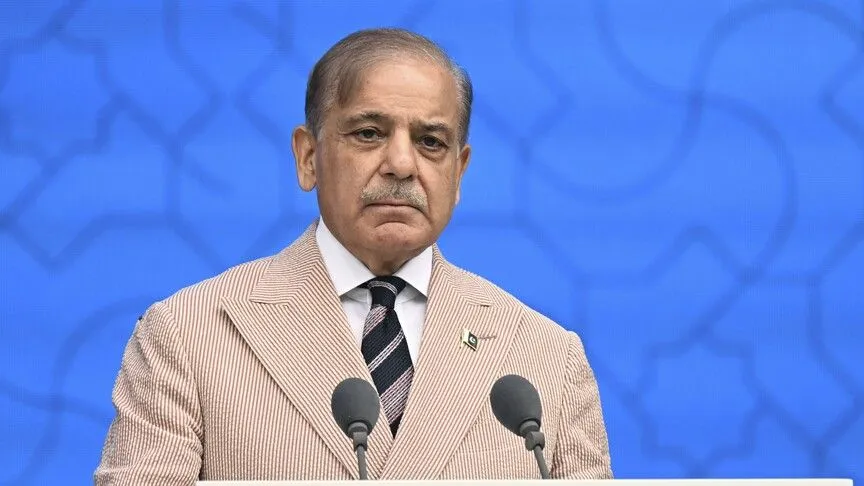
Pakistan Prime Minister Shehbaz Sharif on Wednesday said his government was making every effort to promote peace and stability in West Asia despite the continuing challenges facing the region. He reiterated Islamabad’s commitment to diplomatic engagement and regional cooperation while addressing a meeting of the federal cabinet.
Sharif said Pakistan was continuing to play a role in efforts to restore peace and reduce tensions across the region. His remarks came as Islamabad maintained diplomatic contacts with Iran and other regional countries amid efforts to prevent further escalation.
During the cabinet meeting, the prime minister also discussed domestic security challenges, the government’s campaign against militancy and measures to manage the economic impact of rising oil prices.
Pakistan Reiterates Role in West Asia Peace Efforts
Addressing the federal cabinet, Sharif said Pakistan remained committed to supporting diplomatic initiatives aimed at restoring stability in West Asia.
“Pakistan is playing its role as before in restoring peace in the region,” Sharif said.
The prime minister referred to Pakistan’s recent diplomatic engagements with Iran and other countries in the region, describing them as part of Islamabad’s broader efforts to reduce tensions and encourage cooperation.
Pakistan has sought to maintain communication with regional governments as tensions continue to present challenges for security and stability. Sharif’s remarks indicated that Islamabad intends to remain involved in diplomatic efforts rather than limit its engagement to bilateral discussions.
Pakistani Delegation Visits Tehran Twice
Sharif disclosed that a Pakistani delegation had visited Tehran twice during the preceding two to three weeks. According to the prime minister, the discussions focused on reducing regional tensions as well as promoting stronger cooperation among countries in the region.
The visits underline the importance Islamabad has attached to maintaining direct diplomatic communication with Iran. Pakistan has also been involved in efforts to facilitate discussions between Tehran and Washington.
Sharif did not provide further details about the specific outcomes of the two visits. However, he indicated that the diplomatic engagement was intended to address wider regional concerns rather than focus exclusively on immediate tensions between individual countries.
Pakistan’s Mediation Efforts Between the US and Iran
Pakistan has played a mediating role between the United States and Iran, seeking to support efforts to halt hostilities and establish a framework for negotiations.
In June, Islamabad helped broker a Memorandum of Understanding between Washington and Tehran. The Islamabad Memorandum of Understanding was intended to stop hostilities and provide a basis for negotiations towards a broader settlement.
However, the diplomatic process subsequently stalled amid renewed tensions between the two sides. The 60-day framework envisaged under the memorandum expired without a final agreement.
The absence of a concluded agreement has left the broader diplomatic process unresolved. Pakistan’s continued engagement with Iran and other regional countries suggests that Islamabad is seeking opportunities to revive dialogue and prevent further deterioration in relations.
Sharif’s latest comments also reflect the importance Pakistan places on its diplomatic relationships across West Asia, particularly as regional instability carries potential security and economic consequences.
Makkah Joint Defence Agreement Involves Pakistan, Saudi Arabia and Turkiye
Sharif also referred to Pakistan’s role under the Makkah Joint Defence Agreement, signed by Pakistan, Saudi Arabia and Turkiye in August.
The agreement contains a collective defence provision under which an armed attack against any one of the three countries would be regarded as an attack against all three.
The arrangement represents an important element of the countries’ security cooperation. Sharif mentioned the agreement while discussing Pakistan’s wider regional engagements and its efforts to promote stability.
Alongside diplomatic contacts with Iran, the agreement highlights Islamabad’s engagement with other regional partners on security-related matters.
Sharif Announces Proposed Rs 160 Billion Package for Khyber Pakhtunkhwa
Beyond foreign policy, the prime minister used the cabinet meeting to reiterate his government’s commitment to eliminating militancy and strengthening security in Pakistan.
Sharif said the government had finalised a proposed package worth Rs 160 billion for Khyber Pakhtunkhwa. The package is focused on development, public welfare and strengthening security and counter-terrorism capabilities in the province.
The proposed financial support is intended to address multiple challenges facing the region, including development needs and the continuing threat of militancy.
Sharif emphasised that eliminating terrorism would require coordinated action involving the armed forces, provincial administration and federal government.
Khyber Pakhtunkhwa Under Governor’s Rule Since October
Khyber Pakhtunkhwa has been under governor’s rule and a state of emergency since October, following the suspension of the provincial government led by Pakistan Tehreek-e-Insaf (PTI).
President Asif Ali Zardari suspended the provincial government amid concerns about worsening militancy and governance. PTI is the party of jailed former prime minister Imran Khan.
The political and security situation in the province has made counter-terrorism efforts a major priority for the federal government.
Sharif reiterated that the government would pursue a coordinated approach to eliminating terrorism from Khyber Pakhtunkhwa. He highlighted the need for cooperation between federal authorities, provincial officials and the armed forces to strengthen security and address militancy.
Rising Oil Prices Add to Pakistan’s Economic Challenges
The federal cabinet meeting also addressed the impact of rising oil prices, another concern for the Pakistani government as it manages domestic economic pressures.
Higher oil prices can create challenges for countries that depend on imported energy, affecting fuel costs and placing pressure on wider economic activity. Sharif referred to the issue while discussing the government’s efforts to manage the consequences of developments affecting the country.
Although the prime minister discussed measures to mitigate the impact of rising prices, no specific details of additional fuel subsidies or other new economic measures were provided in his remarks.
Islamabad Balances Regional Diplomacy and Domestic Security
Sharif’s statements highlight two major priorities for his government: supporting diplomatic efforts to reduce tensions in West Asia and addressing Pakistan’s domestic security challenges.
On the diplomatic front, Pakistan is maintaining contacts with Iran and other regional countries while seeking to support dialogue between Tehran and Washington. The earlier Islamabad memorandum, however, has not produced a final agreement, leaving the mediation process without a concluded settlement.
At home, the proposed Rs 160 billion package for Khyber Pakhtunkhwa reflects the government’s focus on development, public welfare and counter-terrorism measures. The province remains a central concern amid continuing security and governance challenges.
Sharif’s remarks at the federal cabinet meeting indicate that Islamabad intends to continue its regional diplomatic engagement while strengthening domestic efforts against militancy and managing the economic pressures associated with rising oil prices.
For breaking news and live news updates, like us on Facebook or follow us on Twitter and Instagram. Read more on Latest World on thefoxdaily.com.





COMMENTS 0