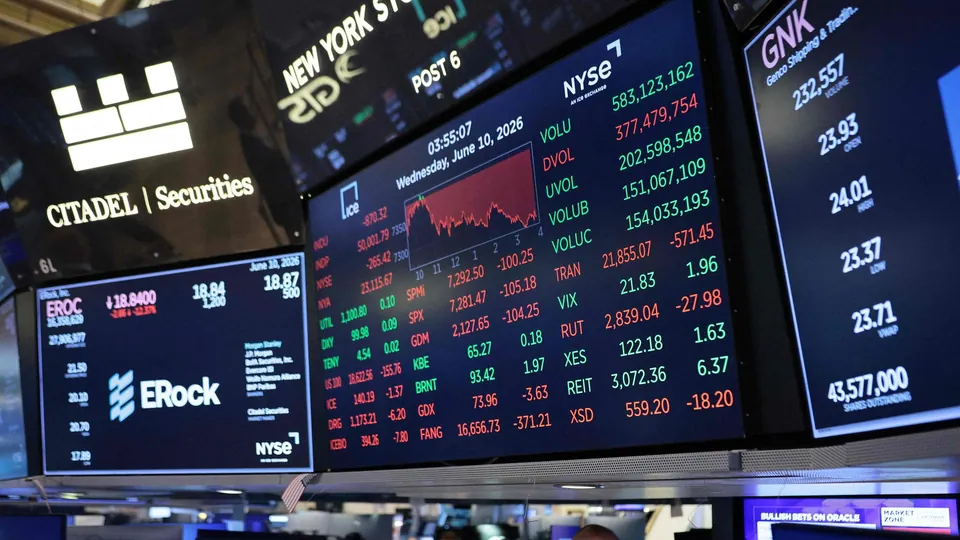
Apple, Nvidia and other major US technology stocks are weighing on the S&P 500 as investors grow increasingly concerned about whether heavy artificial intelligence (AI) investments will generate sufficient returns. Weakness among the largest companies in the benchmark is limiting broader market gains, while rising oil prices, geopolitical tensions and uncertainty ahead of the US midterm elections are adding to investor caution.
The 10 largest stocks in the S&P 500 have started to underperform the rest of the index again, according to RBC Capital Markets strategist Lori Calvasina. Because these companies account for a substantial share of the benchmark’s market value, their share-price movements can have an outsized influence on the index’s overall performance.
The shift highlights a growing challenge for investors who have relied on large technology and AI-related companies to drive market gains. Although these businesses remain central to the AI investment boom, questions about spending, cash flow and future profitability are increasingly influencing their valuations.
Why Apple, Nvidia and Other Megacap Stocks Are Under Pressure
The 10 largest stocks identified in the report include Apple, Nvidia, Amazon, Broadcom, Alphabet’s two share classes, Micron, Meta, Microsoft and Tesla. Together, these companies represent a significant portion of the S&P 500, making their performance particularly important to the wider US stock market.
When heavily weighted companies decline, the effect can outweigh gains recorded by smaller businesses in the same index. This means the S&P 500 can struggle to advance even when a broader group of stocks performs relatively well.
RBC’s Calvasina highlighted the renewed underperformance of the largest constituents in a recent research note. The trend suggests that the market’s previous concentration of gains among megacap companies is facing renewed pressure.
The weakness also reflects changing investor expectations. Market participants are reassessing how much they are willing to pay for companies whose future growth depends partly on the successful commercialisation of AI technologies and infrastructure.
AI Spending Concerns Weigh on Technology Shares
A central concern is the time it may take for investments in artificial intelligence to translate into sustainable revenue and profits. Technology companies are committing substantial resources to data centres, computing capacity, chips and other infrastructure needed to develop and deploy AI systems.
These investments may support future growth, but they also require significant spending before the full financial benefits become clear. Investors are increasingly scrutinising whether anticipated returns will justify the cost and whether companies can maintain healthy cash flows while expanding their AI capabilities.
According to reporting by Yahoo Finance, doubts about the timing and scale of returns have contributed to selling pressure across several major technology stocks. The concern is not necessarily that AI demand will disappear, but that the financial benefits may take longer to materialise than investors previously expected.
This distinction matters for company valuations. Share prices often reflect expectations about future earnings rather than just current results. If investors become less confident about projected growth or profitability, valuations can come under pressure even when a company continues to invest heavily in its business.
Nvidia and Tesla Retreat From Record Highs
Nvidia and Tesla have experienced significant declines from their respective record highs, illustrating how market sentiment has shifted towards some of the most closely watched technology and growth stocks.
Nvidia, a major supplier of AI computing chips, has fallen approximately 13% from its all-time high, according to the supplied report. Tesla has declined around 26% from its peak.
Nvidia has been a central beneficiary of demand for AI infrastructure, as businesses invest in the computing power required to train and operate advanced AI models. Its share price is therefore closely linked to expectations about continued spending by technology companies and the long-term growth of the AI market.
However, sustained investment in AI infrastructure does not automatically guarantee that every company involved will deliver returns at the level investors anticipate. Questions about future demand, competition, capital expenditure and customer spending can influence market expectations even for major suppliers.
Tesla’s decline adds to the broader weakness among prominent growth stocks. While its business differs from Nvidia’s, its valuation has also been sensitive to investor expectations about future growth and technological opportunities.
The reported declines are measured from previous peaks and do not, by themselves, establish the direction of either stock over a longer period. They nevertheless show the scale of the recent pullback from record levels.
Amazon and Alphabet Also See Double-Digit Declines
The pressure extends beyond Nvidia and Tesla. Amazon and Alphabet have also recorded double-digit declines from their respective highs, according to Yahoo Finance.
Amazon operates across e-commerce, cloud computing and digital services, while Alphabet’s businesses include Google’s search and advertising operations, cloud services and AI development. Both companies have substantial exposure to the technology sector, although their revenue sources and investment priorities differ.
Their share-price weakness reinforces the point that the current pressure is not confined to one company or one segment of the AI market. Investors are reassessing a range of major technology businesses as they weigh expected growth against spending requirements, competitive pressures and broader economic uncertainty.
For the S&P 500, simultaneous declines among several large constituents can be especially consequential. Even if other sectors remain resilient, the market-weighted influence of these companies can limit the index’s ability to advance.
Meta and SpaceX Raise Questions About AI Infrastructure Spending
Concerns about AI spending have also intensified following earnings reports from Meta and SpaceX, according to the supplied report. Both companies reported negative free cash flow and outlined aggressive investment plans related to artificial intelligence, adding to investor questions about the financial burden of expanding AI infrastructure.
Free cash flow generally refers to the cash a business generates after accounting for operating expenses and capital expenditure. Negative free cash flow means that, over the relevant reporting period, the company’s cash outflows exceeded the cash generated after those costs were accounted for.
Negative free cash flow is not automatically a sign of financial distress. A company may deliberately spend heavily on infrastructure or expansion in anticipation of future revenue. However, investors typically want evidence that such spending can eventually support profitable growth and that the company has sufficient resources to finance its plans.
For companies pursuing AI strategies, the balance between investment and financial returns has become increasingly important. Building computing infrastructure can require substantial upfront expenditure, while the revenue generated from new AI products and services may develop over time.
If spending continues to rise faster than cash generation, investors may become more cautious about valuations and future earnings expectations. That concern can affect not only companies making direct AI investments but also suppliers and other businesses whose growth depends on continued spending across the technology industry.
RBC Strategist Maintains a Cautious Technology Outlook
RBC strategist Lori Calvasina remains cautious about the technology sector. According to the report, she moved the sector to a Market Weight rating earlier in October and has continued to stay on the sidelines.
A Market Weight rating generally indicates an expectation that a sector will perform broadly in line with the wider market, rather than substantially outperform it. It is not necessarily a forecast that technology stocks will fall, but it reflects a less aggressive view of their potential relative performance.
Calvasina’s position comes as investors reassess the relationship between AI-related growth expectations and the costs required to achieve them. Technology companies may continue to play an important role in the economy, but their share prices can remain vulnerable if investors conclude that valuations have moved ahead of the likely financial returns.
The renewed underperformance of the largest stocks also raises questions about the concentration of market gains. When a relatively small number of companies drive much of an index’s advance, weakness among those leaders can have an outsized effect on headline market performance.
US Midterm Elections Add Another Layer of Market Uncertainty
Investors are also becoming more cautious ahead of the US midterm elections scheduled for November 3. According to Yahoo Finance, some institutional investors are reducing portfolio risk rather than continuing to buy stocks trading near record levels.
Election periods can introduce uncertainty about future economic policy, regulation and government priorities. For technology companies, potential changes in AI oversight have become an additional consideration as policymakers debate the opportunities and risks associated with rapidly developing technologies.
HSBC strategist Max Kettner said in a Monday note that changing market narratives had reduced the firm’s confidence in its previously strong preference for stocks over sovereign bonds. HSBC had maintained its strongest preference for equities over sovereign debt since mid-March, but Kettner indicated that the accumulation of uncertainties had prompted a more cautious assessment.
Kettner also highlighted the possibility that a strong Democratic performance in the midterm elections, sometimes described as a “Blue Wave”, could raise investor concerns about tighter AI regulation. Such a political outcome would not automatically determine the content of future rules, but uncertainty about potential regulatory changes can affect expectations for technology companies.
Investors may therefore be weighing not only the cost of AI development but also the regulatory environment in which companies will operate. The eventual effects would depend on the election results, subsequent policy decisions and the details of any proposed legislation or regulations.
Rising Oil Prices and Middle East Tensions Add to Investor Caution
Higher oil prices are adding another source of uncertainty for the stock market. Energy costs can influence inflation expectations, household spending and business expenses, while sharp price movements can complicate the outlook for monetary policy and corporate earnings.
Geopolitical tensions in the Middle East are also part of the risk assessment highlighted by HSBC’s Kettner. Developments in the region can affect energy markets and broader investor sentiment, particularly when they raise concerns about supply disruptions or a wider escalation.
These risks are unfolding alongside questions about AI investment returns and the approaching US elections. When several uncertainties converge, investors may become less willing to take large positions in shares that have already experienced substantial gains.
The shift towards caution does not necessarily mean investors expect a broad market decline. It may instead reflect a desire to wait for clearer information about corporate earnings, policy developments, energy prices and the financial returns from AI investments.
Why Weak Megacap Stocks Matter for the S&P 500
The S&P 500 tracks a broad group of large US-listed companies, but its market-capitalisation-weighted structure means that larger companies have more influence over its movements than smaller constituents.
As a result, weakness among Apple, Nvidia and other megacap stocks can drag on the index even when many other companies are performing better. The current underperformance of the largest stocks is therefore an important factor in understanding why the broader benchmark is struggling to maintain upward momentum.
There are two broad ways this pressure could ease: the largest companies could recover, or gains among other S&P 500 constituents could become strong enough to offset their weakness. Neither outcome is guaranteed, and the balance will depend on earnings, investor expectations and wider market conditions.
Investors will also be watching whether AI spending begins to produce financial returns that justify the scale of current investment. Stronger evidence of revenue growth, improved cash generation and sustainable profitability could help restore confidence. Conversely, further increases in expenditure without a corresponding improvement in returns could keep valuations under pressure.
What Investors Are Watching Next
The immediate outlook for US equities depends on several interconnected factors: the financial performance of major technology companies, the pace of AI infrastructure spending, oil prices, geopolitical developments and the policy uncertainty surrounding the midterm elections.
RBC’s cautious stance on technology and HSBC’s reduced confidence in its previous equity preference illustrate how investment assessments are evolving as these risks accumulate. They do not establish a uniform view across all investors, but they indicate that some strategists are becoming more selective about their exposure to stocks.
For the S&P 500, the performance of its largest constituents will remain particularly important because of their significant index weights. If megacap weakness persists, it could continue to limit broader gains even if other areas of the market remain resilient.
The key question is whether investors will regain confidence that AI spending can translate into durable profits, while broader political and economic uncertainties become clearer. Until there is greater confidence in those factors, the largest technology stocks may remain a source of pressure on the wider US market.
For breaking news and live news updates, like us on Facebook or follow us on Twitter and Instagram. Read more on Latest World on thefoxdaily.com.






COMMENTS 0