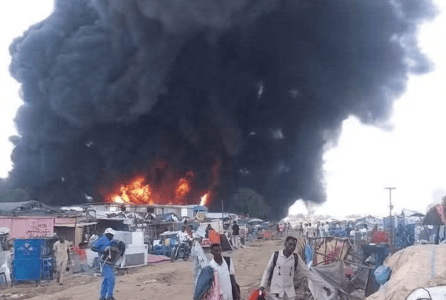
A deadly drone strike hit Amiet market near the disputed Abyei region on the Sudan-South Sudan border, killing at least 150 people and causing extensive damage to property, according to local officials. The attack sparked fires at the bustling market, turning a busy commercial area into a scene of destruction and adding to growing concerns over the escalating violence in the region.
The strike took place on Monday at Amiet market, north of Abyei town. An Abyei government minister and South Sudan’s foreign ministry blamed Sudan’s military for the attack. The allegations come amid a series of deadly aerial assaults in Sudan, where the conflict has increasingly threatened civilians, markets and other populated areas.
The reported death toll makes the attack particularly alarming, although further independently verified details about the victims, the circumstances of the strike and the full extent of the damage were not available in the initial account.
The attack was also the latest in a wave of deadly drone strikes reported across Sudan. On Sunday, a separate drone attack killed 80 people near a market in West Kordofan state, highlighting the dangers facing civilians in areas affected by the continuing conflict.
What Happened at Amiet Market?
Amiet market is located north of Abyei town, in an area affected by the longstanding dispute between Sudan and South Sudan. According to local officials, a drone strike hit the market on Monday, killing at least 150 people and damaging property across the commercial area.
The market was described as bustling before the attack. Such markets are important gathering places where traders, customers and local residents come together to buy and sell goods and conduct everyday business. An attack on a crowded marketplace can therefore have consequences extending well beyond the immediate physical damage.
Images described in reports of the incident showed the market engulfed in flames after the strike. The destruction raised immediate concerns about the safety of civilians who may have been shopping, working or travelling through the area when the attack occurred.
Local officials reported at least 150 deaths. The initial account did not provide a complete breakdown of the casualties or establish how many people were injured. The final toll may require further confirmation as more information becomes available.
The extent of the property damage was also described as extensive. However, detailed information about the number of stalls, buildings or vehicles damaged was not immediately available.
Abyei Officials Blame Sudan’s Military
An Abyei government minister blamed Sudan’s military for the drone strike, according to the report. South Sudan’s foreign ministry also attributed responsibility for the attack to Sudan’s military.
The allegations place the incident within the wider context of the conflict affecting Sudan and the fragile security environment around the disputed Abyei region. However, the initial account did not include a response from Sudan’s military or independently verified evidence establishing responsibility for the strike.
Attribution is particularly important in conflicts involving drone warfare, where attacks may occur far from the operators and where the available evidence can be incomplete. The statements by local and South Sudanese officials establish who they blame, but further independent verification would be needed to confirm the circumstances and responsibility conclusively.
The reported scale of the casualties has intensified concerns about the consequences of aerial attacks in populated areas. When markets and other civilian gathering places are struck, the resulting destruction can disrupt livelihoods, damage essential commercial infrastructure and leave families struggling to meet basic needs.
Another Deadly Drone Strike Killed 80 Near a Market
The attack on Amiet market followed another deadly drone strike on Sunday in West Kordofan state, where 80 people were reportedly killed near a market.
The two incidents, occurring on consecutive days, highlight the scale of the danger facing civilians in areas affected by Sudan’s continuing conflict. Markets are particularly vulnerable because they can attract large numbers of people within relatively small areas, especially during busy trading periods.
The reported attacks also underline how drone strikes can produce devastating consequences when they occur near civilian populations. Beyond deaths and injuries, such incidents can destroy trading spaces, interrupt local supply networks and undermine the economic activity on which communities depend.
The available information does not establish whether the two attacks were connected, whether they involved the same military operation or whether they had identical targets. They should therefore be treated as separate incidents unless further evidence establishes a direct link.
Why the Abyei Region Matters
Abyei is a disputed region along the border between Sudan and South Sudan. Its status has remained unresolved amid wider political and security challenges affecting the two countries.
The region’s contested status has contributed to a complicated security environment, making developments there particularly sensitive. Violence near Abyei can raise concerns not only about immediate civilian safety but also about the potential for further instability in the surrounding border areas.
Amiet market’s location north of Abyei town makes the reported attack significant for communities that rely on local trading centres for goods and economic activity. Markets can serve as important links between residents, farmers, traders and transport networks, particularly in areas where access to services and commercial infrastructure is limited.
Damage to a major market can therefore have effects that continue long after the flames are extinguished. Traders may lose their stock and income, customers may struggle to obtain essential supplies, and families may face increased financial pressure as local commerce is disrupted.
The immediate consequences of the reported strike are severe, given the number of people said to have been killed. The longer-term impact will depend on the extent of the damage, the availability of assistance and whether further attacks threaten the surrounding communities.
Growing Concerns Over Drone Warfare in Sudan
The reported attack on Amiet market adds to concerns about the use of drones in Sudan’s conflict. Drone strikes can be launched against targets from a distance, but their effects on the ground depend heavily on the location, the weapon used and the circumstances of the attack.
When strikes take place in or near populated areas, civilians can face serious risks. Busy marketplaces, transport routes and other public spaces may contain large numbers of people who have no role in the fighting.
The two market-related incidents reported over the weekend and Monday illustrate the potential human cost of aerial violence in civilian environments. At least 150 people were reported killed in the Amiet market strike, while another 80 people were reported killed near a market in West Kordofan the previous day.
These reported figures point to a devastating toll, although the available information does not provide a comprehensive assessment of all drone attacks during the period or establish the total number of casualties from air assaults across Sudan.
Determining responsibility for individual strikes, identifying the intended targets and establishing the circumstances of civilian deaths are essential to understanding such incidents. Independent verification is also important where conflicting parties or officials make competing claims about responsibility.
Impact on Civilians and Local Livelihoods
The reported destruction at Amiet market threatens more than the immediate safety of those who were present during the strike. Markets provide a source of income for traders and small businesses while helping communities obtain food and other everyday necessities.
When a market is damaged or forced to close, the effects can spread across the local economy. Vendors may lose goods and equipment, workers may lose their daily earnings, and customers may have to travel farther to find supplies.
The reported death toll also raises concerns about the families and communities affected by the attack. The initial account did not provide details about the identities of those killed or the number of households affected, leaving the full human consequences unclear.
In areas already affected by conflict, the destruction of commercial infrastructure can make recovery more difficult. Communities may have limited resources to rebuild stalls, replace damaged property or restore access to goods and services.
The immediate priority following such an attack is generally to establish the scale of casualties, support injured people and assess the damage. The available report, however, did not provide detailed information about emergency response efforts or the availability of medical and humanitarian assistance in the area.
What Is Known About the Attack So Far?
The initial information establishes several key details about the reported strike, while important questions remain unanswered.
- Location: Amiet market, north of Abyei town, near the disputed Sudan-South Sudan border.
- Date: Monday, October 19, according to the report’s reference to the Monday attack in the current news cycle.
- Reported casualties: At least 150 people were killed, according to local officials.
- Damage: The attack caused extensive property damage, and the market was reported to be engulfed in flames.
- Responsibility alleged: An Abyei government minister and South Sudan’s foreign ministry blamed Sudan’s military.
- Related incident: A separate drone strike killed 80 people near a market in West Kordofan state on Sunday.
- Unconfirmed details: The precise circumstances of the strike, the full casualty figures, the identities of the victims and independent confirmation of responsibility were not provided in the initial account.
Questions Remain Over Casualties and Responsibility
Although local officials reported at least 150 deaths, further information is needed to establish the final number of casualties and the circumstances in which people were killed. The available account also does not detail the number of injured survivors or the extent of damage to individual market structures.
Responsibility for the attack remains an important question. The Abyei official and South Sudan’s foreign ministry blamed Sudan’s military, but the initial report did not include an independent investigation or a detailed response from the military.
It is also unclear whether the market itself was the intended target or whether the strike was directed at another objective in the vicinity. Without verified information about the target and the circumstances of the attack, it would be premature to draw conclusions about the operation’s purpose.
These unanswered questions do not diminish the seriousness of the reported civilian casualties. They underline the importance of reliable information when assessing attacks in conflict zones, particularly when allegations of responsibility have significant political and security implications.
Deadly Market Strikes Highlight Sudan’s Worsening Civilian Risks
The reported drone strike at Amiet market represents a devastating incident for communities in the Abyei region. With at least 150 people reportedly killed and extensive damage to property, the attack has raised urgent concerns about civilian safety and the consequences of aerial attacks near populated areas.
The incident follows the reported deaths of 80 people near a market in West Kordofan on Sunday, adding to concerns about a succession of deadly air assaults in Sudan.
While local and South Sudanese officials have blamed Sudan’s military for the Amiet strike, independent confirmation of responsibility and further details about the attack remain necessary. The full casualty toll, the condition of survivors and the extent of the market’s destruction also require additional information.
For the communities that depend on Amiet market, the immediate consequences extend beyond the loss of life. Damage to commercial infrastructure can disrupt livelihoods, limit access to essential goods and make recovery more difficult in an already fragile security environment.
As further details emerge, the central questions will concern the circumstances of the strike, the people affected, the response to the casualties and the steps needed to protect civilians from further violence.
For breaking news and live news updates, like us on Facebook or follow us on Twitter and Instagram. Read more on Latest World on thefoxdaily.com.

COMMENTS 0