- The Controversial Remark: When Rhetoric Meets Reality
- Iran’s Response: Turning Words Into a Legal Argument
- What Counts as Piracy? The Legal Grey Zone
- Maritime Flashpoint: Why the Strait of Hormuz Matters
- Economic Impact: Energy Markets on Edge
- War Context: A Broader Conflict at Play
- Global Reaction: Between Concern and Caution
- Comparison: Maritime Disputes in Modern Conflicts
- Strategic Messaging: Why Words Matter in War
- Future Outlook: Escalation or Legal Showdown?
- Conclusion: A Remark That Reshaped the Narrative
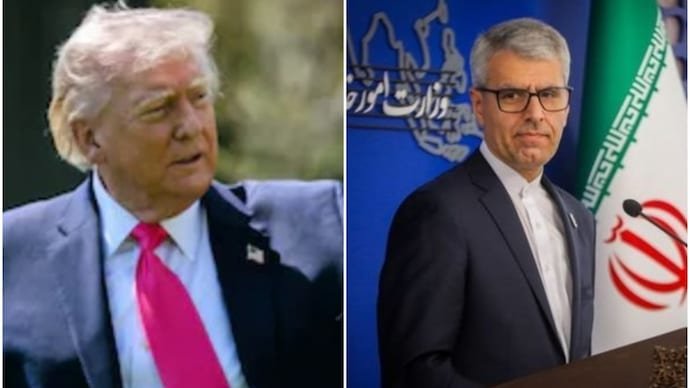
A single remark has ignited a major diplomatic controversy. After US President Donald Trump described American naval actions against Iranian vessels as being “like pirates,” Iran responded with a sharp accusation: that the statement amounts to a direct admission of criminal conduct under international law. Now, Tehran is urging the United Nations to intervene transforming what might have been a rhetorical comment into a high-stakes geopolitical dispute.
Who is involved? Iran, the United States, and the broader international community. What happened? Trump compared US naval seizures of Iranian-linked ships to piracy, prompting Iran to accuse Washington of admitting illegal actions. When? Amid an ongoing conflict that began escalating in late February. Where? Primarily in strategic maritime zones, especially around the Strait of Hormuz. Why? As part of a broader pressure campaign targeting Iran’s economy and military capabilities. How? Through naval blockades, vessel seizures, and public political messaging.
The Controversial Remark: When Rhetoric Meets Reality
The controversy stems from Trump’s unusually candid description of US naval operations. By stating that American forces are “like pirates” while seizing ships, cargo, and oil, he framed these actions in a way that Iran quickly seized upon.
From a political standpoint, such language may have been intended to project strength and confidence. However, in the realm of International Relations, words carry legal and diplomatic weight. Iran’s argument is straightforward: if US actions resemble piracy even metaphorically it raises serious questions about their legality.
This highlights a broader issue in modern Geopolitics: leaders often use bold rhetoric for domestic audiences, but those same words can trigger international consequences.
Iran’s Response: Turning Words Into a Legal Argument
Iran’s foreign ministry did not treat the remark as a casual statement. Instead, it framed it as evidence an “admission” that could be used to challenge US actions on the global stage.
By calling for United Nations intervention, Tehran is attempting to shift the narrative from military confrontation to legal accountability. This strategy serves multiple purposes:
- International Pressure: Bringing the issue to the UN increases diplomatic scrutiny on the United States
- Legitimacy: Framing itself as a defender of international law strengthens Iran’s global position
- Narrative Control: Redirecting attention from military actions to legal violations
In essence, Iran is transforming a battlefield conflict into a courtroom-style argument where perception and interpretation matter as much as facts.
What Counts as Piracy? The Legal Grey Zone
At the heart of the dispute is a complex legal question: what actually constitutes piracy?
Under international law, piracy typically refers to illegal acts of violence or detention carried out on the high seas for private gain. State actions, especially those conducted by naval forces, usually fall under different legal frameworks such as enforcement of Sanctions or wartime measures.
However, the situation becomes complicated when actions blur these lines. Seizing vessels, confiscating cargo, and disrupting trade routes can be interpreted differently depending on context, intent, and legal justification.
This ambiguity creates a “grey zone” where both sides can claim legitimacy making disputes like this difficult to resolve definitively.
Maritime Flashpoint: Why the Strait of Hormuz Matters
The dispute is unfolding in one of the world’s most strategically important waterways: the Strait of Hormuz. This narrow passage handles a significant share of global oil and liquefied natural gas shipments, making it a critical نقطة ضغط in any geopolitical conflict.
Recent developments have turned the strait into a high-risk zone:
- Iran has restricted shipping in response to military pressure
- The United States has imposed a naval blockade targeting Iranian-linked vessels
- Commercial shipping faces increased uncertainty and costs
When tensions rise in this region, the effects are felt globally particularly in energy markets.
Economic Impact: Energy Markets on Edge
The maritime confrontation is not just a military issue it has immediate economic consequences. Disruptions in the Strait of Hormuz directly affect global oil and gas supply chains, leading to price volatility.
Key impacts include:
- Rising Oil Prices: Uncertainty drives up costs worldwide
- Shipping Risks: Higher insurance and operational expenses
- Supply Chain Disruptions: Delays in energy and commodity flows
This means that a dispute over maritime legality can quickly translate into real-world economic pressure on countries far beyond the conflict zone.
War Context: A Broader Conflict at Play
The current maritime tensions cannot be viewed in isolation. They are part of a wider conflict involving Iran, the United States, and Israel, which began with military strikes in late February and has since expanded across multiple fronts.
This broader context matters because it shapes how actions are interpreted. In wartime conditions, measures that might otherwise be considered unlawful can be framed as strategic necessities. Conversely, opponents may view the same actions as violations of international norms.
This duality is at the core of the current dispute.
Global Reaction: Between Concern and Caution
Trump’s remarks have drawn criticism from various quarters, including legal experts and policy analysts who question the implications of such statements. Concerns focus on two main issues:
- Legal Precedent: Whether such rhetoric undermines established international norms
- Escalation Risk: How language can intensify already volatile situations
At the same time, global responses have been measured. Many countries are cautious about taking strong positions, given the complexity of the conflict and their own strategic interests.
Comparison: Maritime Disputes in Modern Conflicts
| Conflict | Type of Maritime Action | Outcome |
|---|---|---|
| US–Iran (Current) | Seizures, blockades | Ongoing dispute, legal ambiguity |
| Gulf Tanker Incidents (2019) | Ship seizures | Temporary escalation, diplomatic resolution |
| Russia–Ukraine (Black Sea) | Naval restrictions | Global supply chain impact |
| Somalia Piracy Crisis | Non-state piracy | International naval cooperation |
This comparison shows that maritime disputes often exist in a legal grey area especially when state actors are involved.
Strategic Messaging: Why Words Matter in War
Trump’s “pirates” remark illustrates how language can shape geopolitical dynamics. In modern conflicts, statements are not مجرد commentary they are strategic tools.
For the United States, strong rhetoric can project power and deterrence. For Iran, the same words can be used to challenge legitimacy and rally international support.
This creates a cycle where communication itself becomes part of the conflict.
Future Outlook: Escalation or Legal Showdown?
The situation could evolve in several directions:
- Diplomatic Escalation: Iran pushes for UN action, increasing international scrutiny
- Status Quo: Maritime tensions continue without formal resolution
- Military Escalation: Further incidents at sea trigger broader conflict
The most likely near-term outcome is continued tension without immediate resolution but the risk of escalation remains significant.
Conclusion: A Remark That Reshaped the Narrative
What began as a striking comment has evolved into a major geopolitical issue. By describing US naval actions as “like pirates,” Donald Trump inadvertently opened the door for Iran to challenge those actions on legal and diplomatic grounds.
The result is a complex standoff where law, strategy, and perception intersect. As Iran pushes for United Nations involvement and the United States maintains its pressure campaign, the outcome will depend not just on actions at sea but on how those actions are interpreted by the world.
In today’s interconnected landscape, even a single phrase can carry global consequences. And in this case, the word “pirates” may prove to be far more than just rhetoric.
For breaking news and live news updates, like us on Facebook or follow us on Twitter and Instagram. Read more on Latest World on thefoxdaily.com.





COMMENTS 0