- Why the Strait of Hormuz Is More Than an Oil Chokepoint
- Why Undersea Cables Are Vulnerable
- The Real Risk: Simultaneous Cable Disruption
- Who Is Most at Risk?
- Lessons from Recent Cable Disruptions
- The Hidden Layer: Data Centers and Cloud Infrastructure
- Comparison: Oil Shock vs Data Shock
- The Strategic Signal: More Than Just a Warning?
- The Bigger Picture: The Rise of Hybrid Warfare
- The Missing Insight: The Ocean Is the New Frontier of Conflict
- Future Outlook: Are We Entering a Data War Era?
- Conclusion: A Silent but Serious Threat
Introduction: The war You Can’t See
For decades, the Strait of Hormuz has been synonymous with Oil Tankers, naval patrols, and geopolitical brinkmanship. But a new warning has shifted attention to a far less visible yet equally critical asset: undersea internet cables.
An Iran-linked report has flagged the growing vulnerability of these submarine cables, suggesting that the next major disruption in the region may not target ships or pipelines but the digital lifelines powering modern economies.
This raises an urgent question: Could the world be heading toward a “data war” beneath the oceans?
As global tensions simmer, the risks to digital Infrastructure once considered neutral and untouchable are becoming impossible to ignore.
Why the Strait of Hormuz Is More Than an Oil Chokepoint
The Strait of Hormuz is one of the most strategically important waterways in the world. A significant portion of Global Oil passes through this narrow corridor.
But what is less widely understood is its role as a digital chokepoint.
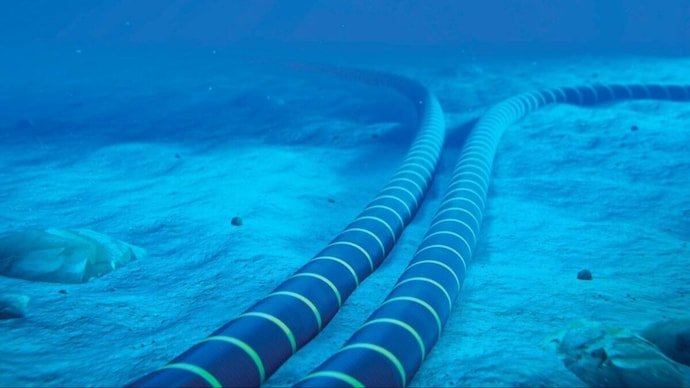
Beneath its waters runs a dense network of submarine cables that carry vast amounts of internet traffic connecting Europe, Asia, and the Middle East.
Key Cable Systems in the Region
- FALCON cable network
- AAE-1 (Asia-Africa-Europe-1)
- TGN-Gulf system
- SEA-ME-WE cable systems
These cables are responsible for:
- International internet connectivity
- Financial transactions and banking systems
- Cloud computing and data services
- Government and Military communications
In short, they are the backbone of the modern digital Economy.
Why Undersea Cables Are Vulnerable
Despite their importance, submarine cables are surprisingly fragile.
Unlike pipelines or Ports, they are:
- Hidden and difficult to monitor
- Spread across vast underwater distances
- Exposed to both natural and human threats
Common Causes of Cable Damage
- Ship anchors dragging across the seabed
- Fishing trawlers accidentally cutting cables
- Natural events like earthquakes
- Deliberate sabotage or military action
A single break can disrupt connectivity for entire regions especially where multiple cables run close together, as in the Strait of Hormuz.
The Real Risk: Simultaneous Cable Disruption
The warning highlights a particularly dangerous scenario: multiple cables being damaged at the same time.
This could happen through:
- Coordinated sabotage
- Collateral damage during Conflict
- Chain reactions from a single incident
When redundancy fails, the consequences escalate quickly:
- Internet speeds drop drastically
- Financial systems slow or halt
- Cloud services become inaccessible
- Cross-border communication breaks down
In highly connected economies, even a few hours of disruption can cost millions.
Who Is Most at Risk?
The Gulf region is particularly exposed due to its heavy reliance on a limited number of cable routes.
High-Risk Countries
- United Arab Emirates
- Qatar
- Bahrain
- Kuwait
- Saudi Arabia
These nations depend heavily on submarine cables for:
- Financial markets
- energy trading systems
- Cloud-based government services
Interestingly, the warning suggests that some countries may be less dependent on these specific routes highlighting an imbalance in regional vulnerability.
Lessons from Recent Cable Disruptions
This is not a hypothetical risk.
Recent incidents in the Red Sea have already demonstrated how fragile undersea infrastructure can be.
In 2024 and 2025:
- Multiple cables were damaged during regional tensions
- Internet speeds slowed across several countries
- Repair efforts took months due to security constraints
These events showed that:
- Repairing cables is slow and complex
- Access to damaged areas can be restricted during conflict
- Even partial disruption can have widespread effects
The Strait of Hormuz, with its higher traffic and strategic importance, could face even greater consequences.
The Hidden Layer: Data Centers and Cloud Infrastructure
The risk doesn’t stop at cables.
Many Gulf countries have invested heavily in:
- Data centers
- Cloud infrastructure
- Digital financial hubs
These systems depend on uninterrupted connectivity.
If cables are disrupted:
- Cloud services can go offline
- Businesses lose access to critical data
- Government systems may be affected
This creates a cascading effect where a physical cable cut leads to a digital shutdown.
Comparison: Oil Shock vs Data Shock
| Factor | Oil Disruption | Data Cable Disruption |
|---|---|---|
| Visibility | Highly visible | Largely invisible |
| Immediate Impact | Fuel prices rise | Internet slows or stops |
| Economic Effect | Gradual | Instant and widespread |
| Recovery Time | Days to weeks | Weeks to months |
This comparison reveals a critical insight: data disruptions can be faster and more disruptive than traditional energy shocks.
The Strategic Signal: More Than Just a Warning?
Some analysts believe the report is not just informational but strategic.
By highlighting:
- Cable routes
- Landing stations
- Data hubs
It effectively maps critical infrastructure.
This raises an important possibility:
Is this a warning or a signal?
In geopolitical terms, such messaging can serve multiple purposes:
- Deterrence (highlighting vulnerabilities)
- Psychological pressure
- Strategic signaling to adversaries
Without direct action, the message alone can influence behavior.
The Bigger Picture: The Rise of Hybrid Warfare
This development fits into a broader trend known as hybrid warfare where conflicts extend beyond traditional battlefields.
Modern conflicts now include:
- Cyberattacks
- Information warfare
- Economic disruption
- Infrastructure targeting
Undersea cables sit at the intersection of these domains.
They are physical assets but enable digital systems.
This makes them ideal targets in a world where warfare is increasingly indirect.
The Missing Insight: The Ocean Is the New Frontier of Conflict
While much attention is given to space and cyberspace, the ocean floor is emerging as a critical and vulnerable battleground.
Why?
- It hosts essential infrastructure
- It is difficult to monitor continuously
- Attribution of attacks is challenging
This creates a “gray zone” where actions can occur without immediate accountability.
In simple terms: what happens underwater may shape what happens online.
Future Outlook: Are We Entering a Data War Era?
The concept of a “data war” may sound futuristic but the building blocks are already in place.
Possible future scenarios include:
- Targeted cable disruptions during geopolitical crises
- Increased militarization of undersea infrastructure
- Investment in alternative routes and satellite systems
Governments and companies may respond by:
- Diversifying cable routes
- Strengthening monitoring systems
- Developing rapid repair capabilities
However, complete protection is nearly impossible.
Conclusion: A Silent but Serious Threat
The warning about undersea cables in the Strait of Hormuz is a reminder of how dependent the modern world is on invisible infrastructure.
Unlike oil tankers or military assets, these cables rarely make headlines until something goes wrong.
But in today’s digital-first economy, their importance cannot be overstated.
A single disruption can ripple across economies, governments, and societies.
Whether or not the current warning leads to actual incidents, it has already achieved one thing: it has brought global attention to a hidden vulnerability.
And in an era where information is power, protecting the networks that carry it may become just as important as protecting the resources that fuel it.
For breaking news and live news updates, like us on Facebook or follow us on Twitter and Instagram. Read more on Latest World on thefoxdaily.com.




COMMENTS 0