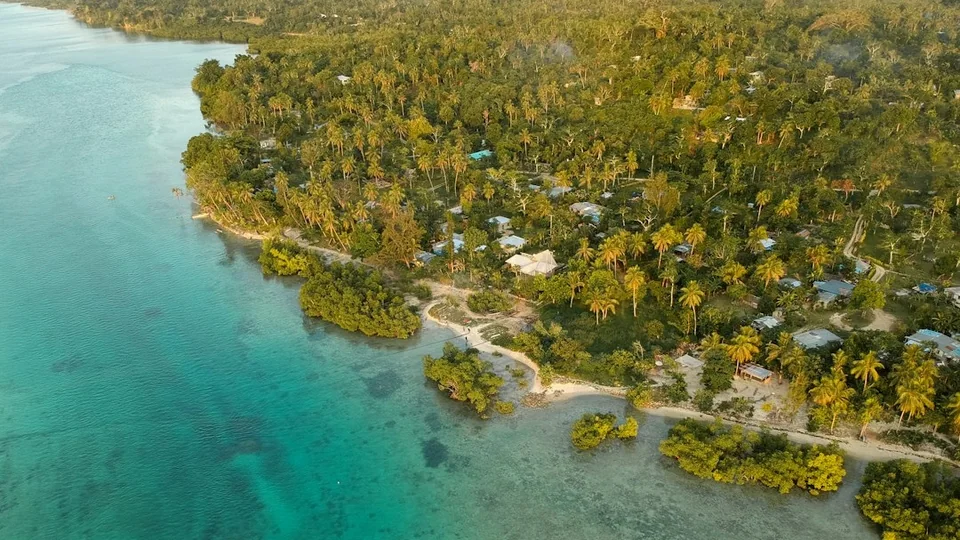
A Tsunami Warning issued for Vanuatu following a powerful offshore earthquake on October 24, 2026, has been canceled, authorities said. The earthquake was initially reported at magnitude 7.2, prompting officials to advise people in coastal areas to move to higher ground as a precaution.
The Pacific Tsunami Warning Centre initially warned that hazardous tsunami waves could affect coastlines within 300 kilometres of the earthquake’s epicentre. However, subsequent sea-level observations and updated assessments led authorities in Vanuatu to announce that the tsunami threat had ended.
The United States Geological Survey (USGS) later revised the earthquake’s magnitude from 7.2 to 6.9 and reported another nearby earthquake measuring magnitude 6.3. Despite the initial warning, monitoring agencies said there was no tsunami threat to the Philippines or Chile, while the US tsunami warning system also reported no threat to the United States or Canada.
Vanuatu Earthquake: What Happened on October 24?
The earthquake struck offshore near Vanuatu, an island nation in the southwestern Pacific Ocean. According to the initial information cited in the reports, the epicentre was approximately 200 kilometres, or 124 miles, northwest of Port-Olry. Another statement from Vanuatu authorities placed the earthquake about 220 kilometres northwest of Luganville, on Santo island.
The earthquake was initially reported at magnitude 7.2, with a depth of approximately 10 kilometres. The USGS subsequently revised its magnitude estimate to 6.9 and reported a second earthquake of magnitude 6.3 nearby.
The initial magnitude and location estimates prompted tsunami monitoring agencies to assess the potential impact on nearby coastlines. Because the earthquake occurred offshore and was relatively shallow, authorities issued warnings while evaluating whether it could generate dangerous waves.
The initial warning did not mean a tsunami had already reached the coast. Instead, it indicated that hazardous waves were possible and that people in potentially affected areas should follow official safety instructions.
Why Was a Tsunami Warning Issued for Vanuatu?
The Pacific Tsunami Warning Centre initially warned that hazardous tsunami waves were possible along coastlines within 300 kilometres of the earthquake’s epicentre.
The Hawaii-based monitoring centre issued its assessment after the offshore earthquake. Its preliminary warning highlighted the potential danger to coastal areas close to the seismic event, including Vanuatu.
Vanuatu’s National Disaster Management Office (NDMO) subsequently advised people in coastal areas to evacuate to higher ground. Residents were also told to follow information broadcast through local radio stations and television outlets.
The initial advisory emphasized that coastal communities should take precautions while the potential tsunami threat was being assessed. Authorities later issued an update after reviewing available sea-level observations.
Vanuatu Authorities Cancel Tsunami Alert
Vanuatu authorities later confirmed that the tsunami threat from the earthquake had ended. The decision followed an assessment of the latest available sea-level and observational data.
In its subsequent announcement, the NDMO said the earthquake had occurred at approximately 1:31 p.m. local time on October 24, 2026. The updated statement gave coordinates of 14.0080 degrees south and 165.5262 degrees east, placing the earthquake approximately 126 kilometres northwest of Santo.
The statement said there was no longer a tsunami threat from the earthquake to Vanuatu’s coastal areas.
The cancellation marked a change from the earlier warning, which had instructed people across coastal areas to move to higher ground. The updated announcement was based on the latest available sea-level observations rather than the initial earthquake parameters alone.
Residents should continue to follow instructions from local authorities during and after such events, particularly if additional advisories are issued.
No Tsunami Threat to the Philippines or Chile
Monitoring agencies in the Philippines and Chile also reported that the Vanuatu earthquake did not pose a tsunami threat to their respective coastlines.
The Philippines’ local monitoring agency issued an advisory on October 24, 2026, stating that there was no tsunami threat to the country. The notice cited the initially reported magnitude of 7.2, a depth of 10 kilometres and an epicentre at approximately 13.8 degrees south and 165.7 degrees east near Vanuatu.
Authorities in Chile also said the earthquake’s characteristics did not meet the conditions necessary to generate a tsunami along the country’s coast.
The assessments were important for countries far from the earthquake’s epicentre because powerful undersea earthquakes can sometimes trigger tsunami alerts across wider ocean regions. In this case, the monitoring agencies reported that the event did not present a tsunami threat to the Philippines or Chile.
US Tsunami Monitoring System Reports No Threat to US or Canada
The United States’ tsunami warning system also reported that there was no tsunami threat to the United States or Canada following the earthquake near Vanuatu.
In an update posted on X, the monitoring system said its duty scientists had analysed the magnitude 7.2 event near Vanuatu and confirmed that there was no tsunami danger for the two countries.
The update provided additional clarity for regions outside the immediate area of the earthquake. While the initial warning focused on potentially affected coastlines close to the epicentre, subsequent assessments helped establish that the event did not pose a tsunami threat to the United States or Canada.
Why Earthquakes Are Common in Vanuatu
Vanuatu is located along the Pacific Ring of Fire, an extensive zone of tectonic activity associated with frequent earthquakes and volcanic activity. The region extends through parts of Southeast Asia and around much of the Pacific Ocean basin.
The movement and interaction of tectonic plates in this region make earthquakes relatively common around the island nation. Some offshore earthquakes can generate tsunamis, depending on factors such as their magnitude, depth, location and the way the seafloor moves.
However, not every powerful undersea earthquake produces a damaging tsunami. Monitoring agencies evaluate seismic measurements alongside sea-level observations to determine whether dangerous waves are likely and whether warnings should remain in effect.
The Vanuatu event illustrates how tsunami assessments can change as more information becomes available. Authorities initially issued a warning based on preliminary earthquake parameters and later canceled it after reviewing updated observations.
What Residents Should Know After the Warning Cancellation
Although the tsunami warning for Vanuatu has been canceled, residents should continue to rely on official announcements for information about local conditions and any further instructions.
- Follow official updates: Monitor announcements from Vanuatu’s National Disaster Management Office and local authorities.
- Check local broadcasts: Follow radio and television announcements when authorities issue new instructions.
- Understand the warning status: The latest announcement stated that there was no longer a tsunami threat from this earthquake to Vanuatu’s coastal areas.
- Watch for further advisories: Follow any new instructions issued by emergency management officials.
For people outside Vanuatu, the monitoring updates indicated no tsunami threat to the Philippines, Chile, the United States or Canada from this earthquake.
Key Takeaway
Vanuatu authorities canceled the tsunami warning issued after the offshore earthquake on October 24, 2026, after reviewing updated sea-level observations. The earthquake was initially reported at magnitude 7.2 before the USGS revised it to 6.9, and a nearby magnitude 6.3 earthquake was also reported. Monitoring agencies said there was no tsunami threat to the Philippines, Chile, the United States or Canada.
For breaking news and live news updates, like us on Facebook or follow us on Twitter and Instagram. Read more on Latest World on thefoxdaily.com.


COMMENTS 0