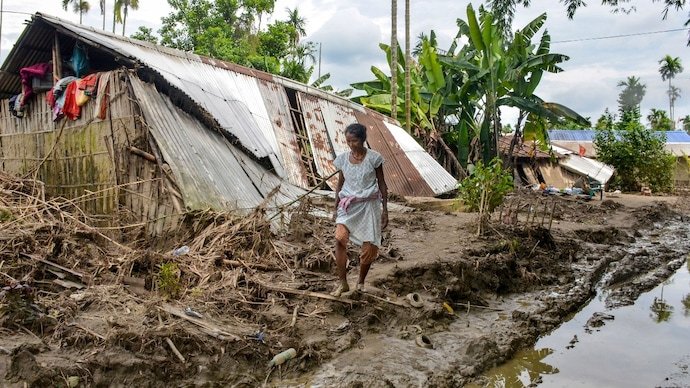
At least 72 people have been killed and nearly 500 are missing after a powerful flash flood originating in Tibet swept through parts of central Nepal, causing extensive destruction across towns and villages and damaging critical infrastructure.
The disaster has triggered particular concern in Rasuwa district, which lies along Nepal’s northern border with Tibet. Officials said nearly 400 people were reported missing in the district, including at least 105 Indians and 37 non-resident Indians (NRIs).
The overall number of missing people, combined with the scale of damage to roads, bridges and hydropower facilities, has made the disaster one of the most serious recent emergencies to affect the region. Authorities are continuing to assess the destruction as communications and access to some affected areas remain difficult.
For India, the situation has an additional humanitarian dimension because more than 100 Indian nationals are among those reported missing. Families are awaiting information about relatives who were in Nepal when the flood struck.
What happened in Nepal?
The flash flood swept into central Nepal on Wednesday after originating in Tibet, sending large volumes of water through vulnerable areas and rapidly overwhelming communities in its path.
Unlike a slowly rising river, a flash flood can develop and move with little warning. The sudden surge can destroy bridges, roads and buildings before people have enough time to evacuate.
In this case, the force of the water was sufficient to wash away bridges and damage major infrastructure, including at least a dozen hydropower projects.
The destruction has affected both communities and infrastructure that are essential for movement, communication and electricity generation. The loss or damage of bridges can be particularly serious in mountainous Nepal, where roads frequently depend on crossings over fast-flowing rivers and streams.
As authorities began assessing the aftermath, reports of missing people rose sharply, particularly in Rasuwa.
Why Rasuwa is at the centre of the disaster
Rasuwa has emerged as the most heavily affected area in the reports available so far.
The district borders Tibet and includes mountainous terrain where settlements and infrastructure can be exposed to sudden changes in river and Weather conditions.
Officials said nearly 400 people were missing in Rasuwa. Among them were at least 105 Indians and 37 NRIs, making the district a major focus of concern for families in Nepal and India.
The number is particularly significant because Rasuwa’s location makes it an important route between Nepal and Tibet. People travelling or working in the area can include local residents as well as visitors, workers and other travellers.
The flash flood reportedly tore through villages and damaged infrastructure in the district, complicating efforts to establish the whereabouts of those who could not be immediately accounted for.
At least 72 people have died
The reported death toll has reached at least 72, although the final number could change as rescue teams gain access to affected areas and authorities verify reports of missing people.
The distinction between confirmed deaths and missing people is important during a disaster of this scale. A person reported missing may ultimately be found safe, while others could be confirmed dead as search operations progress.
With nearly 500 people reported missing across the affected areas, authorities face the difficult task of identifying survivors while simultaneously documenting casualties and damage.
The scale of the missing-person reports also means that the human cost of the disaster cannot yet be measured only through the confirmed death toll.
133 Indians and NRIs are among those missing
The disaster has generated concern in India because at least 105 Indian nationals and 37 NRIs are reported missing in Rasuwa.
The figures bring the total number of Indians and NRIs reported missing to 142, based on the numbers provided by officials in the affected district.
For families, the uncertainty surrounding missing relatives can be particularly difficult because damaged infrastructure may delay communication and make it harder to establish who survived the flood.
Indian nationals frequently Travel to Nepal for tourism, Business, religious visits and work, while the two countries also have longstanding social and economic links. A major Natural Disaster in a border region can therefore quickly become a concern for authorities and families on both sides.
The missing-person figures are reports from the immediate aftermath and can change as authorities cross-check names and receive information from survivors and local communities.
Bridges were among the major casualties
One of the clearest signs of the flood’s destructive force is the damage to bridges.
Bridges are critical pieces of infrastructure in Nepal because mountainous terrain often forces roads to follow river valleys and cross waterways at multiple points. When a bridge is washed away, a community can become temporarily isolated even if its roads and buildings remain intact.
For emergency responders, damaged bridges can create a second problem: the routes needed to deliver Food, medicine, rescue equipment and other supplies may themselves be unavailable.
That can turn the aftermath of a flood into a prolonged humanitarian challenge. Even after the water recedes, communities may remain difficult to reach until temporary crossings or alternative routes are established.
Hydropower projects were also damaged
At least a dozen hydropower projects were reported damaged by the flood.
The impact on hydropower infrastructure is significant because Nepal has invested heavily in electricity generation from its rivers. Hydropower facilities depend on river systems and are often located in mountainous areas, which can also expose them to floods, landslides and other natural hazards.
Damage to power projects can have consequences beyond electricity generation. Access roads, bridges, transmission infrastructure and other supporting facilities can also be affected during a major flood.
For communities already dealing with destroyed homes and disrupted transport, damage to electricity infrastructure can further complicate recovery.
The extent of the economic and energy impact will become clearer only after authorities and operators can conduct detailed assessments of individual projects.
Why flash floods can be so destructive
Flash floods are among the most dangerous forms of flooding because the time between the onset of intense rainfall or a sudden water release and the arrival of destructive flows can be extremely short.
Mountainous regions are particularly vulnerable. Steep slopes can accelerate the movement of water, while narrow valleys can concentrate large volumes into relatively small channels.
A flood originating upstream can also affect communities far from the location where the initial event occurred. This makes early warning and communication particularly important for settlements downstream.
In the Nepal disaster, the reported origin of the flood in Tibet adds a cross-border dimension. Water does not follow political boundaries, and communities downstream can be affected by conditions that develop outside their immediate area.
The disaster has exposed the vulnerability of mountain infrastructure
The destruction of bridges and hydropower facilities demonstrates the particular vulnerability of infrastructure built in mountainous environments.
Roads and electricity projects are often constructed along river corridors because those routes provide access through difficult terrain. But the same geography can expose them to powerful water flows.
Infrastructure resilience therefore becomes as important as simply building more roads and power projects. Bridges need to withstand extreme flows, warning systems need to reach communities quickly and emergency routes need to remain available when primary infrastructure fails.
The current disaster does not by itself establish whether any particular infrastructure project was inadequately designed. Such conclusions would require detailed engineering assessments after the flood.
But the scale of the damage shows why disaster planning is particularly important in areas exposed to sudden flooding.
Rasuwa’s location makes rescue efforts more complicated
Rasuwa’s geography creates additional challenges for rescue and recovery operations.
The district is located in the Himalayan region near the Tibet border, where settlements are spread across difficult terrain. When bridges and roads are damaged simultaneously, emergency teams can struggle to move between affected communities.
Search operations also become more complicated when floodwaters carry debris downstream. People who were in one location before the flood may be displaced far from where they were last seen.
That makes the early stages of a disaster particularly dependent on local information. Survivors, community leaders, transport workers and residents can help authorities establish who was present in affected areas and identify locations where people may be trapped or stranded.
What the high number of missing people means
The reported number of missing people is one of the most worrying aspects of the disaster.
Nearly 500 people are reported missing across the affected areas, with a large concentration in Rasuwa. However, missing-person figures during an ongoing disaster should be interpreted cautiously.
Initial lists can include people who have survived but have not yet contacted their families, people who moved to safer locations, and individuals whose whereabouts authorities have not yet confirmed.
As communications are restored and rescue operations continue, some names may be removed from missing-person lists. At the same time, the death toll can rise if search teams locate victims in severely affected areas.
The numbers are therefore likely to change as the authorities build a more complete picture of the disaster.
Why the Nepal disaster matters to India
The presence of at least 105 Indian nationals and 37 NRIs among those reported missing gives the disaster a direct connection to India.
Indian authorities and families will be closely watching information emerging from Nepal as officials attempt to establish the identities and locations of missing people.
The incident also demonstrates the practical importance of India’s close relationship with Nepal. The two countries share an open border and extensive movement of people, alongside deep social, cultural and economic ties.
A natural disaster in Nepal can therefore quickly affect Indian citizens and families, particularly when it occurs in an area visited by Indian nationals.
The immediate priority remains locating missing people and confirming the condition of those affected. Broader questions about infrastructure, disaster preparedness and cross-border emergency coordination can be addressed once the immediate rescue phase is complete.
The difference between the immediate crisis and the recovery phase
The response to a disaster of this scale will unfold in stages.
The first priority is finding people who may still be alive and trapped or stranded. This requires search teams, emergency medical assistance, communications and access to affected communities.
The next challenge is restoring basic connectivity. Roads and bridges need to be assessed, temporary routes may be required and damaged electricity infrastructure must be made safe before restoration.
Only after those immediate needs are addressed can authorities fully assess the economic damage and begin long-term reconstruction.
For families of missing people, however, the distinction between rescue and recovery is deeply personal. Until authorities confirm what happened to a missing relative, uncertainty remains the central concern.
What happens next in Nepal?
The immediate outlook will depend on the progress of Search and Rescue operations and the authorities’ ability to reach areas cut off by damaged infrastructure.
The confirmed death toll, currently at least 72, and the number of missing people are expected to be reassessed as more information becomes available.
Authorities will also need to determine the full extent of damage to bridges, hydropower projects, roads and settlements. That assessment will be important for deciding where emergency resources are needed first and how reconstruction should be prioritised.
For Rasuwa, the most urgent issue is the fate of the hundreds of people who remain unaccounted for, including the 105 Indians and 37 NRIs reported missing.
A disaster whose full scale is still emerging
The Nepal flash flood has already produced a devastating human toll, but the full scale of the disaster remains unclear.
At least 72 people are confirmed dead, nearly 500 are missing, bridges have been washed away and at least a dozen hydropower projects have been damaged. Rasuwa has emerged as the centre of the crisis, with nearly 400 people reported missing there alone.
The reported presence of more than 100 Indian nationals among the missing has added urgency in India, where families are waiting for confirmation about relatives caught in the disaster.
The coming days will be crucial. Search operations will determine how many missing people can be reunited with their families, while engineering assessments will establish how severely Nepal’s infrastructure has been damaged.
For now, the most pressing priority is not the long-term reconstruction bill or the political consequences of the disaster. It is finding those who are still missing and getting help to communities cut off by one of the most destructive flash floods to hit the region.
For breaking news and live news updates, like us on Facebook or follow us on Twitter and Instagram. Read more on Latest World on thefoxdaily.com.



COMMENTS 0