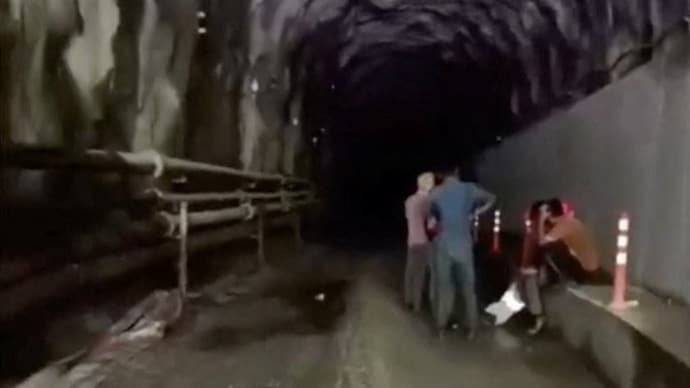
Nepal has sought India’s assistance in a desperate search for workers who remain unaccounted for after devastating floods and mudslides struck Hydropower projects across the country. More than 900 workers were initially reported uncontactable, with fears growing that some may be trapped inside underground tunnels at several project sites.
The Independent Power Producers’ Association, Nepal (IPPAN), reported that 933 workers at 13 flood-hit hydropower projects were uncontactable after the disaster. Of those, 254 have been rescued and contact has been established with some others. A significant number, however, remain unaccounted for.
The situation has become particularly urgent because several of the affected projects are located in difficult mountainous terrain, where floodwaters, landslides and damaged roads have disrupted access. Communications have also been affected, making it difficult for authorities and project operators to establish exactly where workers are and whether they are safe.
Nepal’s government has now asked India for specialised assistance. India is preparing to send a Tunnel Rescue Team, while a reconnaissance team will first assess conditions on the ground and determine what equipment and technical resources are needed. A medical team is also being sent as part of the assistance.
The rescue effort is no longer simply a question of reaching isolated workers. Teams must determine whether people are trapped underground, whether tunnels remain structurally accessible and how rescuers can enter without creating additional risks.
Why Nepal asked India for help
Nepal initially deployed its own rescue and Security teams to deal with the disaster. But after three days of difficult operations, the government concluded that additional specialist assistance was needed.
Nepal Foreign Ministry spokesperson Lok Bahadur Paudel said the government sought India’s assistance because it appeared that Nepal’s rescue teams alone would not be able to complete the operation.
The request reflects the unusually difficult conditions surrounding several hydropower projects. The affected sites are in areas where roads can be narrow and vulnerable to landslides, while tunnels and other underground Infrastructure can be difficult to inspect following flooding.
India’s proposed reconnaissance mission is therefore an important first step. Rather than immediately deploying large quantities of equipment, specialists can first establish the condition of the affected sites, identify accessible routes and determine what kind of tunnel-rescue machinery will be required.
That assessment could be critical because the equipment needed to rescue people from a flooded or blocked tunnel can be very different from the equipment used for conventional flood evacuation.
Upper Trishuli-1 is the biggest concern
Among the affected projects, Upper Trishuli-1 has emerged as the most serious concern because of the large number of workers whose whereabouts remain unknown.
According to IPPAN, 576 workers at the project were uncontactable after the disaster. Around 1,350 people were working at the project when the floods struck.
IPPAN Senior Vice-President Uttam Bhlon said there was no clear information about where the 576 uncontactable workers were located and raised the possibility that some could be inside tunnels.
“576 people are uncontactable. There is no clear information about where they are. If some are trapped inside the tunnels and can be reached in time, there is a possibility of saving them,” Bhlon said.
The distinction between “uncontactable” and “confirmed missing” is important. In a disaster zone where communication networks have failed and roads have been damaged, a worker may be alive but unable to communicate with family members, employers or authorities.
That is why physical searches are essential. Rescue teams must reach the project, inspect worker camps and tunnels and reconcile the number of people found with project records.
Which hydropower projects are affected?
Fears about trapped workers extend beyond Upper Trishuli-1. Rescue teams are also concerned about workers associated with projects including Langtang Hydro, Upper Trishuli, Trishuli-3B and Chilime.
These projects operate in mountainous areas where the combination of rivers, steep slopes and underground construction can make Disaster Response particularly difficult.
When a major flood and mudslide strikes such an area, several forms of infrastructure can be damaged simultaneously. A road providing access to a project may be buried, a bridge may become unusable and telecommunications equipment may stop functioning.
That can leave workers isolated even when they are not physically trapped.
At the same time, workers who were underground when floodwaters or debris entered a project face a much more immediate danger. Rescue teams need to determine whether tunnels have flooded, whether entrances have been blocked and whether the surrounding ground remains stable.
Why tunnel rescue is especially difficult
Hydropower tunnels can extend deep into mountainous terrain and may have limited access points. After flooding, the normal route into a tunnel can become blocked by mud, rocks and water.
Rescuers also cannot assume that a tunnel remains safe simply because it was accessible before the disaster. Flooding can change conditions underground, while landslides can destabilise slopes around entrances and access roads.
Specialist tunnel rescue teams are trained to assess and work in confined environments where conventional rescue methods may not be sufficient.
Several challenges could confront rescuers:
- Flooded passages: Water may block sections of a tunnel or prevent rescuers from reaching deeper areas.
- Mud and debris: Landslides can bury entrances and fill underground passages.
- Unstable structures: Flooding and surrounding landslides can make access dangerous.
- Loss of communication: Workers underground may have no way to contact people outside.
- Damaged roads: Heavy rescue equipment may be difficult to transport to remote project sites.
- Limited air access: Mountain terrain may restrict where helicopters can safely land or operate.
For rescuers, speed matters, but so does caution. An uncontrolled entry into a damaged tunnel could expose rescue personnel to the same hazards facing the workers they are trying to save.
Damaged roads are slowing the rescue effort
One of the biggest obstacles facing Nepal’s rescue teams is not necessarily the distance to the affected projects but the destruction of the routes leading to them.
Hydropower projects in mountainous regions often depend on roads that follow river valleys and steep slopes. A single landslide or washed-out bridge can isolate an entire worksite.
Following the floods, damaged roads have made it harder for emergency personnel to reach some locations. The problem becomes even more serious when heavy equipment is required.
A rescue team travelling on foot may be able to reach an isolated location, but tunnel-rescue equipment, generators, pumps and medical supplies can require vehicles or specialised transport.
This is one reason India’s reconnaissance mission could be important. Before equipment can be deployed, rescuers need to know which routes remain usable and whether alternative access points are available.
Communication failures are adding to the uncertainty
Disrupted communication networks have made it difficult to establish the status of workers across the affected projects.
In a normal situation, a project operator could quickly contact employees and compare responses with its workforce records. After a major flood, that process can break down if mobile towers, Electricity supplies or local communication infrastructure are damaged.
This creates a dangerous information gap.
Authorities may know how many people were working at a project before the disaster but not where each individual is afterward. Some workers may have evacuated independently, moved to higher ground or taken shelter in another part of the project.
Others could genuinely be trapped.
The only reliable way to resolve that uncertainty is to restore communication where possible and conduct physical searches of the affected areas.
Helicopters could help, but they have limitations
Nepalese authorities are also exploring helicopters as part of the Rescue Operation. Aircraft could provide a vital alternative where roads have been destroyed or blocked by landslides.
But helicopters are not a straightforward solution in mountainous disaster zones.
Limited landing space can make it impossible to bring an aircraft directly to a project site. Even where landing is possible, damaged infrastructure and unstable ground can create additional safety concerns.
Helicopters can also be used for aerial reconnaissance and evacuation, but underground rescues still require teams capable of operating inside tunnels.
That means Nepal’s response is likely to require several capabilities working together: ground rescue teams, specialist tunnel personnel, helicopters, engineers and medical workers.
The 933-worker figure could change
The initial report that 933 workers were uncontactable should be understood in the context of a rapidly developing disaster.
So far, 254 of those workers have been rescued, while contact has been established with some others. That means the number of people whose status remains unresolved is changing as rescue teams gain access to isolated sites.
It is also important not to equate “uncontactable” with “dead”. A worker who cannot be reached by phone after a flood may simply be in an area where communications have failed.
However, that uncertainty is precisely why the situation remains serious. Until teams physically locate the remaining workers or establish reliable communication with them, authorities cannot determine how many people may actually be trapped or in danger.
The final accounting will require authorities to compare project employment records with the names of people rescued, evacuated or otherwise accounted for.
Why the rescue operation has become a race against time
The possibility of workers being trapped inside tunnels makes time a critical factor.
The condition of people inside an isolated underground area can deteriorate rapidly if they lack adequate air, water, food or safe shelter. At the same time, flooding or further landslides can alter conditions inside and around a tunnel.
But rescuers must also deal with another reality: entering a damaged tunnel without understanding its condition could endanger the rescue team.
This is where specialised assessment becomes essential. A reconnaissance team can help determine whether the tunnel can be entered, which sections are blocked and what machinery is needed to clear access.
India’s planned assistance is aimed at strengthening that specialist capability rather than replacing Nepal’s existing emergency response.
India’s role could extend beyond tunnel rescue
India’s response includes both technical and medical assistance.
The proposed tunnel rescue team could provide expertise for underground searches, while the reconnaissance team will assess what equipment is required. Medical personnel will be needed to treat workers who are rescued, particularly those who may have spent prolonged periods in difficult conditions.
The cooperation also highlights the close geographic relationship between India and Nepal. Disasters in Nepal can quickly become a cross-border humanitarian concern, particularly when Indian nationals are among people working on major infrastructure projects.
For Nepal, specialist assistance from a neighbouring country can also help increase the resources available during the most difficult phase of the rescue.
What happens next?
The next phase will focus on locating workers whose status remains unknown and reaching the most difficult project sites.
The first priority for India’s specialist team will be understanding conditions on the ground. That assessment should determine whether rescue teams need pumps, debris-clearing equipment, specialised tunnel-access tools or other resources.
Nepalese authorities will simultaneously need to restore communications and improve road access wherever possible.
The outcome will depend heavily on what rescuers find when they reach the affected tunnels. If workers are located and accessible, a rapid extraction operation could follow. If passages are blocked or flooded, teams may first need to create a safe route into the tunnel.
Helicopters could provide additional support where ground routes remain unusable, although the difficult terrain limits their usefulness for every stage of the operation.
A disaster that has exposed the vulnerability of Nepal’s hydropower sites
The crisis at Nepal’s hydropower projects goes beyond the immediate search for missing workers. It has exposed how difficult emergency response can become when critical infrastructure is located in steep, remote terrain.
Hydropower construction requires workers to operate near rivers, tunnels, roads and mountain slopes. Those conditions can become dangerous when extreme flooding is combined with landslides and mudflows.
The current rescue effort therefore has two urgent objectives: save workers who may still be trapped and establish an accurate picture of who has survived, who has been evacuated and who remains missing.
For now, the figure of 933 uncontactable workers remains an initial measure of the scale of the communications and access crisis, not a final count of confirmed missing people.
With 254 already rescued and contact established with others, the picture is gradually becoming clearer. But the workers who remain unaccounted for, particularly those potentially trapped inside tunnels at Upper Trishuli-1 and other affected projects, remain the central concern.
India’s specialised rescue and medical support could prove important as Nepal moves into the next phase of the operation. The immediate test will be whether rescuers can overcome damaged roads, broken communications and dangerous underground conditions quickly enough to reach anyone still trapped.
For breaking news and live news updates, like us on Facebook or follow us on Twitter and Instagram. Read more on Latest World on thefoxdaily.com.




COMMENTS 0