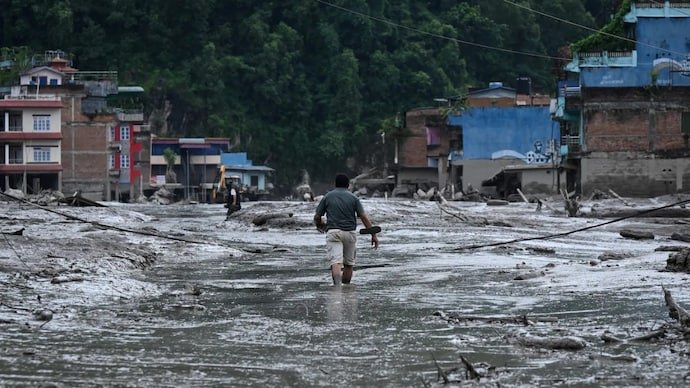
Nepal is facing one of its most devastating flood disasters in recent years after a sudden surge of water, rock and debris swept through Rasuwa and downstream areas on Wednesday, leaving at least 626 people dead in Nepal and thousands still unaccounted for across Nepal and Tibet.
The disaster began near the china border after an ice-and-rock avalanche and subsequent blockage in the upstream river system sent an enormous volume of water downstream into the Bhotekoshi and Trishuli river corridors. The force of the flood destroyed homes, bridges, roads and other infrastructure, while people in remote settlements and workers at hydropower facilities were caught with little time to escape.
Search teams are now facing a difficult race against time. Poor Weather, damaged roads, unstable terrain, disrupted communications and the continuing possibility of another surge of water have complicated efforts to locate survivors and recover those who remain missing.
Authorities are also monitoring unstable water bodies formed or enlarged by the disaster. The possibility of another sudden release has forced officials to balance two urgent priorities: sending rescuers into areas where people may still be trapped while keeping those same teams away from potentially dangerous river corridors.
What happened in the Nepal floods?
The disaster struck on August 26 in the Bhotekoshi river system in Rasuwa district, close to Nepal’s northern border with China. The initial event was not simply a conventional rainfall-driven flood.
Preliminary assessments indicate that an ice-and-rock avalanche occurred on the Tibetan side of the border, with debris blocking a section of the Lhende river. Water accumulated behind the blockage before the barrier failed or was overtopped, sending a sudden flood wave downstream.
Scientists and authorities have continued investigating the exact chain of events. Early satellite imagery indicated that debris had blocked the river and formed a temporary lake before a sudden release sent water into the Bhotekoshi system. The precise contribution of a glacial lake outburst remains under assessment.
The distinction matters because the event demonstrates how quickly high-mountain hazards can turn into downstream disasters. A disturbance occurring far upstream and outside Nepal can produce destructive flooding in communities many kilometres away, leaving little time for people downstream to react.
The flood then moved through the Bhotekoshi and Trishuli river systems, affecting several districts and causing extensive damage along the river corridors.
Death toll reaches 626 as thousands remain unaccounted for
Nepal Police has put the country’s death toll at 626. Seven additional deaths have been reported in Tibet, where the flooding also affected communities and infrastructure near the border.
The number of people still unaccounted for remains fluid because communications were disrupted and many affected areas were temporarily inaccessible. A figure of 2,478 missing people across Nepal and Tibet has been reported, with 1,924 of those cases in Nepal and 554 in Tibet. Officials have warned that the numbers could change as authorities reconcile reports from different locations.
The scale of the missing-persons crisis is particularly significant because the affected corridor includes local residents, security personnel, workers and foreign visitors. Nepal’s disaster authorities have also reported hundreds of foreign nationals among those whose whereabouts remain unknown.
The Nepal Tourism Board has said that 121 tourists were rescued following the Floods and landslides. The disaster occurred along a route used by travellers and pilgrims, adding an international dimension to an already complex Rescue Operation.
Authorities are treating missing people as potentially alive while search teams work through damaged settlements, riverbanks, debris fields and infrastructure that has been buried or swept away.
Why search and rescue operations are so difficult
Finding survivors after a flash flood is fundamentally different from responding to a slower-moving flood.
In a conventional flood, authorities may have hours or days to evacuate residents before water reaches dangerous levels. A sudden debris-laden surge can arrive much faster. The combination of water, mud, boulders, trees and broken infrastructure can also completely alter the landscape.
That is now creating major obstacles for Nepal’s rescue teams.
- Roads and bridges have been washed away, cutting off some affected areas.
- Landslides and unstable slopes are making movement through mountainous terrain dangerous.
- Flood debris has buried or blocked infrastructure, including tunnels and hydropower facilities.
- Bad weather has periodically disrupted helicopter operations.
- Communication networks have been damaged in parts of the disaster zone.
- Rising water levels have created the risk of secondary flooding.
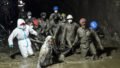
These conditions mean rescuers cannot simply move from one location to another. In some places, teams have had to approach through difficult mountain terrain, while helicopters have become essential for reaching isolated communities and moving injured people.
At the Upper Trishuli-1 hydropower project, rescue efforts have focused on workers believed to have been trapped in tunnels after the flood struck the facility.
New flood threat raises alarm in the Bhotekoshi area
The immediate disaster has been followed by a second concern: the possibility of another flood wave.
Floodwaters and debris have created or altered temporary water bodies upstream. One lake formed behind a natural barrier began overflowing toward the Lhende Khola and Trishuli river systems, prompting authorities to temporarily suspend rescue operations and issue warnings to people living downstream.
Chinese authorities have warned that the natural dam holding back the lake could become unstable. Water levels have been rising, and officials have been monitoring changes in the lake and surrounding terrain.
Chinese water authorities estimated that roughly 2.5 million cubic metres of water had accumulated by Friday and warned that additional water could build up. Modelling suggested that a partial breach could produce a peak flow of up to 500 cubic metres per second, although Chinese assessments indicated that the resulting flow was expected to remain largely within the riverbanks.
Those estimates do not mean downstream communities face no danger. Mountain flood conditions can change quickly, particularly when natural barriers are made of loose rock, mud and debris. A partial collapse could also occur differently from modelled scenarios.
For that reason, authorities have urged residents and rescue personnel in the Bhotekoshi and Trishuli areas to remain alert and move to safer ground when instructed.
The disaster exposed Nepal’s vulnerability to high-mountain hazards
The geography of northern Nepal makes the country particularly vulnerable to sudden changes in its mountain river systems.
Rasuwa sits in a steep Himalayan Environment where rivers descend rapidly from high elevations toward more densely populated areas. When an upstream blockage fails, the resulting water surge can gain enormous destructive power as it moves through narrow valleys.
The latest disaster also highlights why identifying the exact trigger of a flood matters. A flood caused primarily by intense rainfall requires a different warning strategy from one generated by an ice avalanche, landslide or sudden release from a temporary natural lake.
Researchers have increasingly focused on the risks associated with unstable glaciers and glacial lakes across the Himalayas. High-altitude warming can contribute to changes in glaciers and the growth of glacial lakes, although scientists have cautioned that it is not possible to attribute every individual collapse directly to climate change without detailed Investigation.
In this case, early assessments have pointed toward an ice-and-rock avalanche and debris blockage as key parts of the event. Authorities are continuing to examine the sequence rather than treating a single explanation as final.
Nepal’s hydropower infrastructure has suffered major damage
The human toll has been accompanied by extensive destruction of infrastructure.
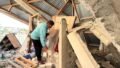
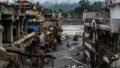
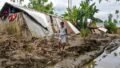
Bridges and roads along the Bhotekoshi and Trishuli corridors were damaged or swept away, isolating communities and complicating the delivery of relief supplies. Hydropower facilities were also affected, with workers among those reported missing at some sites.
This damage matters beyond the immediate rescue operation. Roads and bridges are the links that allow emergency teams to reach isolated communities. When they disappear, the difficulty of providing food, medicine and equipment increases sharply.
Hydropower is also strategically important to Nepal’s economy and electricity system. Damage to generation facilities can therefore create consequences that continue long after floodwaters recede.
The destruction of transport infrastructure could also affect cross-border trade with China. The Gyirong border area, an important connection between Nepal and Tibet, was severely affected by the disaster, with Chinese rescuers facing difficult conditions before reaching the worst-hit areas.
International rescue assistance expands
Nepal initially indicated that its own emergency services could manage the search-and-rescue operation. As the scale of the disaster became clearer, however, the government accepted specialized assistance from several countries.
International support has been particularly focused on areas where specialized equipment and technical expertise are needed rather than simply adding large numbers of general rescuers.
India, China, Australia and South Korea have been involved in different forms of assistance, including support connected to tunnel rescue, forensic work and DNA identification.
That type of assistance is increasingly important as the rescue operation shifts from immediate evacuation toward identifying people who remain missing. When bodies are recovered after major disasters, DNA testing and forensic identification can help families obtain reliable information even when visual identification is impossible.
China has also deployed rescuers toward the affected border area, where damaged roads and difficult mountain terrain had initially prevented teams from reaching some locations.
The financial cost could reach billions of dollars
The physical destruction is expected to create a major reconstruction burden for Nepal.
Nepal’s Finance Minister has estimated that the country could require between $4 billion and $5 billion for reconstruction following the floods. That figure is an early estimate, and the eventual cost could change as engineers and government agencies assess damaged roads, bridges, hydropower facilities, homes and other infrastructure.
Reconstruction will also have to compete with the immediate demands of humanitarian relief. Families who have lost homes require shelter and basic supplies, while authorities must restore roads and communications before longer-term rebuilding can begin.
The scale of the estimated bill illustrates why the disaster is not simply a short-term emergency. The consequences could affect Nepal’s public finances, infrastructure priorities and development plans for years.
Why the missing-person figure may keep changing
One of the most difficult numbers in a disaster of this scale is the number of people who remain missing.
A missing-person report does not necessarily mean that someone has died. In remote flood-hit areas, people may have escaped to higher ground, moved to another settlement or reached a location where communications are unavailable.
At the same time, damaged records and communication systems can result in duplicate or outdated reports. As rescuers reach previously inaccessible areas and authorities compare information from police, tourism agencies, families and local governments, the total can rise or fall.
That is why early figures should be treated as provisional. The death toll can increase as bodies are recovered, while the missing-person count can change as survivors are located and records are reconciled.
What happens next in Nepal
The immediate priority remains Search and Rescue, but the response is already moving toward a much larger recovery operation.
Authorities must continue monitoring unstable lakes and river levels while clearing roads and restoring access to isolated communities. At the same time, specialist teams will need to examine damaged hydropower facilities, tunnels, bridges and other critical infrastructure before they can safely be reopened.
The disaster is also likely to intensify discussion about early-warning systems in Nepal’s mountain regions. Warning systems cannot prevent a glacier collapse or landslide, but earlier detection of dangerous changes upstream can provide communities farther downriver with additional time to move to safety.
The challenge is especially difficult in remote Himalayan terrain, where installing and maintaining monitoring equipment can itself be expensive and technically demanding.
A disaster that extends far beyond the first flood wave
Nepal’s latest tragedy is not only a story of a single flash flood. It is a cascading disaster involving a high-mountain avalanche, sudden river flooding, damaged infrastructure, secondary flood risks and a prolonged search for missing people.
The death toll of 626 already represents a devastating loss, while the thousands still unaccounted for mean the full human cost remains uncertain. For rescue workers, the danger has not disappeared simply because the first flood has passed.
The next stage will depend on weather conditions, the stability of temporary lakes and debris barriers, access to isolated areas and the ability of authorities to identify and reach people who remain missing.
For Nepal, the longer-term challenge will be rebuilding the infrastructure that connects its mountain communities while improving its ability to detect and respond to sudden hazards originating high in the Himalayas.
Until the unstable water bodies are drained or secured and search teams can safely reach the most difficult areas, the disaster remains an active emergency. The priority now is clear: find survivors, protect communities from another surge, identify the missing and begin restoring the transport and power networks that have been devastated by the flood.
For breaking news and live news updates, like us on Facebook or follow us on Twitter and Instagram. Read more on Latest World on thefoxdaily.com.

COMMENTS 0