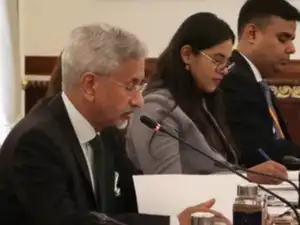
External Affairs Minister S. Jaishankar has discussed possible ways to address the ongoing Russia-Ukraine conflict, highlighting India’s engagement with Russia, European countries and Ukraine. The discussions have focused on reducing the impact of the war, particularly on civilian shipping, grain exports and energy infrastructure.
India’s diplomatic engagement comes amid continuing concerns over disruptions to international trade and the security of critical infrastructure. The conflict has affected shipping routes and grain supplies, making these issues important parts of discussions involving countries with an interest in regional stability and global economic security.
India Engages Russia, Europe and Ukraine
Jaishankar said India has been involved in conversations with Russia, European countries and Ukraine on the conflict and its wider consequences. These engagements reflect India’s effort to maintain communication with different sides while discussing practical steps to reduce the conflict’s impact.
One key area of discussion has been preventing attacks on civilian shipping. The safety of commercial vessels is important for international trade, particularly when disruptions to maritime routes can affect the movement of essential goods and increase uncertainty for businesses and governments.
The discussions have also focused on restoring grain exports affected by disruptions in the Black Sea. The region is an important route for agricultural shipments, and interruptions can create difficulties for countries that depend on international grain supplies.
Black Sea Grain Exports and Civilian Shipping Remain Key Concerns
Disruptions to Black Sea shipping have made the protection of civilian vessels and the movement of agricultural products significant issues in discussions surrounding the war. Restoring grain exports could help reduce pressure on supply chains and improve the movement of food commodities through affected routes.
India’s engagement on these issues highlights the broader economic consequences of the conflict. Maritime security and agricultural trade are closely connected to global supply chains, meaning that continued disruptions can affect countries beyond the immediate conflict zone.
Energy Infrastructure Talks Face Different Interpretations
Jaishankar also highlighted the complexity of discussions about stopping attacks on energy installations. He indicated that reaching a common understanding has been difficult because countries may interpret the term ‘energy installations’ differently.
This disagreement complicates efforts to define which facilities should be covered by any arrangement aimed at preventing attacks. Energy infrastructure includes different types of facilities, and differing interpretations can make it difficult for negotiating parties to agree on the scope of possible commitments.
The issue is particularly significant because attacks on energy-related facilities can have consequences beyond the immediate battlefield. Damage to such infrastructure can disrupt energy supplies and add uncertainty to markets and economic activity.
Diplomatic Discussions Continue Amid Conflict
India’s conversations with Russia, Europe and Ukraine cover several practical concerns linked to the continuing conflict. The focus on civilian shipping, grain exports and energy infrastructure reflects the importance of limiting the wider consequences of the war, even as differences remain over how particular issues should be addressed.
Jaishankar’s remarks underline the challenges involved in building agreement among countries with different positions and interpretations. Preventing attacks on civilian vessels, restoring grain shipments and defining protections for energy installations remain complex subjects for diplomatic engagement.
The discussions indicate that India’s engagement is focused on maintaining dialogue and exploring ways to address the conflict’s wider effects. However, the available details do not indicate that an agreement has been reached on these issues.
For breaking news and live news updates, like us on Facebook or follow us on Twitter and Instagram. Read more on Latest Business on thefoxdaily.com.






COMMENTS 0