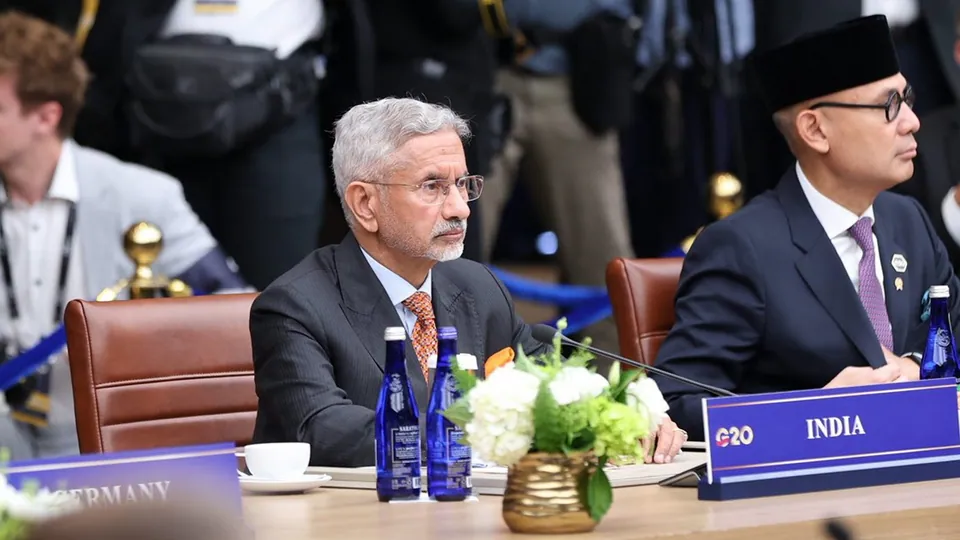
External Affairs Minister S Jaishankar has outlined India’s three key areas of discussion with Russia, Ukraine and European countries concerning the ongoing war between Moscow and Kyiv. The discussions focused on protecting civilian shipping and seafarers from attacks, restoring grain exports from Russia and Ukraine, and preventing attacks on energy infrastructure and fuel transportation.
Speaking to news agency ANI on the sidelines of the G20 foreign ministers’ meeting in Atlanta, the United States, Jaishankar described the energy-related issue as the most complicated part of the discussions because different countries and parties interpret the protection of energy facilities differently.
His remarks highlighted India’s diplomatic engagement with the countries involved in the conflict, as well as its concerns about the wider consequences of the war for international trade, food supplies, energy security and civilian safety.
Jaishankar Explains India’s Three Priorities in Ukraine War Discussions
Jaishankar said India had been discussing three major aspects of the Russia-Ukraine conflict with Moscow, Kyiv and European countries. These issues relate not only to the military situation but also to the protection of international economic activity and civilian infrastructure.
The first priority concerns civilian shipping and the safety of seafarers. Attacks on commercial vessels can threaten crew members, disrupt shipping routes and increase the risks associated with transporting essential goods.
The second issue is the restoration of grain exports from Russia and Ukraine. Both countries are significant participants in international agricultural markets, and disruptions to their exports can affect food availability and prices, particularly in countries that depend on imported grain.
The third area involves protecting energy infrastructure and preventing attacks on facilities and vessels involved in transporting fuel. Jaishankar described this as the most complicated subject because the meaning of energy-related protection varies depending on the interests and concerns of different parties.
By raising these three issues, India is seeking attention for the wider consequences of the conflict beyond the battlefield, particularly its impact on civilian lives, international commerce and essential supplies.
Why Protecting Energy Infrastructure Is the Most Complicated Issue
Explaining the challenges surrounding energy security, Jaishankar said that different countries and parties have different interpretations of what should be covered by an agreement to avoid attacks on energy facilities.
“Non-attack on energy is probably the most complicated piece because it means different things to the different players. There is energy infrastructure itself. To some, it would mean a refinery; to some, it would mean grids. There would be issues relating to ships carrying fuel,” he said.
Energy infrastructure includes several types of facilities that are essential to maintaining electricity supplies, fuel production and transportation. Refineries process crude oil into usable petroleum products, while electricity grids distribute power to homes, businesses and industries.
Fuel-carrying vessels also form an important part of the international energy supply chain. Any disruption affecting these ships can create risks for energy transportation and increase uncertainty in global markets.
The challenge, therefore, is to establish a common understanding of which facilities and activities should be protected from attacks. An agreement focused only on one category of infrastructure may not address the concerns of all parties involved.
Jaishankar’s remarks indicate that India has been encouraging discussions on this issue while recognising the difficulties of reaching a shared position.
India Maintains Diplomatic Contact With Russia and Ukraine
India has continued to engage with both Russia and Ukraine through diplomatic channels, including meetings involving senior political and foreign policy officials.
Jaishankar said he had discussed the conflict with Russian Foreign Minister Sergey Lavrov during the G20 meeting in Atlanta. He also referred to his earlier visit to Moscow and his diplomatic engagement with Ukraine during a visit to Kyiv.
“I had gone earlier to Moscow, and even today I discussed it with Mr Lavrov, and then in between I had gone to Kyiv, and we are in touch with the Ukrainian side. We have also been coordinating this with the Americans because they have their own peace mediation initiative,” he said.
The minister’s comments reflect India’s effort to maintain communication with multiple sides rather than limiting its diplomatic engagement to one country.
Jaishankar and Lavrov also held discussions on the sidelines of the G20 foreign ministers’ meeting. Their talks covered the Ukraine conflict, developments in West Asia and broader international issues.
India has consistently maintained that dialogue and diplomacy are necessary to resolve international conflicts. Its engagement with Moscow and Kyiv has continued alongside discussions with other countries involved in diplomatic efforts.
PM Modi Had Discussed Ukraine Conflict With Vladimir Putin
Jaishankar also referred to Prime Minister Narendra Modi’s discussions with Russian President Vladimir Putin during Putin’s visit to India in September for the 18th BRICS Summit.
The meeting provided another opportunity for the Indian leadership to discuss the conflict with Moscow at the highest political level. India has continued to raise concerns about the wider consequences of the war and the importance of finding a diplomatic path towards a resolution.
Modi’s engagement with Putin forms part of India’s broader diplomatic approach, which involves maintaining relations with Russia while also keeping communication channels open with Ukraine, European countries and the United States.
Jaishankar’s latest discussions in Atlanta indicate that these diplomatic efforts are continuing through meetings involving foreign ministers and other international representatives.
Jaishankar Calls for Diplomacy Instead of Military Solutions
At the G20 foreign ministers’ meeting, Jaishankar emphasised that military action alone could not resolve complex international challenges. He called for diplomatic engagement and negotiations to be given an opportunity to address conflicts.
In a post on X outlining his remarks during the first plenary session hosted by US Secretary of State Marco Rubio, Jaishankar said he had stressed the importance of diplomacy in dealing with global challenges.
“Emphasised that in the face of global challenges, military solutions will not work and diplomacy must be given a chance,” he wrote.
India’s position reflects its continued emphasis on dialogue as a means of addressing disputes between countries. The government has repeatedly highlighted the need for negotiations and diplomatic communication rather than relying exclusively on military action.
The G20 meeting provided an international platform for foreign ministers to discuss the consequences of ongoing conflicts and explore areas where diplomatic engagement could help reduce tensions.
Global South Faces Disproportionate Impact of Shipping Attacks
Jaishankar also highlighted the concerns of developing countries, particularly those in the Global South, over attacks on civilian shipping and seafarers.
He said these countries bear an unfair share of the consequences because disruptions to maritime transportation can affect the availability and affordability of essential commodities.
Commercial shipping plays a major role in moving fuel, food and agricultural nutrients across international markets. When vessels face attacks or shipping routes become unsafe, transportation costs and supply uncertainties can increase.
These disruptions can have a greater impact on countries that depend heavily on imports to meet domestic demand. Higher transportation costs and interruptions in supply can place additional pressure on consumers, farmers and businesses.
Jaishankar’s comments connected maritime security with wider economic concerns, arguing that protecting civilian vessels is important not only for the safety of crews but also for the stability of international supply chains.
India Reports 22 Nationals Killed in West Asia Conflict
India’s concerns about civilian safety have also been shaped by the deaths of its nationals during the conflict in West Asia.
The Ministry of External Affairs had earlier said that India had lost 22 nationals, including 14 seafarers, in the West Asia war over the preceding eight months.
The reported casualties underline the risks faced by Indian citizens working in maritime transportation and other sectors affected by regional conflicts.
For India, the protection of seafarers is therefore both an international maritime security issue and a direct concern involving the safety of its citizens overseas.
Jaishankar’s emphasis on civilian shipping at the G20 meeting reflects the importance New Delhi places on protecting commercial vessels and the people working aboard them.
Jaishankar Meets Polish Foreign Minister Radoslaw Sikorski
During the G20 gathering in Atlanta, Jaishankar also met Polish Deputy Prime Minister and Foreign Minister Radoslaw Sikorski.
The two ministers discussed the Ukraine conflict, India-European Union relations and issues connected with the G20. Poland’s position in Europe and its involvement in discussions surrounding the Ukraine war make the conflict an important subject in its diplomatic engagement with India.
The meeting added another dimension to India’s discussions with European countries on the security and economic consequences of the war.
India’s engagement with European representatives is also relevant to its broader relationship with the European Union, particularly in areas involving trade, strategic cooperation and international diplomacy.
Why India’s Three-Point Approach Matters
India’s three areas of discussion reflect the wider international consequences of the Russia-Ukraine War. Protecting civilian shipping, restoring grain exports and preventing attacks on energy infrastructure are issues that extend beyond the immediate military confrontation.
Disruptions to maritime transportation can threaten seafarers and affect the movement of essential goods. Restrictions on grain exports can create uncertainty in food markets, while attacks on energy infrastructure can affect fuel supplies and electricity networks.
By raising these concerns with Russia, Ukraine, European countries and the United States, India is seeking to keep attention on issues that affect countries far beyond the conflict zone.
Jaishankar’s remarks in Atlanta also reinforced India’s stated preference for diplomatic engagement. While the three issues involve difficult negotiations and different national interests, New Delhi has maintained that dialogue remains necessary to reduce the wider impact of the war and work towards a peaceful resolution.
For breaking news and live news updates, like us on Facebook or follow us on Twitter and Instagram. Read more on Latest India on thefoxdaily.com.



COMMENTS 0