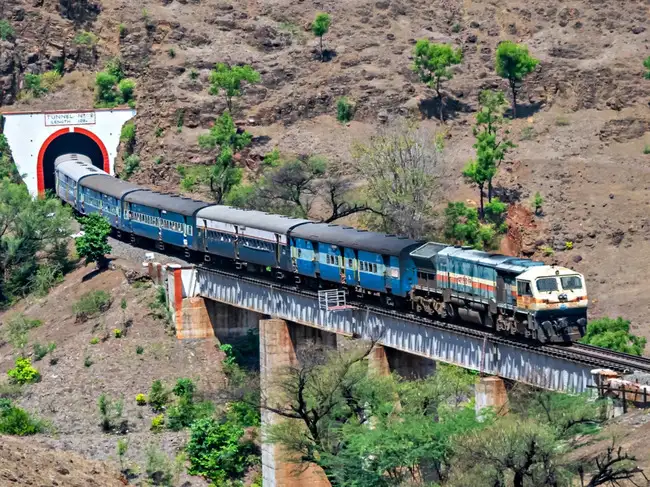
Indian Railways is set to reduce its consumption of liquefied petroleum gas (LPG) and diesel by switching to piped Natural Gas (PNG) at 22 railway establishments across the Delhi-NCR region. The initiative follows a partnership between Indraprastha Gas Ltd (IGL) and Northern Railway’s Delhi Division, aimed at expanding the use of natural gas in railway facilities.
Under the agreement, the initial PNG supply is expected to reach 3,000 standard cubic metres per day (SCMD). This is projected to replace approximately 500 kg of LPG and 2,500 litres of diesel every day, reducing the railway division’s dependence on conventional fuels.
The initiative is part of the government’s PNG Drive 3.0, which seeks to encourage the adoption of piped natural gas across different sectors and establishments.
Which Railway Stations and Facilities Will Switch to PNG?
The agreement covers 22 railway establishments across Delhi-NCR. Major locations identified in the announcement include New Delhi Railway Station, Delhi Railway Station and Anand Vihar Railway Station.
The programme will extend beyond major passenger stations to other railway facilities covered under the Northern Railway Delhi Division. The shift is intended to replace existing LPG and diesel consumption with a piped gas supply, helping establishments access fuel through an established distribution network.
The initial supply target of 3,000 SCMD represents the expected daily requirement under the arrangement. The projected replacement of 500 kg of LPG and 2,500 litres of diesel highlights the potential scale of fuel substitution across the participating railway sites.
IGL Says Railway Partnership Can Reduce Dependence on Imported Fuels
The partnership supports efforts to diversify the country’s energy consumption and reduce reliance on imported conventional fuels. Replacing LPG and diesel with PNG at railway establishments could contribute to lower consumption of these fuels while expanding the use of domestic natural gas infrastructure.
For Indian Railways, the arrangement offers an opportunity to shift fuel requirements at selected facilities to a continuous piped supply. Unlike conventional LPG cylinders, PNG is delivered directly through pipelines, potentially simplifying fuel handling and supply management at establishments connected to the distribution network.
The agreement also reflects the broader push to expand natural gas consumption beyond households and industrial users. Public infrastructure and large institutional consumers can play an important role in increasing the adoption of piped gas.
IGL Offers Rs 2,000 Discount to Promote Household PNG Connections
Alongside its institutional expansion, IGL is offering a discount of Rs 2,000 to encourage households to obtain PNG connections. The incentive is intended to make the transition to piped natural gas more attractive for residential consumers.
Household PNG connections can provide an alternative to LPG cylinders by supplying cooking gas directly through a pipeline. The discount could help reduce the initial cost barrier for eligible consumers considering a switch, although the availability of the offer and connection conditions would depend on IGL’s applicable terms.
The household incentive and the railway partnership represent different parts of the company’s wider effort to expand natural gas adoption among residential and institutional customers.
IGL Operates More Than 30,000 Km of Pipelines Across 11 Geographical Areas
IGL operates a natural gas distribution network extending more than 30,000 kilometres across 11 geographical areas. This infrastructure enables the company to supply PNG to households, commercial establishments and industrial consumers across its operating territories.
The existing pipeline network provides the foundation for expanding gas connections and serving larger institutional customers. Partnerships such as the one with Northern Railway can help increase utilisation of distribution infrastructure while bringing additional establishments into the PNG network.
The railway agreement also highlights the importance of expanding last-mile connectivity to ensure that natural gas can reach facilities with substantial and regular fuel requirements.
PNG Drive 3.0 Supports Wider Adoption of Natural Gas
The shift at 22 railway establishments forms part of the government’s broader PNG Drive 3.0 initiative. The programme seeks to encourage more consumers and institutions to adopt piped natural gas as part of India’s efforts to diversify its energy mix.
Railway facilities are significant institutional consumers, making them potential candidates for fuel-switching initiatives. Replacing LPG and diesel at selected sites could help demonstrate how existing public infrastructure can gradually incorporate alternative energy sources.
The success of the IGL-Northern Railway partnership will depend on the implementation of pipeline connections, consistent gas supply and the operational requirements of the participating establishments. If implemented as planned, the initiative will replace an estimated 500 kg of LPG and 2,500 litres of diesel daily with PNG, marking a step towards wider natural gas adoption in railway operations.
For breaking news and live news updates, like us on Facebook or follow us on Twitter and Instagram. Read more on Latest Business on thefoxdaily.com.






COMMENTS 0