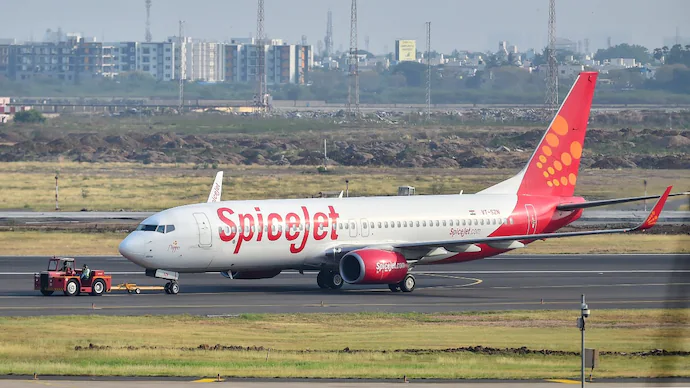
SpiceJet is continuing to accept bookings for domestic and international flights despite a sharply reduced operational fleet and repeated disruptions across several routes. Passengers have reported lengthy delays, last-minute cancellations and difficulties obtaining refunds, raising questions about the airline’s ability to operate the services it continues to advertise.
The airline’s operational difficulties have intensified amid high aviation turbine fuel (ATF) prices, financial pressure, regulatory scrutiny and a shrinking number of aircraft available for service. Reports of disruptions have also raised concerns about passenger communication, airport management and the reliability of upcoming flight schedules.
An investigation by India Today Digital found that SpiceJet’s website was accepting bookings for selected services even when recent operational disruptions had affected the same routes. Booking attempts for Delhi-Dubai and Delhi-Mumbai flights scheduled for November 24 reached the payment stage without displaying specific warnings about potential disruptions.
The situation is particularly concerning for passengers travelling internationally, as Dubai International Airport had reportedly suspended check-in services for SpiceJet flights over unpaid dues to a ground-handling company.
SpiceJet Continues to Accept Bookings Despite Operational Disruptions
India Today Digital attempted to book two SpiceJet services on November 21, including a Delhi-Dubai flight and a Delhi-Mumbai flight, both scheduled for November 24. In both cases, the airline’s website allowed the booking process to proceed through flight selection, passenger information and additional services to the payment stage.
According to the report, the website did not display a specific disruption-related warning during either booking attempt. This raised questions about whether prospective passengers were receiving sufficient information about the operational difficulties affecting the airline.
The Delhi-Mumbai route had experienced multiple cancellations between November 19 and 21. At least eight cancellations were recorded in each direction over the three-day period, according to the report.
The international booking situation was also noteworthy. SpiceJet’s Mumbai-Dubai service, SG-5060, had reportedly not operated for a week, yet tickets for the flight were still listed for sale on November 21.
Allowing customers to proceed with bookings does not by itself establish that a particular flight will be cancelled. However, the absence of clear information about known operational restrictions can leave passengers uncertain about whether their journeys will take place as scheduled.
Dubai Airport Restrictions Raise Questions Over International Flights
SpiceJet’s Dubai operations have faced particular difficulties following the suspension of check-in services at Dubai International Airport. On November 12, Dubai Airports suspended check-in services for the airline over unpaid dues of 14 million dirhams, equivalent to approximately Rs 35.8 crore, owed to ground-handling company Dubai National Air Travel Agency (dnata).
The disruption affected several flights connecting Dubai with Indian cities. Four services to Amritsar, Jaipur, Mumbai and Delhi were cancelled on November 12. The report also said that no SpiceJet flight departed Dubai for India on November 13.
Further cancellations were reported on services connecting Dubai with Delhi, Mumbai, Amritsar and Jaipur. Flightradar24 data cited by aviation publication AeroTime showed additional disruptions during this period.
On November 17, SpiceJet flights from Dubai to Mumbai, Jaipur and Amritsar were still listed as cancelled, according to Gulf News, which cited Dubai Airports’ flight tracker.
Despite these developments, India Today Digital found that the airline’s website continued to offer a Delhi-Dubai service scheduled for November 24. The booking attempt for flight SG 603/5060 reached the payment section, with the ticket priced at Rs 30,284.
The report also found that passengers could attempt to book Mumbai-Dubai services despite the recent operational interruptions. The situation raises questions about how the airline plans to manage bookings when airport ground-handling restrictions affect its ability to operate scheduled flights.
Domestic Flights Face Repeated Delays and Cancellations
SpiceJet’s domestic operations have also experienced significant disruption. Passengers have reported prolonged delays, cancellations and inadequate communication about changes to departure schedules.
One major incident occurred on November 19 at Delhi’s Indira Gandhi International Airport, where passengers confronted airline employees after a Delhi-Mumbai flight, SG 603, was delayed for several hours before being cancelled.
Passengers reportedly expressed anger over the lack of timely information. In another confrontation at the airport, an airline employee allegedly told a passenger, “Meet me outside, then I’ll tell you,” further escalating tensions.
The incident highlighted the difficulties passengers can face when Flight Disruptions are not communicated clearly and airport staff are left dealing with frustrated travellers.
India Today Digital also attempted to book a Delhi-Mumbai domestic service and found multiple flights listed from November 23 onwards. The website allowed the booking process to proceed to the payment stage without a specific warning about the recent cancellations on the route.
Passengers Report 11-Hour Delays and Refund Problems
Reports of lengthy delays have been emerging for weeks. One passenger told India Today Digital that relatives travelling from Bengaluru to Delhi experienced an 11-hour delay on a SpiceJet flight at least three weeks before Diwali.
According to the account, the scheduled departure was delayed, but passengers were informed about the initial change only around an hour before departure. By then, many had already reached the airport.
The passenger said the airport became chaotic, with angry travellers confronting ground staff who appeared unable to provide clear answers.
Another traveller who flew from Bengaluru to Delhi during the last week of October described a similar experience. The passenger had booked SpiceJet because airfares were exceptionally high before Diwali and the airline offered the cheapest available ticket.
The flight, originally scheduled to depart at 11 am, was initially delayed by four hours. The passenger said the delay eventually stretched to 11 hours, with the aircraft finally taking off at 10 pm. They reached Delhi at around 1 am.
By the tenth hour of waiting, the passenger said they were prepared to book another flight. The experience left them unwilling to travel with the airline again, even if it offered the cheapest fares.
Passengers have also raised concerns on social media about refunds for cancelled flights. Some users have claimed that they were still waiting for their money weeks after cancellations. One passenger reportedly said 20 days had passed without receiving a refund.
These accounts are individual complaints rather than a complete measure of the airline’s refund performance. Nevertheless, they underline the importance of timely communication and effective passenger assistance when flights are disrupted.
DGCA Issues Show-Cause Notice Over Eight Areas of Concern
The Directorate General of Civil Aviation (DGCA) has taken note of SpiceJet’s deteriorating operational performance. On November 17, the aviation regulator issued the airline a show-cause notice, identifying eight areas of concern involving alleged operational and regulatory non-compliance and passenger inconvenience.
The DGCA gave SpiceJet seven days to respond to the notice. The regulator highlighted several issues, including:
- Declining operational performance: Concerns over falling on-time performance and an increase in flight delays and cancellations.
- Schedule compliance: Reported failure to adhere to approved flight schedules.
- Passenger inconvenience: Repeated disruptions and inadequate arrangements for assisting affected travellers.
- Grounded aircraft: The majority of the airline’s aircraft reportedly remained grounded.
- Aircraft restoration: Concerns that SpiceJet had not submitted a credible plan for returning grounded aircraft to service.
- Overseas service payments: Delayed payments to foreign service providers.
- Insurance coverage: Uncertainty surrounding mandatory insurance arrangements.
- Regulatory penalty: Failure to pay an earlier regulatory penalty despite repeated reminders.
The notice reflects regulatory concerns about the airline’s operational reliability and compliance obligations. A show-cause notice is an opportunity for the airline to respond to the issues raised; it should not be treated as a final determination of every alleged violation.
The regulator’s observations also bring attention to the relationship between fleet availability, maintenance planning and the airline’s ability to maintain its approved flight schedule.
SpiceJet’s Operational Fleet Has Shrunk Sharply
The scale of SpiceJet’s difficulties is reflected in the number of aircraft available for operations. According to the India Today report, the airline had only five operational aircraft against a fleet of nearly 50 on paper.
This gap between the listed fleet and operational aircraft limits the airline’s ability to maintain services across multiple domestic and international routes. A smaller active fleet can also leave an airline with less flexibility when aircraft require maintenance or flights face unexpected disruptions.
SpiceJet’s domestic market share has also declined significantly. It fell from 3.9% in January 2026 to 0.6% in September 2026, reflecting the airline’s reduced presence in India’s domestic aviation market.
With fewer aircraft available and repeated cancellations affecting passengers, restoring operational capacity has become an important challenge for the airline.
Pilots’ Association Raises Concerns About Flight Safety
SpiceJet’s financial difficulties have also prompted concerns about their possible implications for aircraft maintenance, employee welfare and flight safety.
On November 19, the Airline Pilots’ Association of India (ALPA India) warned that prolonged financial instability could affect several areas of airline operations. Its president, Sam Thomas, raised concerns in a conversation with India Today TV about persistent salary delays and the pressure facing frontline employees.
The pilots’ body also highlighted the possibility that financial constraints could disrupt payments to maintenance organisations and spare-parts suppliers. Such difficulties, it warned, could contribute to further aircraft groundings if essential maintenance arrangements are affected.
Thomas urged the Ministry of Civil Aviation and the DGCA to examine the potential safety implications of the airline’s financial condition. He stressed that aircraft maintenance and airworthiness standards must not be compromised.
These concerns represent warnings from the pilots’ association rather than confirmation that SpiceJet has compromised flight safety. Maintaining aircraft airworthiness and meeting regulatory requirements remain essential obligations for every airline, regardless of its financial position.
SpiceJet Plans to Raise Rs 5,500 Crore to Strengthen Finances
While operational and regulatory pressures continue, SpiceJet is attempting to strengthen its financial position. On November 18, the airline’s board approved a proposal to raise up to Rs 5,500 crore through various financial instruments.
The proposed fundraising is subject to shareholder and regulatory approvals. The airline intends to use the capital to strengthen its balance sheet, restore grounded aircraft and support its operations.
However, the board’s approval of a fundraising proposal does not mean that the money has already been secured. The airline will need to complete the required approval and fundraising processes before the proposed capital becomes available.
Access to additional funding could help SpiceJet address some of its financial and operational challenges. The extent of any recovery will depend on how successfully it raises capital, restores aircraft to service, meets its obligations and improves operational reliability.
Former Aviation Minister Suresh Prabhu Highlights Passenger Concerns
Former Civil Aviation Minister Suresh Prabhu also commented on the airline’s difficulties, highlighting the importance of financial stability, reliable operations and compliance with safety requirements.
Writing on X, Prabhu said: “I know that an airline needs three things: financial strength, reliable operations and compliance with safety rules. If any one of them is weak, passengers are the first to suffer.”
He also argued that India needed at least two to four more strong airlines to support better services and fairer airfares. Emphasising the importance of passenger protection, he said travellers should receive timely information and proper assistance when flights are cancelled.
Prabhu expressed hope that SpiceJet would recover and return to normal operations.
Why Continued Ticket Sales Raise Questions for Passengers
The central concern in the SpiceJet crisis is the gap between the flights being offered for sale and the airline’s ability to operate its scheduled services reliably. When an airline continues accepting bookings on routes affected by operational restrictions or repeated cancellations, passengers may find it difficult to assess the risk of disruption before purchasing tickets.
For travellers, the consequences can extend beyond a delayed journey. Last-minute cancellations may lead to additional accommodation and transport expenses, missed connections, disrupted work schedules and uncertainty over refunds or alternative arrangements.
Clear communication is therefore essential. Airlines should provide accurate information about schedule changes, offer appropriate assistance to affected passengers and ensure that booking systems reflect relevant operational restrictions.
For SpiceJet, restoring passenger confidence will require more than a fundraising announcement. It will depend on improving aircraft availability, addressing outstanding financial obligations, meeting regulatory requirements and demonstrating that advertised services can be operated consistently.
Conclusion: SpiceJet’s Recovery Depends on Reliability and Passenger Confidence
SpiceJet is facing a combination of financial pressure, a reduced operational fleet, repeated flight disruptions and regulatory scrutiny. Reports that its website continued accepting bookings for certain affected routes, including Dubai services, have raised questions about how clearly passengers are being informed before making travel arrangements.
The proposed Rs 5,500 crore fundraising could provide financial support if completed, but it does not immediately resolve the airline’s operational challenges. Restoring grounded aircraft, maintaining essential services and meeting regulatory obligations will remain critical to any recovery.
Ultimately, passengers need more than low ticket prices. They need reliable schedules, timely updates, transparent refund arrangements and confidence that the airline can operate the flights it sells. For SpiceJet, rebuilding that confidence will be central to its ability to regain a stable position in India’s aviation market.
For breaking news and live news updates, like us on Facebook or follow us on Twitter and Instagram. Read more on Latest Business on thefoxdaily.com.






COMMENTS 0