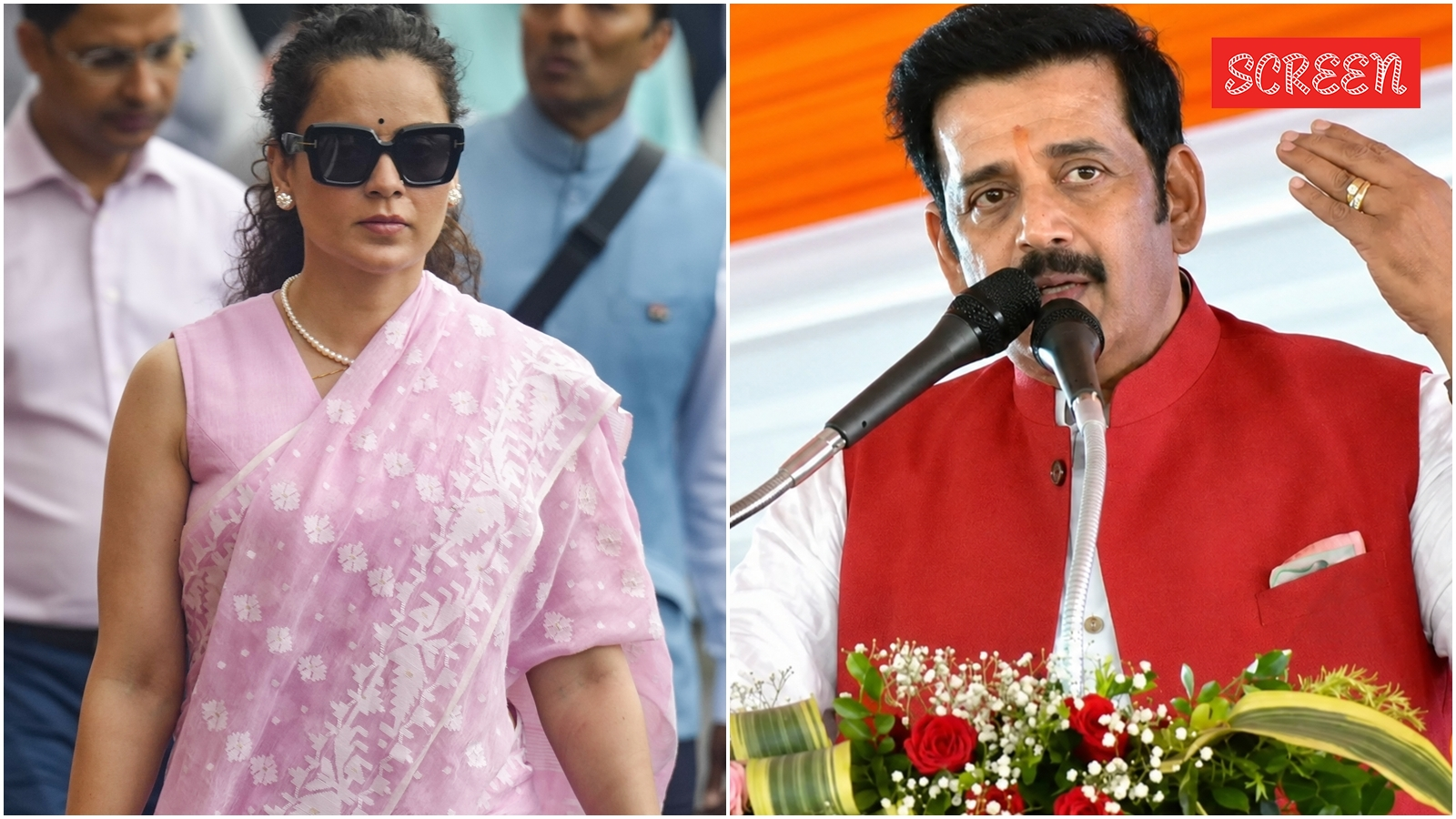
Political protests near parliament are not uncommon in India, but few generate as much attention as demonstrations tied to national examinations affecting millions of students. During the Monsoon Session of Parliament, the CJP organized its ‘Chalo Sansad’ march demanding the resignation of Union Education Minister Dharmendra Pradhan over the NEET-UG paper leak controversy. Amid heightened security in New Delhi, BJP MP and actor Kangana Ranaut claimed that lawmakers inside Parliament were concerned that protesters might breach security and attack the premises.
Her comments have reignited conversations about balancing democratic protest with public safety, while also drawing attention to the broader political fallout of one of India’s biggest examination controversies.
What Did Kangana Ranaut Say?
Speaking after the protest, Kangana Ranaut said parliamentarians inside the Lok Sabha were worried about the situation unfolding outside Parliament.
“We were all inside the House and were scared that the mob might attack us. Delhi Police acted like a shield and ensured that no one was harmed,” she said while appreciating the security arrangements.
Her remarks highlighted two key concerns:
- The perceived security threat during the protest.
- The role of Delhi Police in preventing any breach of Parliament security.
While there were protests outside Parliament, there has been no official confirmation that protesters attempted to storm the Parliament complex. Kangana’s statement reflects her personal account of how lawmakers inside the House perceived the situation.
Why Was the ‘Chalo Sansad’ March Organized?
The protest centered on the NEET-UG paper leak controversy, an issue that has dominated national political discourse since allegations emerged that question papers were leaked before the medical entrance examination.
The Cockroach Janta Party (CJP) organized the march demanding accountability from the Union government, with its primary demand being the resignation of Union Education Minister Dharmendra Pradhan.
Opposition parties and student groups have argued that the controversy undermined confidence in one of India’s most competitive entrance examinations.
Understanding the NEET-UG Paper Leak Controversy
The National Eligibility cum Entrance Test (NEET-UG) serves as the gateway to undergraduate medical education across India. Every year, more than two million aspirants compete for limited seats in government and private medical colleges.
When allegations of paper leaks surfaced, the controversy quickly evolved beyond an examination issue into a political and legal matter involving multiple investigations and nationwide protests.
The case has raised important questions about:
- Examination security.
- Digital handling of confidential question papers.
- Recruitment of organized cheating networks.
- Student trust in competitive examinations.
- Government accountability.
Ravi Kishan Demands Strict Punishment
Gorakhpur MP and actor Ravi Kishan also addressed the controversy during the Parliament session, calling for stringent punishment against those responsible for leaking examination papers.
According to Ravi Kishan, students spend years preparing for competitive examinations, and those involved in compromising their future deserve the strongest legal consequences available under the law.
His remarks reflected a broader political consensus that examination fraud should be treated as a serious criminal offense rather than merely an administrative lapse.
Why Parliament Security Is Always a Sensitive Issue
Parliament remains one of India’s most heavily protected institutions. Security concerns around the complex intensified significantly following the 2001 Parliament attack, leading to multiple layers of surveillance, controlled access and rapid-response protocols.
Whenever large-scale protests occur nearby, authorities typically increase deployment to ensure demonstrations remain peaceful while safeguarding constitutional institutions.
| Security Objective | Purpose |
|---|---|
| Perimeter Control | Prevent unauthorized access near Parliament. |
| Crowd Management | Allow lawful protests while maintaining order. |
| Rapid Response Teams | Handle emergencies or unexpected incidents. |
| Traffic Diversions | Reduce congestion and improve emergency mobility. |
| Surveillance | Monitor crowd movement and potential risks. |
How Delhi Police Handled the Demonstration
Delhi Police deployed extensive security arrangements around Parliament during the protest. Barricades, personnel and traffic diversions were used to regulate movement and prevent protesters from entering restricted areas.
Kangana Ranaut specifically praised the force, saying their actions prevented harm and ensured lawmakers remained safe while Parliament functioned.
Such deployments are standard practice during high-profile demonstrations involving large crowds near sensitive government institutions.
Balancing the Right to Protest and Public Safety
The incident also highlights an ongoing democratic challenge: protecting citizens’ constitutional right to peaceful protest while ensuring public safety and the uninterrupted functioning of Parliament.
India’s Constitution guarantees the freedom to assemble peacefully, but authorities may impose reasonable restrictions concerning public order, security and access to protected zones.
This balance often becomes particularly important during politically charged demonstrations involving national issues.
Political Reactions Beyond Parliament
The NEET controversy has become a significant political issue, with both ruling and opposition parties framing it differently.
- Opposition parties argue the paper leak exposed systemic failures.
- The government maintains that investigative agencies are taking action against those responsible.
- Several lawmakers have demanded stronger anti-cheating mechanisms.
- Student organizations continue to seek reforms that improve transparency.
The issue extends beyond Politics because it directly affects millions of students and families who invest years preparing for competitive examinations.
Why the NEET Issue Resonates Across India
Medical entrance examinations represent one of the country’s most competitive academic pathways. A single examination often determines access to highly sought-after medical colleges.
Consequently, any allegation involving examination malpractice attracts widespread public attention because it raises concerns about fairness and equal opportunity.
| Stakeholder | Primary Concern |
|---|---|
| Students | Fair evaluation and equal opportunity. |
| Parents | Transparency and credibility of examinations. |
| Government | Maintaining trust in national testing systems. |
| Educational Institutions | Admission integrity. |
| Law Enforcement | Investigating organized cheating networks. |
A Timeline of Recent Developments
| Event | Development |
|---|---|
| NEET-UG Examination | National medical entrance test conducted. |
| Paper Leak Allegations | Questions raised regarding examination integrity. |
| Investigations | Authorities initiated probes into alleged malpractice. |
| Political Protests | Opposition parties and student groups intensified demonstrations. |
| Chalo Sansad March | CJP organized a march demanding ministerial accountability. |
| Kangana’s Statement | She praised Delhi Police and said MPs feared possible violence. |
Why Kangana Ranaut’s Comments Matter
Kangana Ranaut occupies a unique position as both a public figure from the entertainment industry and a Member of Parliament. Statements from individuals who bridge politics and popular culture often receive greater public attention because they reach audiences beyond traditional political circles.
Her remarks also underscore how lawmakers experienced the events inside Parliament, offering a perspective distinct from that of protesters gathered outside.
The Bigger Picture: Trust in Institutions
The controversy ultimately extends beyond a single protest or political exchange. It touches on two institutions central to democratic governance:
- The integrity of India’s examination system.
- The security and uninterrupted functioning of Parliament.
Public confidence in both remains essential. Transparent investigations into examination irregularities, combined with effective security arrangements during public demonstrations, are critical for maintaining that trust.
What Comes Next?
The political debate surrounding the NEET paper leak is unlikely to end soon. Investigations into those allegedly involved continue, while lawmakers across party lines are expected to keep pressing for stronger safeguards against examination fraud.
Meanwhile, Parliament security will remain under close scrutiny whenever large demonstrations are organized in the national capital, particularly during legislative sessions.
Conclusion
Kangana Ranaut’s remarks following the CJP’s ‘Chalo Sansad’ march have added another dimension to the ongoing NEET-UG controversy. While she described lawmakers as fearful that protesters could attack Parliament and praised Delhi Police for preventing any escalation, the broader story remains rooted in public concern over examination integrity and accountability.
As investigations continue and political debate intensifies, the incident highlights the delicate balance between safeguarding democratic protest and protecting key national institutions. Ultimately, restoring confidence in India’s examination system—and ensuring peaceful civic engagement—will be just as important as determining accountability in the paper leak case itself.
For breaking news and live news updates, like us on Facebook or follow us on Twitter and Instagram. Read more on Latest Entertainment on thefoxdaily.com.





COMMENTS 0