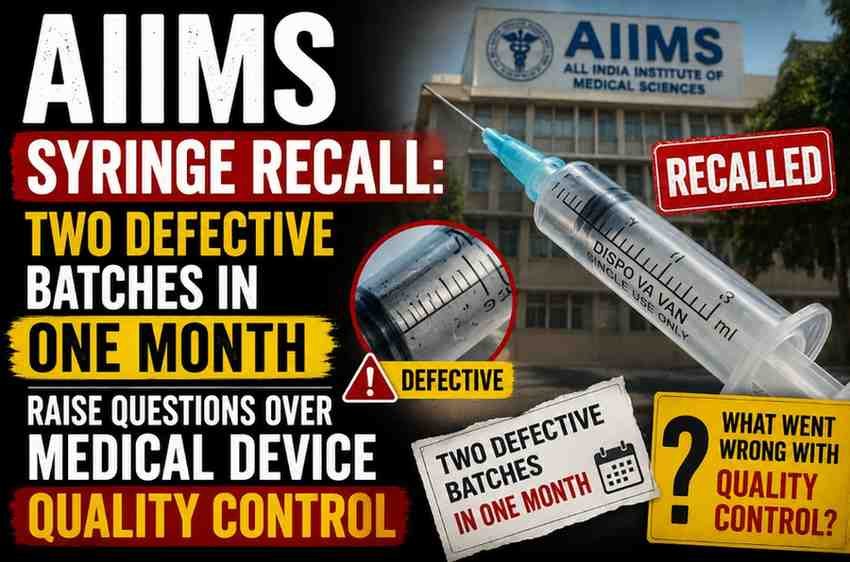
The recall of two batches of disposable syringes at the All India Institute of Medical Sciences (AIIMS) within a single month has reignited concerns about quality control standards in India’s rapidly growing medical device sector. The development has also triggered demands for a comprehensive investigation into procurement processes, manufacturing practices, and regulatory oversight mechanisms designed to safeguard patient safety.
The issue gained national attention after Rajya Sabha Member Haris Beeran wrote to Union Health Minister J.P. Nadda, highlighting that two separate recall notices involving disposable 10 ml syringes with needles had been issued within a span of approximately three weeks. The products reportedly originated from different manufacturers, raising questions about whether the problem is limited to individual suppliers or reflects broader systemic weaknesses.
While no widespread patient harm has been publicly reported in connection with the recalled batches, healthcare experts note that even isolated quality failures involving essential Medical Devices deserve serious scrutiny because of the critical role syringes play in modern healthcare delivery.
Why the AIIMS Syringe Recall Matters
Syringes are among the most commonly used medical devices worldwide. They are essential for administering medications, vaccines, intravenous treatments, and numerous diagnostic procedures. Because they come into direct contact with patients, even minor manufacturing defects can create significant safety concerns.
Potential risks associated with defective syringes include:
- Incorrect medication delivery.
- Needle detachment during use.
- Leakage of medication or fluids.
- Compromised sterility.
- Increased risk of infection.
- Patient discomfort or injury.
- Treatment delays and procedural complications.
For large institutions such as AIIMS, which treat thousands of patients daily, product reliability is not merely a procurement issue it is a patient safety imperative.
What Happened at AIIMS?
According to concerns raised by lawmakers, AIIMS issued two separate recall notices involving disposable 10 ml syringes supplied by different manufacturers within a relatively short period. The occurrence of multiple recalls involving the same category of medical device has led to calls for a detailed review of quality assurance protocols.
Although recalls are not uncommon in healthcare systems around the world, experts note that repeated recalls involving basic clinical equipment often warrant closer examination because they may indicate vulnerabilities in manufacturing, inspection, procurement, or post-market surveillance systems.
Understanding Medical Device Recalls
A product recall is generally initiated when a medical device is found to have defects, quality concerns, labeling issues, or safety risks that could potentially affect patient care.
Recalls can occur for several reasons:
- Manufacturing defects.
- Material contamination.
- Sterility failures.
- Packaging problems.
- Incorrect product specifications.
- Regulatory non-compliance.
- Performance issues identified after distribution.
Contrary to public perception, a recall does not necessarily mean patients have been harmed. In many cases, recalls demonstrate that monitoring and reporting systems are functioning as intended. However, repeated recalls involving critical medical supplies can still signal deeper quality-control challenges.
The Bigger Question: Is This an Isolated Incident or a Systemic Issue?
The most significant concern emerging from the AIIMS recalls is whether the incidents represent isolated manufacturing failures or evidence of broader weaknesses within the medical device ecosystem.
India has become one of the world’s fastest-growing healthcare markets, with demand for disposable medical devices rising dramatically in recent years. This growth has created opportunities for manufacturers but has also increased pressure on quality assurance systems.
Healthcare policy experts argue that when multiple suppliers encounter quality related issues within a short timeframe, regulators should examine:
- Manufacturing standards.
- Supplier qualification processes.
- Procurement evaluation criteria.
- Inspection frequency.
- Batch-testing procedures.
- Post-market surveillance mechanisms.
Such reviews help determine whether corrective action is needed beyond the affected products themselves.
How Medical Device Quality Is Supposed to Be Monitored
Medical devices undergo multiple stages of oversight before reaching hospitals and patients. These typically include manufacturing inspections, quality-control testing, certification requirements, procurement reviews, and periodic audits.
| Stage | Purpose |
|---|---|
| Manufacturing Quality Control | Ensures products meet design and safety specifications. |
| Batch Testing | Identifies defects before distribution. |
| Regulatory Compliance | Verifies adherence to applicable standards. |
| Hospital Procurement Review | Assesses supplier reliability and product performance. |
| Post-Market Surveillance | Detects issues after products enter clinical use. |
| Recall Mechanism | Removes potentially defective products from circulation. |
Experts emphasize that every stage must function effectively because failures in basic medical devices can have widespread consequences across healthcare facilities.
India’s Expanding Medical Device Industry Faces Greater Scrutiny
India’s medical device sector has experienced significant expansion over the past decade, supported by increased healthcare spending, domestic manufacturing initiatives, and growing demand from hospitals and diagnostic centers.
While this growth has improved accessibility and reduced dependence on imports in several categories, it has also heightened the need for consistent quality standards.
Industry analysts note that as production volumes increase, regulators must ensure that quality assurance systems evolve at the same pace. Rapid market growth can create challenges related to supplier oversight, certification processes, and compliance monitoring.
Patient Safety Must Remain the Top Priority
The AIIMS recalls serve as a reminder that patient safety depends not only on doctors, nurses, and hospitals but also on the integrity of the medical devices used every day.
Healthcare professionals often rely on thousands of disposable products during routine patient care. When even basic devices fail to perform as expected, clinical workflows can be disrupted, treatment may be delayed, and confidence in supply systems can be affected.
For patients, the expectation is simple: every syringe, needle, catheter, or medical device should function safely and reliably.
Why Transparency During Recalls Is Critical
Public confidence in healthcare systems depends heavily on transparency. Experts argue that hospitals and regulators should communicate clearly whenever recalls occur, explaining:
- The nature of the defect.
- Potential risks involved.
- Corrective actions being taken.
- Whether affected products were used clinically.
- Steps being implemented to prevent recurrence.
Transparent communication not only protects patients but also strengthens trust in the healthcare system’s ability to identify and address problems quickly.
Could These Recalls Lead to Regulatory Reforms?
Whenever multiple recalls occur within a short period, policymakers often face pressure to reassess existing oversight frameworks. Experts believe the AIIMS incidents could encourage discussions around:
- Enhanced supplier audits.
- More frequent product testing.
- Stronger procurement safeguards.
- Improved recall reporting systems.
- Expanded post-market surveillance programs.
- Greater accountability across the supply chain.
Such measures would align with broader global efforts to strengthen healthcare quality assurance and reduce the risk of defective products reaching patients.
A Comparison With Other Healthcare Safety Challenges
| Healthcare Safety Issue | Potential Impact | Importance of Early Detection |
|---|---|---|
| Defective Syringes | Medication delivery and infection risks | High |
| Faulty Diagnostic Equipment | Incorrect diagnoses | High |
| Medication Quality Issues | Treatment failure or adverse effects | Very High |
| Sterility Failures | Hospital-acquired infections | Very High |
This comparison highlights why quality assurance remains a cornerstone of modern healthcare systems.
What the AIIMS Recall Signals for the Future
The most important lesson from the AIIMS syringe recalls is that healthcare quality cannot be taken for granted, even when it comes to the most routine medical supplies. As healthcare systems become more complex and patient volumes continue to grow, vigilance must extend beyond hospitals to include every component of the medical supply chain.
The recalls also demonstrate the importance of robust monitoring systems capable of detecting problems before they lead to widespread patient harm. In many ways, the effectiveness of a recall process reflects the strength of the broader healthcare safety ecosystem.
Conclusion
The recall of two syringe batches at AIIMS within a single month has raised important questions about medical device quality control, procurement practices, and regulatory oversight in India. While recalls are an established safety mechanism designed to protect patients, multiple incidents involving essential clinical equipment naturally warrant closer examination.
As calls for an investigation grow, healthcare experts stress that the focus should remain on strengthening quality assurance systems, improving transparency, and ensuring that every medical device used in patient care meets the highest safety standards. The outcome of any review could have implications far beyond AIIMS, influencing how medical devices are monitored, regulated, and trusted across India’s healthcare system.
For breaking news and live news updates, like us on Facebook or follow us on Twitter and Instagram. Read more on Latest Health on thefoxdaily.com.




COMMENTS 0