- Why Fabrics Cause Skin Sensitivity
- Natural Fabrics: The Best Choice for Sensitive Skin
- What About Bamboo Fabric?
- Synthetic Fabrics: What to Avoid (and Why)
- Natural vs Synthetic Fabrics: Quick Comparison
- Best Fabrics for Skin Conditions (Eczema, Psoriasis, Sensitive Skin)
- Hidden Triggers in Clothing You Might Be Ignoring
- How to Build a Skin-Friendly Wardrobe
- The Sustainability Angle: Why Fabric Choice Matters
- Frequently Asked Questions
- Conclusion: Comfort Starts with the Right Fabric
If you’ve ever wondered why some clothes feel soft and soothing while others cause itching, redness, or discomfort, you’re not alone. Choosing the best fabrics for sensitive skin is more than a comfort decision—it’s a health priority. Whether you’re dealing with everyday sensitivity, eczema, or simply want irritation-free clothing, understanding fabric types can make a major difference.
In this guide, we’ll explore why fabrics affect your skin, which materials are safest, what to avoid, and how to build a wardrobe that supports your skin rather than irritates it. We’ll also uncover lesser-known insights about fabric treatments, sustainability, and how modern clothing Manufacturing impacts your skin.
Why Fabrics Cause Skin Sensitivity
Skin irritation from clothing usually happens due to three main factors:
- Friction: Rough textures rub against the skin, causing irritation
- Heat retention: Non-breathable fabrics trap heat and sweat
- Chemical exposure: Dyes, finishes, and treatments can trigger reactions
Modern textiles often undergo chemical processing, including wrinkle-resistant treatments and dyes. These can leave residues that irritate sensitive skin—even if the fabric itself seems soft.
Pro Tip: Always wash new clothes before wearing them. This simple step removes excess chemicals and reduces irritation risk.
Natural Fabrics: The Best Choice for Sensitive Skin
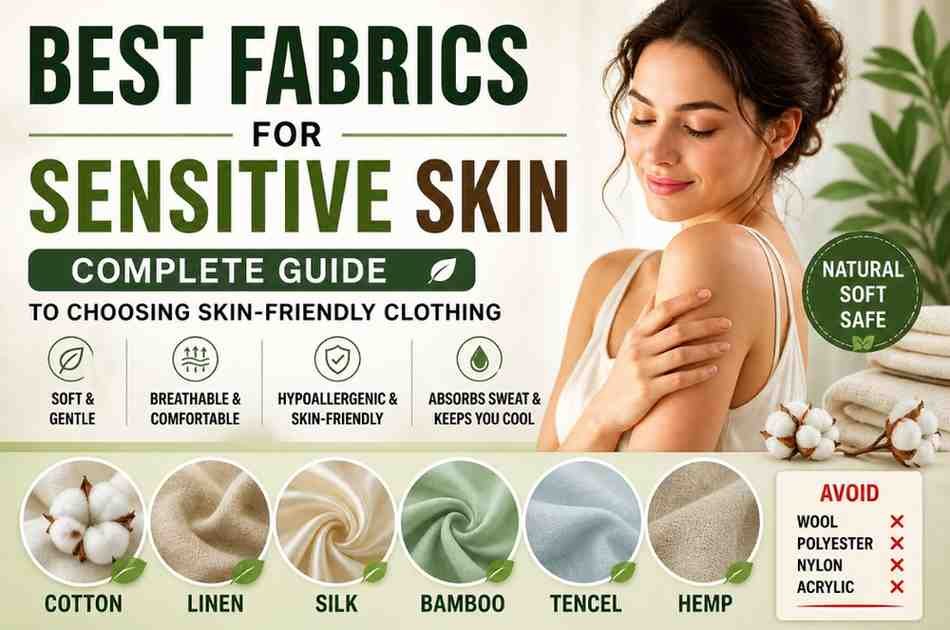
Natural fabrics are widely considered the safest option because they are breathable, soft, and less likely to trap heat or cause friction.
Top Natural Fabrics to Choose
- Cotton: Highly breathable, soft, and versatile. Ideal for everyday wear and undergarments.
- Linen (Flax): Lightweight, cooling, and naturally hypoallergenic. Great for hot climates.
- Hemp: Durable, antimicrobial, and moisture-wicking. Becomes softer with each wash.
- Silk: Smooth, luxurious, and excellent for temperature regulation.
- Cashmere: Ultra-soft and gentle on the skin, though expensive.
These fabrics allow your skin to breathe and reduce sweat buildup—key triggers for irritation.
Special Note on Wool
While wool is natural, it can be irritating for sensitive skin due to its coarse fibers. However, fine Merino wool is much softer and may be tolerated better.
What About Bamboo Fabric?
Bamboo fabric is often marketed as “natural,” but most bamboo textiles are actually semi-synthetic. They are processed using chemicals to convert plant fibers into soft fabric.
Despite this, bamboo viscose remains popular for sensitive skin because it is:
- Soft and smooth
- Breathable
- Moisture-wicking
- Quick-drying
Insight: Bamboo fabric offers comfort benefits but is not as “purely natural” as many believe. Always check labels for processing details.
Synthetic Fabrics: What to Avoid (and Why)
Synthetic fabrics are made from petroleum-based materials and are commonly used due to their durability and affordability. However, they can be problematic for sensitive skin.
Common Synthetic Fabrics
- Polyester
- Nylon
- Rayon (viscose)
- Acrylic
- Spandex (Elastane)
- Polypropylene
Why Synthetic Fabrics Cause Irritation
- Trap heat and sweat
- Reduce airflow
- Increase friction
- May cause allergic reactions
Key Insight: Fabrics that feel fine initially can become irritating after repeated washing due to fiber breakdown and increased roughness.
Natural vs Synthetic Fabrics: Quick Comparison
| Feature | Natural Fabrics | Synthetic Fabrics |
|---|---|---|
| Breathability | High | Low to Moderate |
| Skin Friendliness | Excellent | Often Irritating |
| Moisture Control | Good | Poor |
| Durability | Moderate | High |
| Environmental Impact | Biodegradable | Non-biodegradable |
Best Fabrics for Skin Conditions (Eczema, Psoriasis, Sensitive Skin)
If you have a skin condition, fabric choice becomes even more important.
Recommended Fabrics
- Cotton: Soft, breathable, and easy to wash
- Silk: Gentle and temperature-regulating
- Bamboo viscose: Smooth and moisture-wicking
Fabrics to Avoid
- Wool (coarse types)
- Polyester and nylon
- Rough or heavily textured fabrics
Expert Insight: Clothing should also withstand frequent washing, as people with skin conditions often need to clean garments regularly to remove irritants.
Hidden Triggers in Clothing You Might Be Ignoring
Even the best fabric can cause irritation if certain factors are overlooked:
- Seams and stitching: Rough edges can irritate skin
- Labels and tags: Common source of itching
- Dyes and finishes: May contain irritants
- Fabric blends: Even small synthetic percentages can matter
Practical Tip: Look for tagless clothing or remove labels to reduce irritation.
How to Build a Skin-Friendly Wardrobe
Creating a wardrobe that supports sensitive skin doesn’t require a complete overhaul—just smarter choices.
Smart Shopping Tips
- Choose clothing with at least 50% natural fibers
- Opt for 100% cotton for maximum comfort
- Avoid heavily processed or chemically treated fabrics
- Test new fabrics before buying in bulk
Care Tips for Sensitive Skin
- Use fragrance-free, hypoallergenic detergents
- Avoid fabric softeners with harsh chemicals
- Wash clothes before first use
- Rinse thoroughly to remove detergent residue
The Sustainability Angle: Why Fabric Choice Matters
Choosing natural fabrics doesn’t just benefit your skin—it also impacts the Environment.
- Natural fibers are biodegradable
- Synthetic fabrics contribute to microplastic pollution
- Sustainable fabrics reduce long-term environmental harm
Insight: A skin-friendly wardrobe often overlaps with an eco-friendly one—making it a win-win choice.
Frequently Asked Questions
What is the best fabric for sensitive skin?
Cotton is widely considered the best due to its softness, breathability, and low irritation risk.
Is organic cotton better?
Yes, organic cotton avoids harsh chemicals and pesticides, making it safer for sensitive skin.
Are synthetic fabrics always bad?
Not always, but they are more likely to cause irritation, especially in hot or humid conditions.
Is bamboo fabric safe?
Yes, it is generally safe and comfortable, but it is semi-synthetic due to processing.
What fabrics should I avoid?
Avoid polyester, nylon, acrylic, and rough wool if you have sensitive skin.
Conclusion: Comfort Starts with the Right Fabric
Choosing the best fabrics for sensitive skin is not just about comfort it’s about protecting your skin from unnecessary irritation. Natural fabrics like cotton, linen, and silk offer the best balance of breathability, softness, and safety.
As clothing Technology evolves, the key is to stay informed. Read labels, test materials, and prioritize quality over price.
Final Thought: Your skin is your body’s largest organ—what you wear every day directly affects it. Choose wisely, and your skin will thank you.
For breaking news and live news updates, like us on Facebook or follow us on Twitter and Instagram. Read more on Latest Health on thefoxdaily.com.

COMMENTS 0