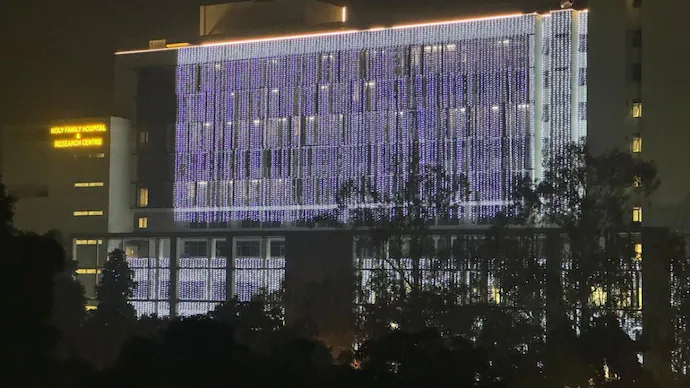
Holy Family Hospital in Delhi has expanded its healthcare infrastructure with the addition of 150 beds and a new super speciality block dedicated to advanced medical treatment, including Cancer Care, organ transplantation and complex neurological procedures. The facility was inaugurated by Vice President C P Radhakrishnan at the hospital’s Okhla premises on November 27, marking a significant expansion of the charitable institution’s capacity to treat patients requiring specialised and critical care.
The new block brings several specialised departments under one facility, including surgical, radiation and medical oncology, haematology-oncology, bone marrow transplantation, nuclear medicine, cardiothoracic and vascular surgery, neurosurgery and organ transplantation. The additional beds will increase the hospital’s capacity beyond its existing 345 beds, enabling it to accommodate more patients seeking advanced treatment.
The expansion comes at a time when access to specialised healthcare remains an important concern for patients and families. By adding infrastructure across multiple medical disciplines, Holy Family Hospital aims to strengthen its ability to provide complex treatment while continuing its charitable healthcare mission.
Holy Family Hospital’s New Super Speciality Block: Key Facilities
The newly inaugurated block is designed to expand the hospital’s services across several areas of specialised medicine. Its departments will cover different stages of diagnosis, treatment and care for patients with complex health conditions.
- Medical oncology: Specialised medical treatment for patients with cancer.
- Surgical oncology: Surgical procedures forming part of cancer treatment.
- Radiation oncology: Cancer treatment services involving radiation-based therapies.
- Haematology-oncology: Care for blood-related cancers and other complex blood disorders.
- Bone marrow transplantation: Specialised transplant services for eligible patients with certain blood and related conditions.
- Nuclear medicine: Medical services that use radioactive substances for diagnostic and therapeutic purposes.
- Cardiothoracic and vascular surgery: Surgical treatment involving the heart, chest and blood vessels.
- Neurosurgery: Surgical care for conditions affecting the brain, spine and nervous system.
- Organ transplantation: Specialised services for patients requiring organ transplant procedures.
The range of departments reflects the hospital’s focus on expanding beyond general medical services to include more complex treatment areas. These specialties often require coordinated care involving doctors, surgeons, diagnostic teams and other healthcare professionals.
150 Additional Beds to Expand Hospital Capacity
One of the most significant aspects of the expansion is the addition of 150 beds. Holy Family Hospital previously had a capacity of 345 beds, and the new addition will take its total capacity beyond that figure.
Additional beds can help hospitals accommodate more patients, particularly those who require admission for surgery, specialised treatment or continued medical supervision. For patients undergoing complex procedures, access to appropriate inpatient facilities is an important part of the overall treatment process.
However, an increase in bed capacity is only one part of healthcare expansion. Specialised services also depend on trained medical professionals, diagnostic facilities, equipment, support staff and coordinated clinical systems. The new block’s range of departments is intended to strengthen the hospital’s infrastructure across several areas of advanced care.
The hospital has described the expansion as part of its continuing effort to provide healthcare to people across socio-economic backgrounds. As a charitable, non-profit institution, its stated mission includes making medical services accessible to a broad section of society.
Vice President Calls for Greater Collaboration in Cancer Care
Addressing the inauguration ceremony, Vice President C P Radhakrishnan highlighted the importance of collaboration among institutions working in cancer treatment. He called for greater cooperation to improve access to care and make cancer treatment more affordable.
He suggested that healthcare institutions, including Holy Family Hospital, consider establishing a common platform where they could share expertise, discuss challenges and work towards improving the availability of quality cancer services.
Such collaboration can be important in a specialised field like oncology, where treatment may involve multiple disciplines and different stages of care. Sharing knowledge and discussing common challenges can help institutions identify areas where cooperation may improve the delivery of services.
The Vice President also acknowledged Holy Family Hospital’s contribution to healthcare and assured its management of his continued support. During the address, he spoke about religious freedom and mutual respect, describing the freedom to practise one’s faith as an enduring strength of India.
Why Expanding Cancer and Transplant Care Matters
The inclusion of oncology and transplantation services is an important part of the hospital’s expansion. Cancer treatment can involve several medical approaches, including surgery, medication and radiation therapy. Patients may also require support from specialists in pathology, imaging, blood disorders and other related disciplines.
Bringing medical, surgical and radiation oncology together within the same hospital infrastructure can support coordination between different treatment teams. The addition of haematology-oncology and bone marrow transplantation further broadens the range of specialised services the institution intends to provide.
Organ transplantation is another area that requires extensive medical coordination. Transplant patients may need assessment before surgery, specialised surgical care and close medical supervision afterwards. Expanding infrastructure for such services can strengthen a hospital’s ability to manage complex treatment pathways, although actual access depends on the availability of clinical teams, facilities and other requirements.
The new block also includes neurosurgery and cardiothoracic and vascular surgery. These specialties deal with conditions that can require highly specialised procedures and coordinated post-operative care. Their inclusion indicates that the expansion is not limited to cancer treatment but covers a broader range of advanced medical needs.
A Historical Connection Between Two Vice Presidents
The inauguration carried a historical significance for Holy Family Hospital. Archbishop Anil J T Couto, president of the New Delhi Holy Family Hospital Society, recalled that the foundation stone of the original hospital building was laid in 1953 by Dr Sarvepalli Radhakrishnan, who was then the Vice President of India.
Seventy-three years later, another Vice President bearing the same surname, C P Radhakrishnan, inaugurated the institution’s new super speciality block. The connection gave the ceremony a symbolic link between the hospital’s beginnings and its latest phase of expansion.
Established in 1953, Holy Family Hospital has developed from its original institutional foundation into a charitable healthcare facility serving patients in Delhi. The new block represents another stage in its effort to expand Medical Infrastructure and add specialised services.
Pope Leo XIV Sends Message to the Hospital
The inauguration also included a message from Pope Leo XIV, which was read out by Very Rev Andrea Francia, Chargé d’Affaires a.i. of the Apostolic Nunciature in India.
In the message, the Pope congratulated the hospital’s leadership and described the new facility as reflecting the Church’s continuing commitment to the healing mission of Jesus Christ.
The message highlighted the religious and humanitarian values associated with the institution’s work. Holy Family Hospital was established by the Medical Mission Sisters and is managed by the Delhi Catholic Archdiocese. Its charitable identity and healthcare mission remain central to its institutional history.
Holy Family Hospital’s Journey Since 1953
Holy Family Hospital was established in 1953 by the Medical Mission Sisters. It is a charitable, non-profit institution managed by the Delhi Catholic Archdiocese and operates through the New Delhi Holy Family Hospital Society.
Its stated approach to healthcare focuses on serving people across socio-economic backgrounds. The institution’s latest expansion adds infrastructure for specialised medical services while extending the capacity of a hospital with a history spanning more than seven decades.
The inauguration of the new block also reflects the changing requirements of healthcare institutions. As hospitals expand their services, they need infrastructure that can support increasingly specialised areas of treatment. The addition of oncology, transplantation, neurosurgery and other departments represents an effort to address a wider range of complex medical needs.
What the Expansion Means for Patients in Delhi
For patients and families seeking specialised treatment, the new block adds another facility to Delhi’s healthcare landscape. Its expanded departments cover several areas in which patients may require coordinated medical and surgical services.
The additional 150 beds may also help the hospital accommodate more inpatients as its specialised services develop. However, the inauguration alone does not establish details such as appointment availability, treatment costs, insurance arrangements or the operational status of every department. Patients should contact the hospital directly for information about specific services, eligibility and access.
The expansion’s broader significance lies in the combination of increased capacity and a wider range of specialised departments. It reflects an effort to strengthen the hospital’s role in advanced healthcare while maintaining its charitable and non-profit identity.
A New Chapter in Holy Family Hospital’s Healthcare Mission
The inauguration of Holy Family Hospital’s new super speciality block marks an important development in the institution’s long history. With 150 additional beds and expanded facilities for cancer treatment, bone marrow transplantation, organ transplantation, neurosurgery and other specialised services, the hospital is increasing its capacity to address complex medical needs.
Vice President C P Radhakrishnan’s call for greater collaboration in cancer care also placed the expansion within a wider discussion about access, affordability and cooperation among healthcare institutions. The historical connection to Dr Sarvepalli Radhakrishnan and the message from Pope Leo XIV added further significance to the ceremony.
Established by the Medical Mission Sisters in 1953, Holy Family Hospital continues to position its work around charitable healthcare. The new block represents its latest effort to expand specialised treatment infrastructure and serve a broader range of patients in Delhi.
For breaking news and live news updates, like us on Facebook or follow us on Twitter and Instagram. Read more on Latest Health on thefoxdaily.com.





COMMENTS 0