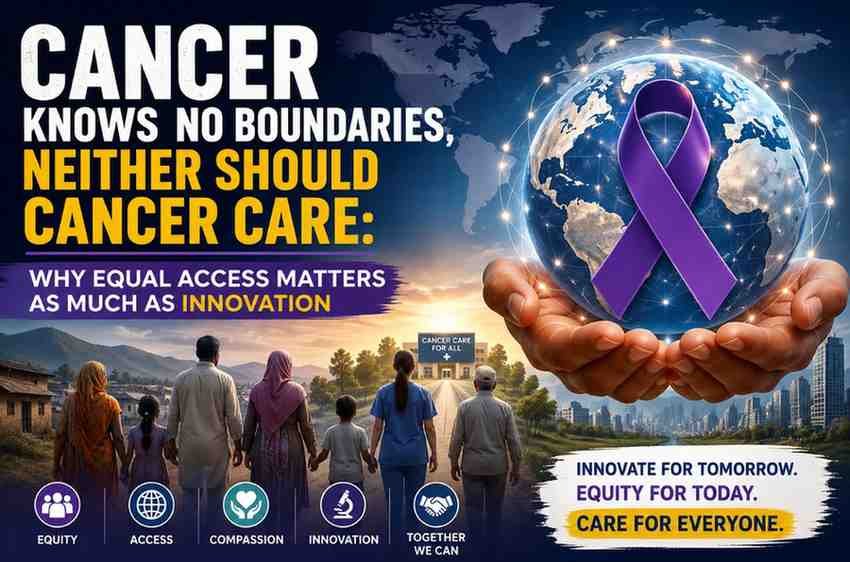
Cancer does not recognize borders, income levels, or social status. It affects people across continents, cultures, and communities. Yet while the disease itself knows no boundaries, access to quality cancer care often does.
Modern oncology has entered a golden age. Precision medicine, immunotherapy, targeted therapies, robotic surgery, and artificial intelligence are reshaping how doctors diagnose and treat malignancies. Survival rates have improved for many cancers that were once considered incurable.
But beneath these scientific successes lies a difficult reality: the benefits of progress are not reaching everyone equally.
From delayed diagnosis and limited screening programs to shortages of specialists and high treatment costs, inequalities continue to define cancer outcomes around the world. Experts increasingly argue that the future of oncology depends not only on discovering new therapies but also on ensuring that existing innovations reach every patient who needs them.
The Revolution in Cancer Research
Few areas of medicine have evolved as rapidly as oncology.
In recent years, researchers have made significant advances in:
- Immunotherapy.
- Precision medicine.
- Targeted therapies.
- Liquid biopsies.
- Genomic profiling.
- Artificial intelligence-assisted diagnosis.
- Minimally invasive surgical techniques.
These innovations have improved survival and quality of life for millions of patients.
Diseases that once carried grim prognoses are increasingly being managed as chronic conditions, allowing many patients to live longer and healthier lives.
The Problem Isn’t Just Science—It’s Access
Scientific breakthroughs mean little if patients cannot access them.
One of the greatest challenges facing global oncology is the gap between medical capability and healthcare delivery.
Barriers include:
- Limited screening facilities.
- Shortages of trained specialists.
- High treatment costs.
- Geographic disparities.
- Delayed diagnosis.
- Lack of awareness.
- Unequal access to clinical trials.
In many regions, patients still present with advanced-stage disease because early detection services remain inaccessible or underutilized.
Why Early Detection Remains One of the Most Powerful Tools
Despite advances in treatment, early diagnosis remains one of the strongest predictors of survival.
Screening programs help identify cancers before symptoms appear, when treatment is often more effective and less invasive.
Screening can improve outcomes in:
- Breast cancer.
- Cervical cancer.
- Colorectal cancer.
- Lung cancer in high-risk individuals.
- Prostate cancer in selected populations.
Yet access to these programs varies significantly between countries and even within the same nation.
Comparison: Advances in Oncology vs Real-World Challenges
| Area of Progress | Scientific Achievement | Persistent Challenge |
|---|---|---|
| Immunotherapy | Improved survival | High cost and limited access |
| Genomic testing | Personalized treatment | Availability and affordability |
| Screening technologies | Earlier detection | Low participation rates |
| Clinical trials | New treatment options | Unequal representation |
| AI-assisted diagnosis | Improved accuracy | Infrastructure limitations |
The Hidden Inequalities in Cancer Care
Cancer outcomes are influenced by much more than biology.
Socioeconomic factors, education, geography, and healthcare infrastructure all play major roles.
Patients in underserved communities may face:
- Long travel distances.
- Financial hardship.
- Limited specialist availability.
- Treatment interruptions.
- Lower participation in clinical trials.
- Reduced access to supportive care.
These disparities can translate into differences in survival.
An Insight Competitors Often Miss: Innovation Alone Does Not Save Lives
Modern medicine often celebrates discoveries, but discoveries only improve outcomes when they are implemented effectively.
A breakthrough drug available to a few thousand patients cannot have the same public health impact as widespread access to screening, pathology services, surgery, and affordable therapies.
In many cases, strengthening healthcare systems may save more lives than introducing the latest technology.
The future of oncology therefore depends not only on innovation but also on delivery.
Clinical Trials Need Greater Diversity
Clinical research forms the backbone of cancer progress, but many populations remain underrepresented in trials.
Differences in genetics, lifestyle, and healthcare access mean treatments may not perform identically across all groups.
Improving diversity in research can help:
- Enhance treatment effectiveness.
- Identify population-specific responses.
- Reduce disparities.
- Strengthen scientific evidence.
- Improve trust in healthcare systems.
The Growing Role of Technology and Artificial Intelligence
Artificial intelligence is beginning to transform oncology.
AI tools may assist with:
- Image analysis.
- Early cancer detection.
- Risk prediction.
- Treatment planning.
- Drug development.
However, technology can only narrow disparities if it is implemented equitably. Otherwise, digital advances risk widening existing gaps.
Why Survivorship Matters Too
Cancer care does not end when treatment stops.
Millions of survivors require ongoing support for:
- Physical rehabilitation.
- Mental health.
- Nutrition.
- Pain management.
- Monitoring for recurrence.
- Quality of life.
As survival improves, survivorship care is becoming an increasingly important component of comprehensive oncology.
Prediction: The Next Frontier in Oncology Will Be Equity
The coming decade is likely to witness extraordinary scientific advances, including personalized vaccines, AI-driven diagnostics, and more sophisticated targeted therapies.
Yet experts believe the greatest challenge may not be inventing new treatments—it may be ensuring that these innovations reach all patients.
The countries and healthcare systems that succeed will be those that combine technological progress with equitable delivery.
In this sense, access may become the defining issue of 21st-century cancer care.
What Patients and Policymakers Can Do
- Strengthen screening programs.
- Improve awareness and education.
- Expand specialist training.
- Support clinical research.
- Reduce financial barriers.
- Promote early diagnosis.
- Invest in healthcare infrastructure.
Addressing these challenges requires collaboration among governments, healthcare professionals, researchers, industry, and patient communities.
Conclusion
Oncology research has entered an era of unprecedented promise. Scientific breakthroughs are changing what is possible in cancer care, offering hope to millions of patients worldwide. But progress measured only by innovation risks overlooking an uncomfortable truth: many people still lack access to timely diagnosis, quality treatment, and modern therapies.
Cancer knows no boundaries, and neither should the systems designed to fight it. The next chapter in oncology will not be defined solely by the drugs we discover, but by our ability to ensure that every patient regardless of geography, income, or background can benefit from those discoveries.
Because in the fight against cancer, equality may ultimately prove to be one of medicine’s most powerful treatments.
For breaking news and live news updates, like us on Facebook or follow us on Twitter and Instagram. Read more on Latest Health on thefoxdaily.com.




COMMENTS 0