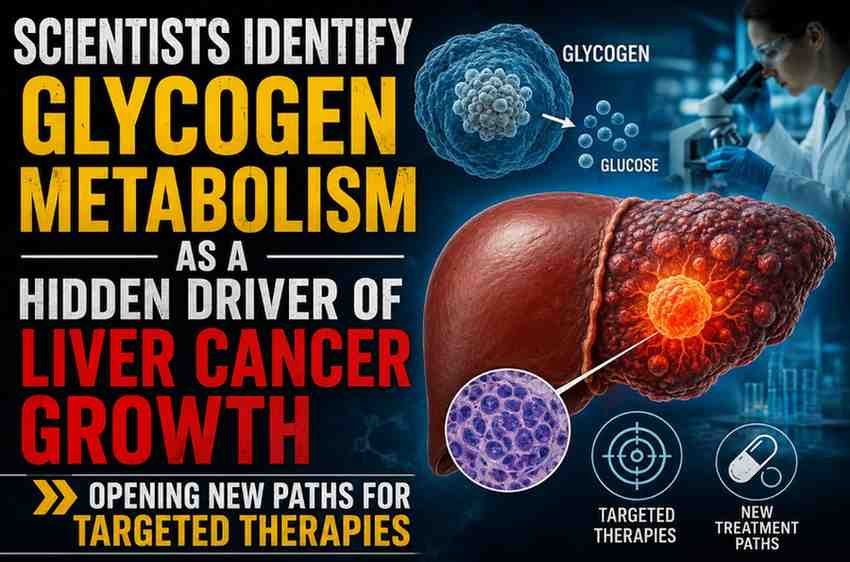
Liver cancer remains one of the deadliest cancers worldwide, largely because it is often diagnosed late and has limited treatment options. Now, scientists are uncovering a surprising culprit behind tumor progression: metabolic rewiring of glycogen, the body’s primary storage form of glucose.
Once considered merely an energy reserve, glycogen is increasingly being recognized as a dynamic player in cancer biology. Emerging studies suggest that liver tumors can manipulate glycogen metabolism to support rapid growth, survive hostile environments, and adapt to changing nutrient supplies. This discovery is transforming how researchers think about cancer metabolism and could pave the way for entirely new therapeutic approaches.
Rather than focusing solely on genetic mutations, scientists are now exploring how cancer cells alter their internal fuel systems to gain a survival advantage. The findings highlight the growing importance of metabolism as a battlefield in the fight against cancer.
Why Liver Cancer Remains a Global Health Challenge
Liver cancer, particularly hepatocellular carcinoma (HCC), accounts for a significant share of cancer-related deaths worldwide. It is commonly linked to chronic liver diseases, hepatitis infections, alcohol-related damage, fatty liver disease, obesity, and diabetes.
One reason liver cancer is difficult to treat is its ability to adapt. Tumors continuously modify their biology to survive under stress, resist therapies, and maintain uncontrolled growth.
Understanding these survival mechanisms has become one of the most important areas of modern cancer research.
What Is Glycogen and Why Does It Matter?
Glycogen is the body’s storage form of glucose, primarily found in the liver and muscles. Under normal conditions, it acts like an energy bank, storing excess sugar and releasing it when needed.
For decades, glycogen was viewed simply as a metabolic reserve. However, recent research suggests that cancer cells may exploit glycogen in unexpected ways.
Instead of using glycogen solely for energy storage, tumors appear capable of rewiring its metabolism to fuel growth and support survival during periods of stress or nutrient deprivation.
The Concept of Metabolic Rewiring
Metabolic rewiring refers to the ability of cancer cells to alter normal biochemical pathways to meet their unique demands. Unlike healthy cells, tumors require enormous amounts of energy and building blocks to sustain rapid division.
To achieve this, they modify how nutrients such as glucose, amino acids, and fats are processed.
Glycogen metabolism is now emerging as another crucial pathway that cancer cells manipulate to maintain their aggressive behavior.
How Glycogen Supports Liver Cancer Growth
Scientists have discovered that glycogen metabolism can provide several advantages to tumor cells.
- Supplies energy during nutrient shortages
- Supports rapid cellular proliferation
- Protects cells from oxidative stress
- Enhances survival in low-oxygen environments
- Promotes resistance to hostile conditions
- Facilitates metabolic flexibility
This adaptability allows liver cancer cells to thrive even when faced with limited resources or therapeutic interventions.
Why the Liver Is Especially Vulnerable
The liver plays a central role in regulating metabolism, making it uniquely susceptible to disruptions in glucose and glycogen pathways.
Because the organ naturally stores large amounts of glycogen, alterations in these processes can have profound consequences. Cancer cells appear to exploit the liver’s metabolic machinery to create an environment favorable for tumor development.
This makes glycogen metabolism particularly relevant in liver cancer compared with many other tumor types.
The Shift From Genetics to Metabolism
For decades, cancer research focused heavily on genetic mutations. While genetic abnormalities remain important, scientists increasingly recognize that metabolism and genetics are deeply interconnected.
Tumors not only accumulate mutations but also reprogram their energy systems to support those genetic changes.
This emerging perspective is leading researchers toward more comprehensive approaches that target both molecular and metabolic vulnerabilities.
| Traditional Cancer Model | Emerging Metabolic Perspective |
|---|---|
| Focus on genetic mutations | Focus on energy pathways and metabolism |
| Tumor DNA as primary target | Cellular fuel systems as therapeutic targets |
| Single pathway interventions | Integrated metabolic strategies |
| Static view of tumors | Dynamic and adaptive tumor behavior |
Why This Discovery Could Transform Treatment
Current therapies for advanced liver cancer often face limitations because tumors develop resistance over time. By targeting glycogen metabolism, researchers hope to deprive cancer cells of critical resources they need to survive.
Instead of attacking tumors directly, future treatments may disrupt the metabolic processes that sustain them.
This strategy could potentially enhance the effectiveness of existing therapies and reduce the likelihood of resistance.
The Relationship Between Metabolism and Tumor Microenvironment
Cancer does not exist in isolation. Tumors interact constantly with surrounding cells, blood vessels, and immune systems.
Metabolic rewiring affects this entire ecosystem. Changes in glycogen utilization may influence inflammation, immune responses, and communication between cancer cells and their environment.
Understanding these interactions could lead to more effective combination therapies involving immunotherapy and targeted treatments.
Comparison With Other Metabolic Pathways in Cancer
| Metabolic Pathway | Role in Cancer |
|---|---|
| Glucose Metabolism | Provides energy for rapid growth |
| Lipid Metabolism | Supports membrane synthesis and signaling |
| Amino Acid Metabolism | Supplies building blocks for proteins |
| Glycogen Metabolism | Enhances adaptability and stress resistance |
| Mitochondrial Function | Regulates cellular energy production |
Implications for Precision Medicine
The discovery of glycogen’s role in liver cancer aligns with the broader movement toward precision medicine. Future treatments may be tailored according to the metabolic characteristics of individual tumors.
Instead of treating all liver cancers the same way, doctors could potentially identify patients whose tumors rely heavily on glycogen metabolism and design targeted interventions accordingly.
This personalized approach could improve outcomes while minimizing unnecessary side effects.
Could Glycogen Become a Biomarker?
Researchers are also exploring whether glycogen-related changes could serve as biomarkers for diagnosis or prognosis. Detecting specific metabolic signatures might help identify aggressive tumors earlier or predict how patients will respond to treatment.
Such advances could significantly improve early detection and monitoring strategies.
Early diagnosis remains one of the most powerful tools in improving survival rates for liver cancer patients.
What This Means for Future Cancer Research
The growing interest in glycogen metabolism reflects a broader shift in oncology. Scientists increasingly view cancer as a disease influenced not only by genes but also by metabolism, immunity, and environmental interactions.
Artificial intelligence, advanced imaging technologies, and molecular biology are accelerating discoveries in this field, creating opportunities for entirely new treatment paradigms.
The coming decade may witness a transition from purely genetic approaches to integrated strategies that address the full complexity of cancer biology.
Conclusion
The discovery that metabolic rewiring of glycogen acts as a key driver of liver cancer growth marks a significant step forward in understanding one of the world’s most challenging cancers. What was once regarded as a simple energy reserve is now emerging as a powerful factor influencing tumor survival, adaptability, and progression.
This shift in perspective highlights an important truth about cancer: it is not merely a genetic disease but also a metabolic one. By uncovering how tumors exploit glycogen pathways, scientists are opening the door to innovative therapies that could one day transform patient outcomes.
While much research remains ahead, the findings underscore the promise of targeting metabolism as a new frontier in cancer treatment—one that may ultimately change how liver cancer is diagnosed, managed, and defeated.
For breaking news and live news updates, like us on Facebook or follow us on Twitter and Instagram. Read more on Latest Health on thefoxdaily.com.

COMMENTS 0