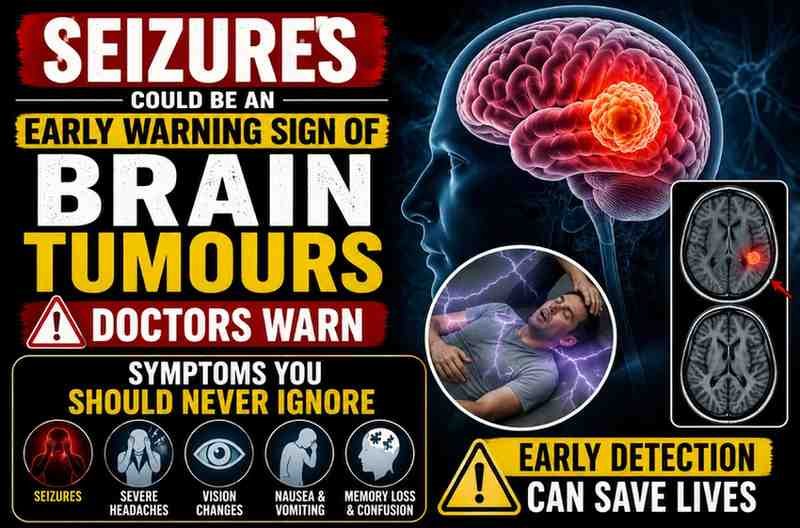
Seizures are often associated with epilepsy, but neurologists and oncologists warn that they can also be one of the earliest signs of a Brain Tumour. As awareness around neurological health grows, doctors are urging individuals and families to pay attention to sudden, unexplained seizure episodes, particularly in adults with no prior history of epilepsy.
The warning comes amid growing concern about the burden of brain tumours in India. According to estimates from the Indian Council of Medical Research’s National Cancer Registry Programme (NCRP), brain tumours account for a significant proportion of cancers affecting the central nervous system. While brain tumours remain relatively uncommon compared to cancers of the breast, lung, or gastrointestinal tract, their impact can be particularly severe because they directly affect the body’s control centre the brain.
Experts emphasize that not every seizure indicates a brain tumour. However, when seizures occur without a clear explanation, they warrant prompt medical evaluation to rule out serious underlying conditions.
Why Seizures Can Be a Sign of Brain Tumours
The brain communicates through billions of nerve cells that transmit electrical signals. A seizure occurs when abnormal electrical activity disrupts normal brain function. Brain tumours can interfere with these signals by exerting pressure on surrounding tissues, causing inflammation, or directly affecting regions responsible for electrical regulation.
Depending on the tumour’s location, size, and growth rate, seizures may appear before other symptoms become noticeable.
Neurologists explain that in some cases, seizures are the first symptom that brings a patient to medical attention, leading to the discovery of a previously undiagnosed tumour.
What Exactly Is a Brain Tumour?
A brain tumour is an abnormal growth of cells within or around the brain. Tumours can be classified into two major categories:
| Type | Description |
|---|---|
| Benign Brain Tumour | Non-cancerous growth that may still cause serious symptoms due to pressure on brain structures. |
| Malignant Brain Tumour | Cancerous growth that can invade surrounding tissues and often requires aggressive treatment. |
Even benign tumours can become dangerous because the skull provides limited space for expansion. Any abnormal growth can affect critical functions such as movement, speech, memory, vision, and consciousness.
Common Types of Seizures Associated With Brain Tumours
Brain tumour-related seizures do not always look dramatic. Many people imagine seizures as full-body convulsions, but symptoms can be much more subtle.
Doctors commonly observe:
- Sudden jerking movements of an arm or leg.
- Brief periods of confusion or unresponsiveness.
- Staring spells.
- Unusual sensations such as tingling or numbness.
- Temporary speech difficulties.
- Sudden changes in vision.
- Loss of awareness of surroundings.
- Generalized convulsions involving the entire body.
Because symptoms vary widely, many individuals initially dismiss them as stress, fatigue, or temporary health issues.
Other Early Symptoms of a Brain Tumour
Seizures are only one possible warning sign. Brain tumours can produce a variety of symptoms depending on their location and rate of growth.
Doctors advise seeking medical evaluation if any of the following symptoms persist or worsen:
- Frequent or severe headaches.
- Morning headaches accompanied by nausea.
- Unexplained vomiting.
- Blurred or double vision.
- Difficulty speaking or understanding language.
- Changes in personality or behaviour.
- Memory problems.
- Weakness in one side of the body.
- Balance and coordination difficulties.
- Hearing changes.
- Persistent fatigue.
While these symptoms can occur for many reasons, persistent neurological changes should never be ignored.
Why Brain Tumours Are Often Diagnosed Late
One of the biggest challenges in neuro-oncology is that brain tumour symptoms often mimic common medical conditions. Headaches may be attributed to stress. Memory issues can be mistaken for aging. Vision changes may be blamed on eye strain.
As a result, many patients delay seeking medical care until symptoms become severe enough to interfere with daily life.
Doctors say greater public awareness could significantly improve early detection rates and treatment outcomes.
The Growing Burden of Brain Tumours in India
Although brain tumours represent a smaller percentage of total cancer cases, they carry substantial medical, social, and economic consequences.
According to cancer registry estimates, central nervous system cancers continue to be reported across population-based cancer registries in India. Advances in diagnostic imaging have improved detection rates, but healthcare experts believe awareness remains a critical challenge.
Brain tumours affect people across all age groups, from young children to older adults. Certain tumour types are more common in specific age categories, making early recognition particularly important.
How Doctors Diagnose a Brain Tumour
When a patient experiences an unexplained seizure, physicians typically begin with a detailed neurological assessment.
Diagnostic investigations may include:
- Neurological examination.
- Magnetic Resonance Imaging (MRI).
- Computed Tomography (CT) scan.
- Electroencephalogram (EEG).
- Blood tests.
- Biopsy, when necessary.
MRI remains one of the most effective tools for identifying abnormalities within brain tissue and determining tumour characteristics.
Treatment Options Have Improved Significantly
One of the most encouraging developments in neuro-oncology is the rapid advancement of treatment technologies.
Depending on tumour type, location, and stage, treatment may include:
- Surgical removal.
- Radiation therapy.
- Chemotherapy.
- Targeted therapies.
- Immunotherapy in selected cases.
- Anti-seizure medications.
Modern imaging, precision surgery, and advanced radiation techniques have significantly improved outcomes for many patients compared to previous decades.
The Hidden Cost of Delayed Diagnosis
A delayed diagnosis can have consequences beyond disease progression. Brain tumours can affect education, employment, family life, and mental health.
Patients may experience cognitive difficulties, emotional distress, reduced independence, and financial strain resulting from prolonged treatment.
Early identification not only improves medical outcomes but can also preserve quality of life and reduce long-term complications.
What Makes Seizures a Particularly Important Warning Sign?
Unlike headaches or fatigue, which are common and often benign, a first-time seizure in adulthood is considered a significant neurological event. Medical experts emphasize that every unexplained seizure deserves professional evaluation.
Although the cause may ultimately be unrelated to a tumour, ruling out serious neurological conditions is essential.
Doctors note that many patients diagnosed at earlier stages first entered the healthcare system because a seizure prompted immediate investigation.
A Comparison: Brain Tumour Symptoms vs Common Everyday Conditions
| Symptom | Common Explanation | When Medical Evaluation Is Needed |
|---|---|---|
| Headache | Stress, dehydration, lack of sleep | Persistent, worsening, or accompanied by neurological symptoms |
| Vision Changes | Eye strain or refractive errors | Sudden or progressive vision loss |
| Memory Problems | Stress or aging | Rapid cognitive decline or confusion |
| Seizure | Various neurological causes | Always requires prompt medical assessment |
Why Awareness Could Save Lives
Many neurological conditions benefit from early intervention, and brain tumours are no exception. Public awareness campaigns have traditionally focused on heart disease, diabetes, and more common cancers. However, experts believe neurological warning signs deserve greater attention.
Recognizing symptoms such as seizures, unexplained headaches, or sudden neurological changes can encourage earlier consultations and faster diagnosis.
The challenge is not to create unnecessary fear but to promote informed vigilance. Most headaches are not caused by brain tumours, and most seizures do not automatically indicate cancer. Nevertheless, understanding when symptoms require medical attention remains critical.
Conclusion
Doctors are increasingly emphasizing that seizures can sometimes be the earliest indication of a brain tumour. While many seizure episodes have causes unrelated to cancer, unexplained neurological symptoms should never be ignored.
With brain tumours accounting for a significant share of central nervous system cancers reported in India, awareness, early diagnosis, and timely treatment remain crucial. Advances in imaging, surgery, and targeted therapies have improved outcomes considerably, but these benefits depend on prompt medical evaluation.
The key message from specialists is simple: a first-time seizure is not something to wait and watch. Seeking immediate medical attention could make a life-changing difference.
For breaking news and live news updates, like us on Facebook or follow us on Twitter and Instagram. Read more on Latest Health on thefoxdaily.com.






COMMENTS 0