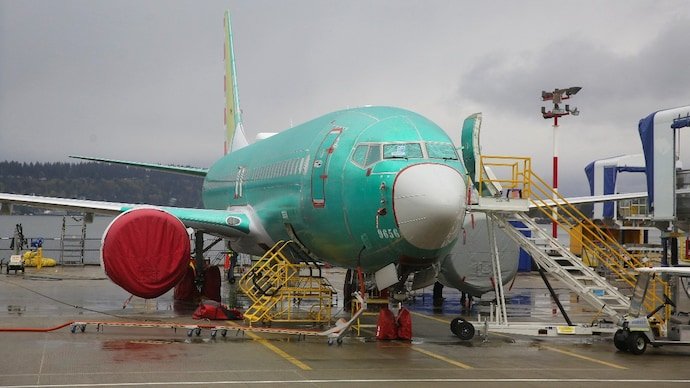
A Boeing software glitch affecting automated flight guidance on certain 737 MAX aircraft could potentially involve 96 planes operated by Air India Express and Akasa Air, with the manufacturer working on a permanent software fix.
Boeing has identified a software issue that can cause a reduction in flight Automation during a specific landing scenario. The problem involves automated flight guidance and may arise when pilots change the planned flight path following a missed approach.
The issue does not prevent pilots from manually flying the aircraft. Boeing has informed operators about the problem and reinforced existing procedures intended to help flight crews safely manage the situation if the automation disengages.
The development puts the Boeing 737 MAX under additional attention in India, where airlines operate a significant number of the aircraft and where Aviation safety has remained under heightened scrutiny following the June 2025 Air India crash in Ahmedabad.
Which Indian Airlines Could Be Affected?
Air India Express and Akasa Air together operate around 96 Boeing 737 MAX aircraft, according to the information available on their fleets.
Air India Express operates approximately 53 Boeing 737 MAX aircraft, while Akasa Air has 43. The potential figure of 96 aircraft therefore covers the combined 737 MAX fleets of the two Indian carriers.
However, the existence of the software issue does not mean that all 96 aircraft have experienced the problem. Boeing has described the issue as affecting some 737 MAX aircraft, while individual aircraft affected by the software condition were not identified in the information provided.
Akasa Air said it was coordinating closely with Boeing and maintained that the issue had no impact on the safety of its operations. The airline did not disclose whether any of its aircraft had actually experienced the specific automation problem.
Air India Express had not immediately responded to requests for comment on the issue. There was also no immediate response from India’s Directorate General of Civil Aviation (DGCA) regarding whether it was examining the software problem or considering any advisory for Indian operators.
What Is the Boeing 737 MAX Autopilot Glitch?
The issue concerns software associated with the aircraft’s automated flight guidance system. According to reports citing Boeing documents, the problem can emerge after a missed approach when flight crews subsequently modify their intended flight path.
A missed approach occurs when an aircraft does not continue with a landing and instead follows a procedure to climb away and prepare for another approach. This can happen for various operational reasons, including an approach that cannot safely be completed.
The software issue identified by Boeing involves what can happen after such a missed approach when the subsequent approach path differs from the flight path that had originally been planned.
Under that specific sequence, the automated flight guidance system may disengage, resulting in a reduction in automation available to the pilots.
That distinction is important. The reported glitch does not mean the aircraft becomes uncontrollable or incapable of continuing its flight. The pilots remain able to fly the aircraft manually and can follow established procedures for managing a reduction in automation.
Boeing Working on Permanent Software Fix
A Boeing spokesperson said the company notified 737 operators about the software issue last month and provided information reinforcing existing pilot procedures.
The manufacturer is now working on a software update intended to permanently address the problem.
The company said the information provided to operators was designed to ensure pilots were prepared to safely handle a reduction in automation if the relevant landing scenario occurred.
Until the permanent update is available, existing procedures remain the main operational safeguard. Sources cited in reports said Boeing has advised operators to reset the system following a missed approach as a precaution.
The approach reflects the difference between a software defect requiring a permanent correction and an immediate flight-safety emergency. Airlines can continue operating aircraft under established procedures while the manufacturer develops and deploys the software update, subject to applicable regulatory requirements.
Akasa Air Says There Is No Impact on Operational Safety
Akasa Air said it was working closely with Boeing over the software issue and emphasized that its 737 MAX operations remained safe.
“We are closely coordinating with Boeing and can confirm that there is no impact on the safety of Akasa Air operations,” an airline spokesperson said.
The airline added that its aircraft continued to operate in accordance with established procedures and applicable regulatory requirements.
Akasa did not say whether any of its 43 Boeing 737 MAX aircraft had encountered the specific software condition. As a result, the reported potential fleet exposure should not be interpreted as confirmation that all of the airline’s aircraft have experienced the glitch.
Air India Express had not immediately provided a response, leaving the carrier’s specific operational experience with the issue unclear.
DGCA Response Remains Awaited
The role of India’s aviation regulator is another key part of the development. The DGCA had not immediately responded to whether it was assessing the Boeing software issue or considering any instructions for Indian airlines operating 737 MAX aircraft.
Regulatory action can range from monitoring a manufacturer’s technical instructions to issuing operational guidance or requiring specific inspections or software changes, depending on the nature and severity of an identified problem.
In this case, Boeing has already communicated with operators and reinforced procedures for pilots. The eventual permanent software update will be another important step in determining how the issue is resolved across affected aircraft.
Why the Issue Is Significant for Indian Aviation
The software glitch comes at a sensitive time for Boeing aircraft in India. The aviation industry has been under increased scrutiny since the crash of an Air India Boeing 787-8 Dreamliner shortly after take-off from Ahmedabad in June 2025.
The Ahmedabad crash killed 260 people and led to additional safety attention surrounding Boeing aircraft operated by Indian airlines.
Following the crash, the DGCA mandated safety and pre-flight maintenance checks for Boeing 787-8 and 787-9 Dreamliner aircraft operated by Indian airlines.
The latest software issue, however, involves the 737 MAX rather than the 787 Dreamliner. The two aircraft families are different, and the software issue described by Boeing is separate from the circumstances surrounding the Ahmedabad crash.
Keeping those incidents separate is important when assessing the latest development. The fact that both involve Boeing aircraft does not establish a connection between them.
Earlier Boeing 787 Incident Also Drew Attention
Another Boeing-related incident involving an Indian airline occurred in February, when an Air India Boeing 787-8 operating a London-Bengaluru service was grounded after its pilot reported a possible problem involving the locking mechanism of a fuel-control switch.
The crew had reported that the switch failed twice to remain positively latched in the “run” position when light vertical pressure was applied during engine start-up. It remained stable on the third attempt, and the flight was completed without incident.
The Indian government later said Boeing conducted a detailed examination of the mechanism and found no abnormality.
The fuel-control switch regulates fuel flow to an aircraft’s engines. The incident therefore concerned a different component and a different aircraft family from the latest 737 MAX software issue.
The distinction matters because the current problem is specifically related to automated flight guidance during a particular sequence involving a missed approach, rather than the fuel-control system on the 787.
Boeing 737 MAX Has a History of Safety Scrutiny
The 737 MAX has faced extensive scrutiny since two fatal crashes involving the aircraft in 2018 and 2019.
A Lion Air 737 MAX 8 crashed in Indonesia in October 2018, killing 189 people. Five months later, an Ethiopian Airlines 737 MAX 8 crashed in March 2019, killing 157 people.
The two crashes resulted in the worldwide grounding of the 737 MAX and prompted investigations into the aircraft’s flight-control systems, certification and Boeing’s safety processes.
The model returned to service after modifications and regulatory reviews, but its safety record has continued to receive close attention from airlines, regulators and the aviation industry.
Alaska Airlines Door Plug Incident Renewed Concerns
The 737 MAX faced renewed scrutiny in January 2024 after a door plug separated from an Alaska Airlines 737 MAX 9 during a flight.
The incident led to investigations into Boeing’s manufacturing and quality-control processes and intensified questions about how aircraft were being assembled and inspected before delivery.
The latest software issue is different from the Alaska Airlines door-plug incident. It concerns automated flight guidance software rather than aircraft assembly or a structural component.
Nevertheless, each new technical issue involving the 737 MAX is likely to receive attention because of the aircraft’s history and the level of scrutiny surrounding the program.
US Airlines Seek Older Software Version for New Jets
The latest software problem has also reportedly affected delivery preferences among some major US airlines.
Southwest Airlines and United Airlines have asked Boeing not to deliver new 737 MAX aircraft equipped with the software associated with the issue, instead requesting an earlier software version, according to reports citing The Wall Street Journal.
The reported requests highlight the operational importance of software configuration in modern commercial aircraft. Airlines can evaluate technical changes not only in terms of whether a problem can be managed safely but also in terms of operational continuity, pilot procedures and fleet consistency.
Boeing’s work on a permanent update is therefore significant for operators that want to maintain a consistent and fully corrected software configuration across their fleets.
More Than 2,400 Boeing 737 MAX Aircraft Delivered Globally
The scale of the 737 MAX fleet makes software reliability an issue with global implications. Boeing has delivered more than 2,400 737 MAX aircraft to airlines around the world.
A software condition that applies only under a specific flight scenario can therefore affect a large number of operators even if most flights never encounter the circumstances required to trigger it.
Modern commercial aircraft depend on interconnected software and automated systems for navigation, flight guidance and other functions. When manufacturers identify a software issue, airlines can often use established procedures while a corrected version is developed, tested and introduced.
For pilots, however, maintaining Awareness of how automation behaves during unusual or changing flight conditions remains essential. The Boeing guidance in this case is intended to ensure crews know how to respond if the automated system disengages following the relevant missed-approach sequence.
What Happens Next for the 737 MAX?
Boeing’s immediate priority is to complete and distribute the permanent software update. In the meantime, operators have been informed of the issue and existing pilot procedures remain in place.
For Indian airlines, attention will likely remain focused on whether any aircraft in their fleets have experienced the specific software condition and whether the DGCA issues additional guidance.
Akasa Air has said its operations remain safe and that it is coordinating with Boeing. Air India Express has yet to provide a response in the information available on the issue.
The reported glitch does not mean that India’s entire fleet of 96 Boeing 737 MAX aircraft is unsafe or that all 96 aircraft have experienced an automation failure. It identifies a potential software condition that can arise during a specific sequence after a missed approach.
With established procedures already communicated to operators and a permanent software fix under development, the focus now is on completing the technical correction and ensuring affected aircraft receive the appropriate update. The episode nevertheless adds another layer of attention to Boeing’s aircraft at a time when airlines, regulators and passengers continue to place a strong emphasis on aviation safety and reliability.
For breaking news and live news updates, like us on Facebook or follow us on Twitter and Instagram. Read more on Latest India on thefoxdaily.com.




COMMENTS 0