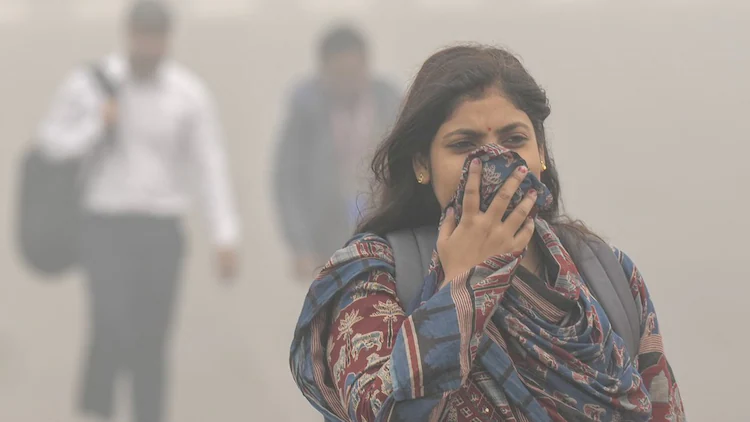
India is generally described as a country with four seasons: summer, monsoon, autumn and winter. But anyone who has lived and worked in Delhi-NCR for years knows that the capital appears to have added another season to its calendar. It arrives around October, settles in by November and often stays long enough to affect everyday life. Its name is pollution season.
Unlike the monsoon or winter, this is a season nobody welcomes. It brings hazy skies, deteriorating Air Quality and growing concerns about the health of millions of residents. For people who have spent years in the capital, the return of polluted air has become an increasingly familiar part of the annual calendar.
After a decade in Delhi, the experience can feel particularly exhausting. What should be an ordinary transition towards winter instead becomes a period of checking air quality before stepping outside, reconsidering outdoor activities and worrying about the long-term consequences of breathing polluted air.
The problem is no longer limited to a few days of poor visibility or an occasional spike in pollution. It has become a recurring Public Health concern that influences how people work, travel, exercise and plan their daily routines.
Pollution Season Has Become Part of Everyday Life
For Delhi residents, October and November increasingly bring a familiar set of precautions. Checking the Air Quality Index (AQI) can become as routine as checking the temperature or the chance of rain.
A morning walk in a neighbourhood park may require reconsideration. Parents worry about children spending time outdoors, elderly residents are advised to take precautions, and people with respiratory conditions face additional challenges when pollution levels rise.
Even commuting to work can become an uncomfortable experience. Residents travelling by road, walking to public transport or spending long hours outdoors cannot completely avoid exposure to the surrounding air.
The physical effects can be immediate. Irritated throats, burning eyes, coughing and breathing discomfort are among the problems residents may experience during periods of severe pollution. For people with existing respiratory or cardiovascular conditions, exposure can present additional health risks.
There is also a less visible concern: the possible cumulative effects of repeated exposure over several years. When polluted air returns every winter, residents are left wondering what the long-term consequences could mean for their health and quality of life.
The most troubling aspect is the normalisation of these conditions. People increasingly adjust their routines to accommodate unhealthy air, even though clean air should be a basic requirement for living in a city.
Why Does Delhi’s Pollution Return Every October and November?
Delhi’s seasonal air pollution is driven by a combination of emission sources and weather conditions. The problem cannot be explained by a single activity or blamed entirely on one neighbouring state.
Vehicle emissions, industrial activity, construction dust, road dust, waste burning and other sources contribute to pollution throughout the year. During the colder months, weather conditions can make the situation worse by limiting the movement and dispersion of pollutants.
Low wind speeds and temperature inversions can prevent polluted air from dispersing effectively. When pollutants remain concentrated close to the ground, air quality can deteriorate rapidly, particularly when several emission sources contribute at the same time.
Seasonal agricultural residue burning in parts of northern India can add to the pollution burden during this period. However, it is only one part of a much wider problem involving emissions within Delhi and across the surrounding region.
This combination makes the pollution season particularly difficult to manage. Even when one source receives attention, other sources continue contributing to poor air quality.
Every Winter Brings Another Political Blame Game
As air quality deteriorates, Delhi’s pollution problem frequently becomes a political debate. Governments and political parties point towards different causes, with neighbouring states, agricultural stubble burning, construction activity and vehicle emissions often becoming central to the discussion.
Stubble burning regularly attracts attention because it coincides with the period when pollution levels begin rising across northern India. Construction dust and industrial emissions also feature prominently, while restrictions on certain vehicles and activities are announced as part of emergency responses.
Meetings, press conferences and public statements follow. Political representatives debate responsibility, officials discuss possible interventions, and residents wait for conditions to improve.
But the recurring nature of the crisis raises a fundamental question: why does a problem that returns at a broadly predictable time every year continue to catch the system struggling to respond?
The issue is not simply whether individual measures are announced. It is whether those measures produce sustained improvements and whether authorities can demonstrate that their actions are reducing pollution across the region.
Why Regional Coordination Matters
Delhi’s air pollution does not stop at the city’s administrative boundaries. The National Capital Region includes neighbouring areas across state borders, and pollution sources in one location can affect air quality elsewhere.
This makes cooperation between governments and agencies essential. Delhi, Haryana, Uttar Pradesh, Punjab and other parts of the wider northern region need coordinated approaches to emissions, transport, industrial activity, agricultural practices and dust management.
Measures taken by one administration may have limited results if neighbouring areas do not implement complementary policies. Similarly, temporary restrictions in Delhi cannot address every source of pollution affecting the wider region.
Effective coordination requires shared monitoring, consistent enforcement, clear responsibilities and long-term planning. Without these elements, the annual debate risks becoming more visible than the progress needed to address the problem.
Delhi’s Pollution Problem Is Affecting Its Image
Delhi is India’s national capital and one of the country’s most important centres for education, employment, business, government and culture. It attracts students, professionals, entrepreneurs and families from different parts of the country.
However, recurring episodes of severe air pollution have increasingly shaped how the city is perceived internationally. Images of grey skies, buildings disappearing behind smog and residents wearing protective masks often circulate across global media and social platforms.
For a city that represents India’s political and economic importance, this association carries consequences beyond its immediate environmental conditions.
Air quality can influence decisions about where people want to study, work and settle. Families considering a move to the capital may weigh pollution alongside salaries, housing costs, education opportunities and commuting times.
Businesses may also need to consider how prolonged periods of poor air quality affect employees, workplace arrangements and recruitment. Although pollution is only one factor in relocation decisions, its recurring nature makes it difficult for employers and workers to ignore.
Young Professionals Are Rethinking Life in the Capital
For decades, Delhi represented opportunity for people looking to build their careers. Students arrived for universities and competitive examinations, young professionals moved for jobs, entrepreneurs came to establish businesses, and families settled in the hope of creating better futures.
That promise has not disappeared, but the calculation involved in moving to the capital has become more complicated for some residents.
Salary, rent, commuting time and career growth are no longer the only considerations. Air quality and its potential effect on health have also become part of the decision.
A young professional considering a job in Delhi may wonder how difficult the winter months will be, whether outdoor exercise will remain possible and whether working remotely or moving to another city could become necessary during periods of severe pollution.
These concerns are particularly significant for people who expect to spend several years building their careers in the capital. Repeated exposure to unhealthy air can turn what should be a temporary seasonal inconvenience into a long-term quality-of-life issue.
The idea of arriving in Delhi during spring, building professional networks through summer and monsoon, and arranging a transfer or return ticket before October may sound exaggerated. Yet it reflects the frustration of residents who feel compelled to plan around conditions that should not be accepted as normal.
The Financial and Personal Cost of Toxic Air
Pollution also creates additional expenses for households. Air purifiers, protective masks and other precautions can become part of the annual budget, particularly for families with children, older people or members who have respiratory problems.
Residents may also change their routines by limiting outdoor exercise, keeping windows closed during periods of poor air quality or choosing indoor activities instead of spending time in parks and public spaces.
These adjustments may provide some protection, but they also affect everyday comfort and freedom. A city should not require residents to reorganise their lives every winter simply to reduce exposure to unhealthy air.
The economic consequences extend beyond individual households. Poor air quality can affect worker productivity, increase pressure on healthcare services and make outdoor activities more difficult. Businesses may also need to adjust operations when pollution levels become severe.
For families with limited financial resources, the burden can be particularly difficult. Not everyone can afford high-quality air purifiers, live in better-insulated homes or work remotely when pollution rises.
Why Emergency Restrictions Are Not Enough
Emergency measures can play an important role when pollution levels become dangerous. Restrictions on certain activities, dust-control measures, traffic interventions and public health advisories can help reduce immediate exposure or limit additional emissions.
However, temporary interventions cannot replace a long-term pollution-control strategy. If the same sources continue generating emissions throughout the year, emergency restrictions may only provide short-term relief.
Delhi needs consistent action on transport emissions, industrial pollution, construction and road dust, waste management and other contributing sources. Agricultural residue burning also requires practical regional solutions that help farmers manage crop waste without relying on open-field burning.
Monitoring and enforcement are equally important. Regulations can have limited impact if they are poorly implemented, inconsistently enforced or introduced only after air quality has already deteriorated.
Authorities also need to communicate clearly with residents. Public information about pollution sources, health precautions and emergency measures should be accessible and supported by reliable air-quality monitoring.
What Delhi Needs to Break the Annual Pollution Cycle
Addressing Delhi’s pollution crisis requires a shift from seasonal emergency responses towards continuous environmental management. The city and surrounding states need to treat air pollution as a year-round challenge rather than a problem that becomes urgent only when winter arrives.
- Consistent emission control: Vehicle, industrial and other major pollution sources need sustained monitoring and enforcement throughout the year.
- Better dust management: Construction sites, roads and other dust-generating areas require effective control measures and regular inspections.
- Regional cooperation: Governments across the National Capital Region and neighbouring states need coordinated plans that address pollution beyond administrative boundaries.
- Practical agricultural solutions: Farmers need accessible alternatives and support to manage crop residue without open burning.
- Reliable public information: Residents need timely air-quality updates and clear health guidance, particularly during severe pollution episodes.
- Transparent accountability: Authorities should publish measurable targets and progress reports so residents can assess whether interventions are working.
These measures require sustained political and administrative commitment. Improvements may take time, but delaying action until pollution reaches emergency levels allows the same cycle to repeat.
Clean Air Cannot Be a Seasonal Privilege
Delhi’s pollution season has become more than an annual environmental problem. It represents a public health challenge that affects how residents experience their city, make career decisions and think about their future.
The capital cannot keep asking people to buy air purifiers, wear masks, shut their windows and wait for the wind to change. Individual precautions may reduce exposure, but they cannot replace effective public policy and coordinated pollution control.
Delhi does not need another winter dominated by political arguments over who is responsible. It needs measurable action, cooperation across state boundaries and accountability that continues long after the immediate public attention has moved elsewhere.
The city may have added pollution to its list of seasons, but toxic air should never become an accepted part of its identity. Clean air cannot be a seasonal privilege, and breathing should not require a contingency plan.
The real tragedy is not simply that Delhi’s air becomes polluted every October and November. It is that residents have begun expecting the crisis to return, adjusting their lives around it and wondering whether anything will change before the next winter arrives.
Until governments treat air pollution as a continuous public health emergency rather than an annual weather event, Delhi’s fifth season will keep returning. And its residents will once again be left waiting for the air to clear.
For breaking news and live news updates, like us on Facebook or follow us on Twitter and Instagram. Read more on Latest India on thefoxdaily.com.





COMMENTS 0