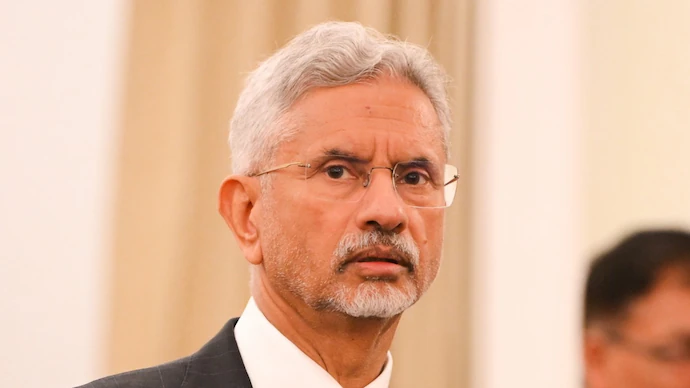
External Affairs Minister S Jaishankar has reiterated India’s position that terrorism must never be used as an instrument of statecraft, warning that some countries continue to let political calculations take precedence over the need to confront the threat. His remarks came days after US Secretary of State Marco Rubio defended Washington’s engagement with Pakistan, saying closer ties could give the United States greater influence over Islamabad’s decisions, including on terrorism.
Speaking at the Chinmaya Amrit Mahotsav Global Sammelan in New Delhi on Sunday, October 25, on the occasion of United Nations Day, Jaishankar called for zero tolerance towards terrorism and stronger international cooperation to counter it in all its forms. Although he did not name any country, his comments came amid renewed discussion about the US approach to Pakistan and its implications for Washington’s relationship with New Delhi.
Rubio, during his recent visit to India, argued that engagement with Pakistan did not come at the expense of the US partnership with India. He said Washington hoped its relationship with Islamabad would help influence decisions on a range of issues, while maintaining that the United States remained committed to countering terrorism.
The remarks from the two foreign policy leaders highlight different emphases in the discussion around terrorism: India’s insistence that no political consideration should justify its use, and Washington’s stated view that maintaining relations with Pakistan could provide leverage over its actions.
Jaishankar Says Terrorism Cannot Be Justified or Rationalised
Addressing the gathering in New Delhi, Jaishankar described terrorism as a serious threat to international peace and rejected the use of violence as a tool of state policy. He said the persistence of terrorism reflected the failure of some countries to adopt an unequivocal position against it.
“Terrorism is another deadly threat to peace. Its usage as an instrument of statecraft is simply unacceptable. It can never be justified. It can never be rationalised. Yet, it continues because not all states really display zero tolerance. Despite history, holding so many lessons, some still allow political calculations to take precedence.”
Jaishankar did not identify the states he was referring to. His remarks instead focused on the broader principle that counter-terrorism efforts require consistent opposition to the use of terrorism, regardless of political interests or strategic relationships.
The phrase “political calculations” was central to his argument. He suggested that the threat could persist when governments place political considerations ahead of a firm commitment to opposing terrorism. His comments reinforced India’s long-standing public position that terrorism should not be excused or normalised for strategic reasons.
He also called on the international community to develop greater awareness of the shared threat and work together with stronger resolve to counter terrorism in all its forms and manifestations.
“The world must therefore develop sharper awareness about this common threat, and it must come together with stronger resolve and counter-terrorism in all its forms and manifestations.”
While the speech did not explicitly connect the argument to Pakistan or Rubio’s comments, the timing brought the two statements into the same diplomatic conversation. The supplied remarks do not establish that Jaishankar was directly responding to the US secretary of state’s defence of Washington’s ties with Islamabad.
Rubio Defends Washington’s Engagement With Pakistan
Jaishankar’s comments came days after Rubio defended the United States’ relationship with Pakistan during his visit to India. Rubio said continued engagement with Islamabad could give Washington an opportunity to influence its decisions across several areas, including issues related to terrorism.
“I think it allows us to have, hopefully, more influence over the decisions they make on a variety of topics,” Rubio said.
Rubio also defended the US record on counter-terrorism, stating that “no country in the world does more to go after terrorism than the United States”. His remarks presented engagement with Pakistan as a means of potentially shaping its choices rather than as a departure from Washington’s stated counter-terrorism objectives.
The argument reflects a diplomatic approach in which maintaining channels of communication with a country is presented as a way to influence its conduct. Rubio’s comments did not, however, provide specific examples of decisions that Washington had changed through its engagement with Pakistan.
For India, the issue is particularly significant because counter-terrorism has been a central concern in its relations with Pakistan and in its discussions with international partners. The question of how other countries engage with Islamabad can therefore become part of wider conversations about regional security and the effectiveness of international counter-terrorism efforts.
Nevertheless, the supplied statements do not establish that Washington’s engagement with Pakistan has produced any particular outcome on terrorism. Rubio described the influence the United States hoped to exercise, rather than documenting a specific result from the policy.
Rubio Says Pakistan Ties Will Not Come at India’s Expense
During an exclusive interview with India Today on Thursday, Rubio reiterated that Washington’s relationship with Pakistan would not undermine its partnership with New Delhi. The interview took place at Mumbai’s Taj Mahal Palace Hotel, one of the locations targeted during the November 2008 Mumbai terror attacks, commonly known as the 26/11 attacks.
“In no way does the relationship with Pakistan come at the expense of our relationship with India,” Rubio said.
He also referred to shared concerns over terrorism between the United States and India. His comments were intended to reassure New Delhi that Washington’s engagement with Islamabad and its partnership with India could continue simultaneously.
The statement addressed a recurring diplomatic question: whether the United States can maintain working relations with Pakistan while also deepening cooperation with India. Rubio’s position was that the two relationships were not mutually exclusive.
However, the public statements from Washington and New Delhi place emphasis on different aspects of the issue. Rubio highlighted the potential value of engagement with Pakistan, while Jaishankar stressed that political considerations should not take precedence over a clear rejection of terrorism.
The remarks alone do not establish a direct disagreement between the two governments over a specific policy decision. Nor do they show that India has formally challenged the US position outlined by Rubio in response to the interview.
India Calls for Collective Action Against Terrorism
Beyond the question of bilateral relationships, Jaishankar used his address to call for stronger international cooperation against terrorism. His appeal was framed around the idea that countries must recognise the threat as a shared concern rather than allow political interests to weaken collective action.
His emphasis on counter-terrorism “in all its forms and manifestations” also underscored the need for a consistent approach. In his formulation, no political or strategic calculation should provide a justification for terrorism.
Jaishankar’s remarks placed responsibility on the international community to develop sharper awareness and greater resolve. The speech did not outline a new policy framework or announce a specific initiative, but it reinforced India’s call for an uncompromising stance against terrorism.
The broader diplomatic challenge is how countries can cooperate against a common threat when they maintain different strategic relationships. Governments may pursue dialogue and engagement for a variety of reasons, but Jaishankar argued that such considerations must not displace the principle that terrorism cannot be justified.
Rubio’s defence of US-Pakistan ties and Jaishankar’s comments illustrate these different emphases without, by themselves, resolving the underlying policy debate. Washington has described engagement as a potential source of influence, while India’s foreign minister has stressed the importance of ensuring that political calculations do not undermine counter-terrorism efforts.
Jaishankar Warns That War Anywhere Threatens Peace Everywhere
Jaishankar also addressed the wider impact of international conflicts, arguing that peace and stability cannot be treated as separate concerns for individual regions. He warned that a war in one part of the world could affect security elsewhere.
“Let us consider the indivisibility of peace. Now, war anywhere threatens peace everywhere,” he said.
Referring to the conflicts in Ukraine and West Asia, Jaishankar said India echoed the wider sentiment that dialogue and diplomacy remained the only solutions. His comments linked the immediate concerns surrounding terrorism with the broader need to prevent conflicts from spreading or undermining international stability.
The reference to the “indivisibility of peace” presented security as an interconnected global issue. In an environment shaped by international trade, supply chains and shared resources, instability in one region can have consequences beyond its borders.
Jaishankar also made the case that prosperity and peace were closely connected, warning against a world in which some countries advanced while others remained deprived. He argued that unequal progress amid interconnected markets and resources could contribute to continuing instability.
“Progress and prosperity are the flip side of conflict and violence, and they too are equally indivisible. The world cannot advance half prosperous and half denied in an era of intricate supply chains, of globalized markets, and of common resources. This is simply a prescription for continuous instability.”
His comments broadened the focus of the address beyond the India-US-Pakistan relationship. They placed counter-terrorism, conflict prevention, diplomacy and shared prosperity within a wider argument for international cooperation.
What the Remarks Mean for India-US Relations
The timing of Jaishankar’s speech and Rubio’s interview has renewed attention on how India and the United States approach Pakistan and regional security. Both countries have publicly emphasised the importance of counter-terrorism, but Rubio’s defence of engagement with Islamabad and Jaishankar’s warning about political calculations highlight different approaches to addressing the challenge.
For Washington, Rubio presented continued ties with Pakistan as a way to maintain influence over its decisions. He also said that the relationship would not come at the expense of the US partnership with India. These were assurances about the administration’s approach, rather than evidence of the outcomes that engagement might deliver.
Jaishankar, meanwhile, emphasised a principle rather than naming a country or setting out a direct response to Rubio. His central argument was that terrorism cannot be justified or rationalised and that governments should not allow political interests to weaken their opposition to it.
The distinction matters because diplomatic engagement and counter-terrorism commitments are not necessarily the same thing. A government may argue that maintaining relations offers opportunities to influence another state, while its partners may judge such engagement against their own security concerns and expectations of accountability.
The supplied statements do not establish whether the two countries have discussed these specific remarks through diplomatic channels or whether India’s government considers Rubio’s explanation sufficient. They also do not provide evidence of a new disagreement or a change in the broader bilateral relationship.
Conclusion
Jaishankar’s warning that political calculations can undermine efforts to combat terrorism came days after Rubio defended Washington’s continued engagement with Pakistan. Although Jaishankar did not name a country or explicitly refer to Rubio, the timing has placed the two sets of remarks in the spotlight.
Rubio argued that ties with Pakistan could help the United States influence Islamabad’s decisions and insisted that the relationship would not come at India’s expense. Jaishankar, for his part, called for zero tolerance towards terrorism and stronger international cooperation, stressing that it could never be justified as an instrument of statecraft.
Both statements underscore the importance their governments publicly attach to counter-terrorism, while reflecting different views on the role diplomatic engagement can play. Whether Washington’s approach produces the influence Rubio described, and how regional partners assess its results, remain questions that cannot be answered from the statements alone.
Jaishankar’s wider appeal was for countries to treat peace as a shared responsibility, pursue dialogue and diplomacy, and resist allowing political interests to weaken collective action against terrorism.
For breaking news and live news updates, like us on Facebook or follow us on Twitter and Instagram. Read more on Latest India on thefoxdaily.com.





COMMENTS 0