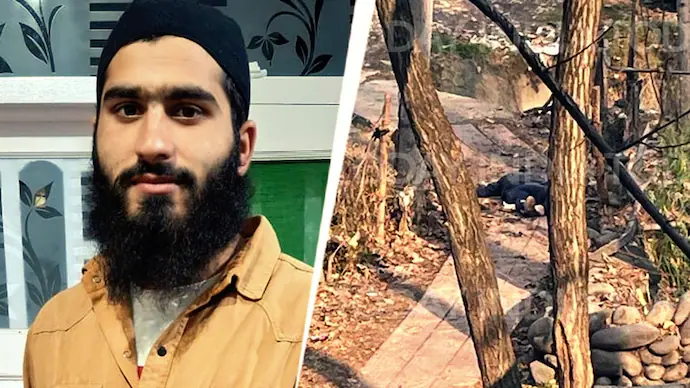
Lashkar-e-Taiba (LeT) terrorist Lateef Bhat, suspected of involvement in a recent attack on a Central Reserve Police Force (CRPF) checkpost in Jammu and Kashmir‘s Kulgam district, was shot dead on Wednesday following an extended standoff inside a mosque. Security forces had attempted to persuade him to surrender before launching an operation to flush him out.
According to police, Bhat repeatedly rejected appeals to lay down his arms. Kulgam Senior Superintendent of Police (SSP) Anayat Ali personally spoke to him through a lengthy video call and assured him that his life would be spared if he surrendered. The Commanding Officer of 9 Rashtriya Rifles (9 RR) also reportedly made repeated attempts to convince him to give himself up.
The operation drew particular attention because Bhat was hiding inside a place of worship. Security forces initially exercised restraint to avoid damaging the mosque, while officials attempted to bring the standoff to a peaceful conclusion.
How the Kulgam Mosque Standoff Unfolded
The confrontation developed after security forces located Bhat in a mosque in Kulgam district. The area was cordoned off to prevent his escape, while personnel attempted to persuade him to surrender rather than continue the confrontation.
SSP Anayat Ali reportedly maintained contact with Bhat through a video call, urging him to put down his weapon. The officer assured him that he would be spared if he surrendered. The commanding officer of 9 Rashtriya Rifles also made repeated appeals during the operation.
Despite these efforts, Bhat refused to surrender. During the video conversation, he reportedly said, “I have nobody with me except Allah.” The remark was described in accounts of the operation as reflecting his unwillingness to give himself up.
Officials said the appeals were intended to provide him with an opportunity to surrender and avoid a fatal outcome. However, the negotiations failed to produce an agreement.
Security Forces Used Tear Gas Before the Final Exchange
According to the account of the operation, Bhat opened fire at approximately 2.45 am after entering the mosque. Security forces subsequently intensified efforts to remove him from his hiding place.
Tear gas shells were fired in an attempt to force him out, including into the mosque where he was reportedly sheltering. The operation was complicated by the need to deal with an armed suspect while limiting damage to the religious structure.
As Bhat emerged from the mosque, security personnel shot him dead outside the premises. Further official confirmation of the precise sequence of events and the circumstances surrounding the firing is awaited.
Before the final action, SSP Anayat Ali had emphasised that security forces were exercising maximum restraint because of the location of the standoff. He indicated that the operation would prioritise minimising damage to the mosque.
“We have time and daylight on our side,” the SSP had said, underlining the forces’ approach of avoiding unnecessary damage while continuing efforts to secure Bhat’s surrender.
Who Was Lateef Bhat?
Lateef Bhat was identified by police as a Lashkar-e-Taiba terrorist operating in Jammu and Kashmir. He was suspected of involvement in the recent attack on a CRPF checkpost in Kulgam district, which had prompted security agencies to intensify efforts to track him down.
According to police, Bhat joined the LeT on November 18, 2025. Investigators described him as heavily self-radicalised and alleged that he had received instructions from across the border to disrupt peace, tourism and economic activity in the region.
Such assessments form part of the security agencies’ investigation into his activities and alleged links with militant networks. The full extent of his role in individual incidents would depend on the findings of those investigations.
Why the Operation Was Sensitive
Conducting a security operation inside or around a mosque presents challenges beyond those involved in a conventional encounter. Security personnel must consider the safety of civilians, the possibility of people being inside the building and the risk of damage to a place of worship.
In this case, officials said they were attempting to avoid unnecessary damage while giving Bhat an opportunity to surrender. The reported video call with the SSP and repeated appeals from the Army officer were part of those efforts.
The use of tear gas and the decision to continue the operation after Bhat refused to surrender reflected the difficulty of resolving the standoff without further escalation. The precise operational decisions and sequence of events remain subject to official confirmation.
What Bhat’s Killing Means for Security Operations in Kashmir
Bhat’s death removes a suspected LeT operative whom police had linked to a recent attack on security personnel. It also brings an end to the immediate standoff in Kulgam, which had required security forces to balance operational requirements with efforts to protect the mosque.
However, the killing of an individual terrorist does not automatically eliminate the wider security threat. Investigators may continue examining his alleged links, communications and activities to establish whether other individuals or networks were involved in the incidents attributed to him.
Security agencies are also likely to assess whether the suspected cross-border instructions mentioned by police formed part of a wider plan targeting public safety, tourism or economic activity. Any conclusions about such connections will depend on the evidence gathered during the investigation.
The Kulgam operation highlights the challenges security forces face when armed suspects take shelter in sensitive locations. Despite repeated appeals from senior officers, Bhat refused to surrender and was ultimately shot dead after emerging from the mosque. The full circumstances of the final exchange remain to be officially established.
For breaking news and live news updates, like us on Facebook or follow us on Twitter and Instagram. Read more on Latest India on thefoxdaily.com.




COMMENTS 0