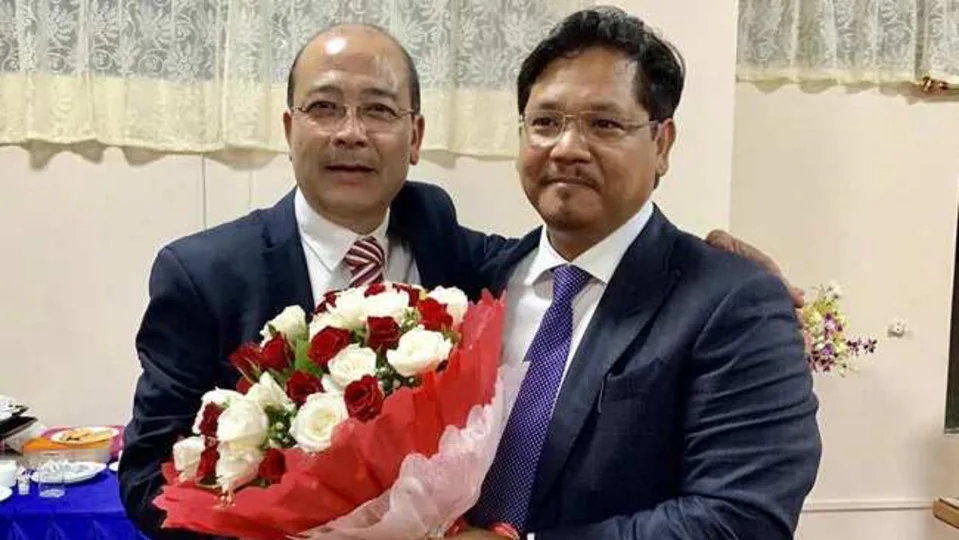
Meghalaya minister and United Democratic Party (UDP) president Metbah Lyngdoh resigned from the state Cabinet on Saturday, days after 11 of the party’s 12 legislators joined the Bharatiya Janata Party (BJP) and the ruling National People’s Party (NPP). The defections have left Lyngdoh as the UDP’s only remaining legislator in the Meghalaya Assembly, triggering a major political crisis within the regional party.
Lyngdoh submitted his resignation to Chief Minister Conrad K Sangma after assessing the changing political situation and developments within the UDP. He was handling the portfolios of power, textiles, water resources and taxation.
The political developments have weakened the UDP’s position within the state legislature and raised questions about its future organisation and role in Meghalaya politics. The party is now expected to discuss its next course of action through its central leadership.
Metbah Lyngdoh Resigns Amid Political Crisis in Meghalaya
Addressing a press conference on Saturday, Lyngdoh confirmed that he had submitted his resignation to Chief Minister Conrad Sangma. He said the decision followed an assessment of the recent political developments and the situation within his party.
Lyngdoh also indicated that the UDP’s central executive committee would discuss the crisis and determine the party’s next steps. The discussions are expected to involve party leaders and office-bearers as the organisation considers its position after the large-scale departure of its legislators.
Rejecting speculation that he had been pressured into leaving the Cabinet, the UDP president maintained that his resignation was voluntary. He said the decision had been taken after consideration rather than under pressure from any political group or individual.
“The decisions we have taken today were not made under any form of pressure. We will always ensure that our decisions are well-considered and the right ones,” Lyngdoh said.
His resignation comes at a particularly difficult time for the UDP, which had emerged as the second-largest party in the state after the 2023 Assembly elections. The departure of almost its entire legislative strength has significantly altered its political position.
11 of 12 UDP MLAs Move to BJP and NPP
The UDP’s current crisis follows two rounds of defections involving 11 of its 12 MLAs. Eight legislators merged with the BJP in September, while three others joined the NPP earlier this month.
The Speaker of the Meghalaya Legislative Assembly recognised both mergers, reducing the UDP’s strength from 12 legislators to just one. The developments also increased the BJP’s representation in the 60-member Assembly from two MLAs to 10.
The eight UDP legislators who merged with the BJP are:
- Lahkmen Rymbui
- Kyrmen Shylla
- Pius Marwein
- Mayralborn Syiem
- Matthew Beyondstar Kurbah
- Ollan Singh Suin
- Balajied Kupar Synrem
- Synshar Kupar Roy Lyngdoh Thabah
The three legislators who merged with the NPP are:
- Paul Lyngdoh
- Renikton Lyngdoh Tongkhar
- Nujorki Sungoh
These defections have left Metbah Lyngdoh as the UDP’s sole remaining MLA. The party’s reduced legislative presence marks a major change from its position following the 2023 elections, when it had secured 12 Assembly seats.
UDP’s Position in the Meghalaya Democratic Alliance
The UDP is part of the Meghalaya Democratic Alliance (MDA), the ruling coalition led by Chief Minister Conrad K Sangma. The NPP and BJP are also members of the alliance, making the defections politically significant for the regional party’s position within the coalition.
The UDP’s participation in the MDA had given it a role in the state government despite being a regional party. However, the departure of 11 legislators has substantially changed its representation in the Assembly and its political standing within the alliance.
Lyngdoh’s resignation also removes the UDP’s remaining ministerial representative from the Cabinet. His portfolios included power, textiles, water resources and taxation, making the resignation an important development in the state’s administrative and political landscape.
With the party now represented by only one MLA, its central leadership faces the task of deciding how to maintain its political identity and organisational presence in Meghalaya.
Internal Discontent and Leadership Differences Within UDP
The defections and resignation have unfolded amid reports of internal dissatisfaction within the UDP over leadership and organisational matters. Differences among senior leaders had reportedly created tensions within the party before the latest political developments.
The situation followed a Cabinet reshuffle in September 2025, when Metbah Lyngdoh and Lahkmen Rymbui replaced senior UDP leaders Paul Lyngdoh and Kyrmen Shylla as the party’s representatives in the state Cabinet.
Paul Lyngdoh had previously pointed to internal divisions and a lack of mutual respect within the organisation. He rejected the suggestion that his departure was simply a reaction to losing his Cabinet position.
“That respect I did not get in the UDP,” Paul Lyngdoh said, according to an earlier report by Hindustan Times.
His remarks highlighted the leadership differences and dissatisfaction that had emerged within the party. The subsequent movement of senior legislators to the BJP and NPP further intensified the crisis, leaving the UDP with a drastically reduced legislative presence.
UDP Had Won 12 Seats in the 2023 Meghalaya Assembly Elections
The UDP’s current position represents a significant change from its performance in the 2023 Meghalaya Assembly elections. The party won 12 seats in the polls, making it the second-largest party in the state legislature.
Its electoral performance had established the UDP as an important regional political force and secured its representation in the state government through the MDA coalition. The party’s legislators also played a role in the Assembly’s political balance.
However, the departure of 11 MLAs has sharply reduced that influence. With only one legislator remaining, the UDP now faces questions about its ability to retain its organisational strength, rebuild its leadership structure and remain relevant in the state’s political discussions.
What Happens Next for the United Democratic Party?
The immediate focus is expected to be on the UDP central executive committee’s response to the defections and Metbah Lyngdoh’s resignation. The party leadership will have to consider how to address internal divisions and determine its political strategy after losing almost its entire legislative representation.
Lyngdoh has said that the party’s next decisions will be taken after discussions with its leaders and office-bearers. His rejection of claims that he resigned under pressure also indicates that the UDP intends to present its response as an internal decision-making process.
The developments have reshaped the political position of one of Meghalaya’s major regional parties. From winning 12 seats in 2023 to being left with a single MLA, the UDP has undergone a major decline in Assembly representation within the current political term. Its next decisions will be important in determining how it responds to the crisis and approaches its future in Meghalaya politics.
For breaking news and live news updates, like us on Facebook or follow us on Twitter and Instagram. Read more on Latest India on thefoxdaily.com.





COMMENTS 0