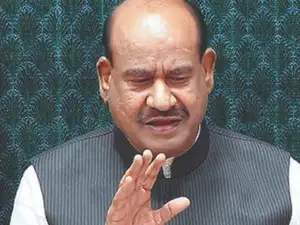
Lok Sabha Speaker Om Birla has stressed that public expenditure must translate into meaningful results, underlining the importance of accountability in the use of taxpayers’ money. He said public funds should be utilised responsibly and strictly for the purposes for which they are allocated.
Birla highlighted the role of Public Accounts Committees (PACs) in examining government spending and ensuring that public money is used appropriately. His remarks bring attention to the importance of legislative oversight in monitoring expenditure and strengthening transparency in public administration.
Om Birla calls for outcome-based assessment of public expenditure
Addressing the Conference of Chairpersons of Public Accounts Committees of Parliament and State and Union Territory Legislatures in Thiruvananthapuram on November 3, 2026, Birla said the success of public spending should not be measured only by budget allocations or the amount of money spent.
He emphasised that committees must examine whether government expenditure has achieved its intended objectives and improved the lives of citizens. According to him, financial scrutiny should focus on the actual benefits delivered to people, particularly those from disadvantaged sections of society.
Birla also called for time-bound action on pending audit observations, noting that some matters remain unresolved for 10, 15 or even 20 years. He stressed the need for stronger monitoring, review and follow-up mechanisms involving both Union and state governments.
What is the role of Public Accounts Committees?
Public Accounts Committees are legislative oversight bodies responsible for examining government expenditure and reviewing audit findings. They play an important role in ensuring that public funds are used according to approved purposes and that government departments remain accountable for their spending.
The committees examine reports prepared by the Comptroller and Auditor General of India (CAG), consider government responses and review the action taken on their recommendations. Their work helps identify financial irregularities, wastage and shortcomings in the implementation of public programmes.
Birla said the committees should go beyond checking expenditure figures and utilisation certificates. In the case of infrastructure projects, he encouraged members to visit project sites, wherever appropriate, to assess construction quality, completion timelines and compliance with prescribed standards.
For welfare schemes, he said scrutiny should focus on whether intended beneficiaries are actually receiving the promised support and whether the programmes are achieving their objectives.
KC Venugopal raises concern over six chief secretaries missing PAC meeting
Parliament’s Public Accounts Committee chairman K. C. Venugopal expressed concern over the absence of chief secretaries from six states at a recent committee meeting. The officials had been called to provide oral evidence on the implementation of pre-matric and post-matric scholarship schemes for Scheduled Caste students.
Venugopal said the absence of the senior officials had prevented the committee from examining shortcomings in the scholarship programmes and seeking corrective action. He stressed that PAC meetings should be treated seriously because their purpose is to improve government policies and public welfare schemes, rather than simply identify faults.
He urged Lok Sabha Speaker Om Birla to intervene in such instances to ensure that the authority of the committee and Parliament is respected.
The six states identified in reports on the committee’s action were Uttar Pradesh, Punjab, Madhya Pradesh, Karnataka, Odisha and Bihar. The committee had earlier initiated privilege proceedings against their chief secretaries over their failure to attend the meeting.
Scholarship implementation under parliamentary scrutiny
The meeting that Venugopal referred to was concerned with pre-matric and post-matric scholarships for Scheduled Caste students. These programmes are intended to support students from disadvantaged communities and help them continue their education.
The PAC’s examination focused on implementation-related shortcomings and the delivery of scholarship benefits. The absence of the chief secretaries meant the committee could not obtain their oral explanations at the scheduled meeting.
Venugopal argued that effective oversight requires cooperation from senior government officials. Without their participation, parliamentary committees may face difficulties in understanding administrative problems, identifying responsibility and securing timely corrective measures.
Venugopal seeks stronger audits and wider coverage of government schemes
Venugopal also called for the CAG to increase the number of audits and give greater attention to the implementation of major government programmes. He emphasised that financial oversight should cover a wider range of sectors and examine whether public schemes are delivering their intended benefits.
He highlighted the relationship between the CAG and the PAC, explaining that the auditor provides independent findings and professional assistance, while the committee examines those findings through the authority of the legislature.
He also raised concerns about delays in conducting audits and presenting reports to Parliament. According to him, delayed audit reports can postpone accountability and corrective action, potentially affecting the delivery of services to citizens.
Venugopal called for more balanced audit coverage across sectors, including health, education, textiles, tourism and micro, small and medium enterprises. He also highlighted the need for closer examination of flagship welfare programmes and major infrastructure projects.
Birla highlights technology’s role in financial oversight
Birla also encouraged Public Accounts Committees to explore the responsible use of artificial intelligence, data analytics and other technologies to strengthen financial monitoring.
These tools could help committees analyse large volumes of expenditure data, identify emerging trends, detect potential irregularities and monitor unresolved audit observations. Technology could also support more systematic scrutiny of government programmes and help committees identify areas requiring further examination.
He stressed that technology should support stronger oversight, transparency and accountability in public spending.
Why timely accountability matters for citizens
The discussions at the conference highlighted that financial accountability is closely connected with the quality of public services. Government expenditure is intended to support infrastructure, education, healthcare, welfare programmes and other public needs. However, spending alone does not establish whether these objectives have been achieved.
For example, the allocation of funds to a scholarship programme does not automatically mean that eligible students have received their benefits. Similarly, expenditure on infrastructure does not necessarily guarantee that a project has been completed on time or meets the required quality standards.
Regular audits, legislative scrutiny and timely action on identified shortcomings can help ensure that public resources are used effectively. They also provide an opportunity for government departments to address administrative weaknesses and improve the delivery of services.
Focus on transparency and responsible use of public money
Birla’s remarks and Venugopal’s concerns placed the role of legislative oversight at the centre of discussions on public expenditure. While Birla stressed that every rupee must be accounted for and produce meaningful outcomes, Venugopal highlighted the need for stronger cooperation from government officials and more effective audit mechanisms.
The conference brought together chairpersons and members of Public Accounts Committees from Parliament and state and Union Territory legislatures to discuss financial oversight, audit practices and accountability.
The central message was that public expenditure must be judged by the results it delivers. Effective audits, timely responses from government departments and follow-up on committee recommendations remain important to ensuring that public money serves its intended purpose and produces tangible benefits for citizens.
For breaking news and live news updates, like us on Facebook or follow us on Twitter and Instagram. Read more on Latest India on thefoxdaily.com.





COMMENTS 0