- What Exactly Happened?
- Why This Exchange Went Viral
- The Bigger Story: Politics and Professionalism in India
- Rahul Gandhi’s Evolving Public Persona
- The Social Media Dimension
- Mutual Funds, Politics and Public Curiosity
- Why Political Civility Still Matters
- How Different Audiences Interpreted the Exchange
- The Role of Personality in Modern Politics
- A Rare Reminder That Politics Is Not Always Binary
- Conclusion
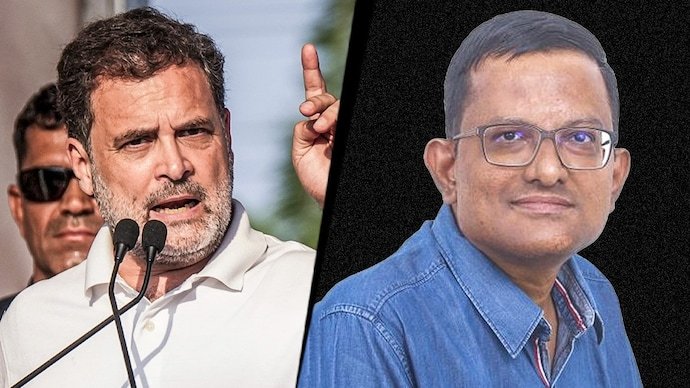
Indian Politics rarely leaves room for nuance on Social Media. But a recent interaction involving congress leader Rahul Gandhi, a BJP-supporting financial advisor, and a joke about slow investment returns has unexpectedly cut through the usual partisan noise.
The conversation began after investment advisor Muthukrishnan Dhandapani shared a detailed post on X explaining that despite being a vocal supporter of Prime Minister Narendra Modi and the BJP for years, he had continued managing Rahul Gandhi’s mutual fund investments since 2013.
What could have turned into another politically charged Controversy instead became a surprisingly human moment. Rahul Gandhi responded with humour rather than defensiveness:
“Muthu ji, your political views are your own but please do speed up the returns on my investments.”
The reply quickly gained traction online because it stood apart from the hyper-aggressive tone that often dominates Indian political discourse. Beyond the humour, however, the episode revealed something more significant about politics, public perception, and professional trust in an increasingly polarised Environment.
What Exactly Happened?
Muthukrishnan Dhandapani, a financial advisor active on social media, posted that he had been handling Rahul Gandhi’s mutual fund investments for more than a decade.
According to his statement, the professional relationship began during the UPA-2 government after a client working with Rahul Gandhi recommended him.
Dhandapani claimed that despite his openly pro-BJP stance between 2014 and 2024, neither Rahul Gandhi nor his office ever raised objections regarding his political beliefs.
In his post, he stressed that:
- Rahul Gandhi’s team was aware of his political opinions
- Professional interactions remained respectful throughout
- Political disagreement never affected business dealings
- Rahul Gandhi allegedly valued professional competence over ideology
He also claimed Rahul Gandhi had once sought his opinion regarding the selection of another key professional, suggesting a level of trust beyond routine financial management.
But it was Rahul Gandhi’s humorous response about investment returns that transformed the post from a niche political anecdote into a widely discussed online moment.
Why This Exchange Went Viral
The exchange resonated because it disrupted several dominant narratives in Indian politics.
Modern political ecosystems especially on social media often reduce public figures into simplified caricatures. Supporters and opponents alike tend to portray leaders as entirely virtuous or entirely villainous.
Dhandapani directly addressed this phenomenon in his post.
“I wanted to post this to show how mainstream media and IT cells of parties can make someone look completely inhuman.”
That observation struck a chord because it touched on a growing public fatigue with political tribalism.
The episode became notable for three reasons:
| Reason | Why It Mattered |
|---|---|
| Cross-political professionalism | It challenged the belief that ideological rivals cannot work together |
| Rahul Gandhi’s humour | The response humanised him in a way political speeches often do not |
| Public transparency | The advisor openly acknowledged differing political loyalties without hostility |
The Bigger Story: Politics and Professionalism in India
The viral interaction also reflects a broader issue in India’s professional and political culture: whether ideological differences should affect working relationships.
In highly polarised democracies, political identity increasingly influences:
- Business networks
- Hiring decisions
- Social circles
- Media perception
- Online reputations
The Dhandapani-Rahul Gandhi exchange stood out precisely because it suggested the opposite that professional expertise and political preference can remain separate.
That distinction may sound simple, but in today’s digital climate it has become surprisingly rare.
Across industries globally, professionals often fear public political positioning could affect careers, clients or business opportunities. The advisor’s statement implied he expected potential consequences for revealing the relationship publicly.
“This post may lead to Rahul terminating our professional relationship. That’s ok. Everything should end one day.”
Instead, Rahul Gandhi responded casually and humorously, diffusing any possibility of confrontation.
Rahul Gandhi’s Evolving Public Persona
The episode also fits into a larger shift in Rahul Gandhi’s public image over recent years.
For much of the last decade, political opponents frequently portrayed him as disconnected, inconsistent or politically ineffective. However, his Bharat Jodo Yatra and subsequent political campaigns gradually reshaped portions of public perception.
Supporters increasingly project him as:
- Accessible
- Conversational
- Less scripted
- Comfortable with criticism
- Willing to engage informally
His response to Dhandapani reinforced that evolving image.
Importantly, humour in politics often works more effectively than direct image management. Carefully crafted PR campaigns can feel artificial, but spontaneous moments tend to resonate more authentically.
The investment-return joke succeeded because it sounded natural rather than strategic.
The Social Media Dimension
Another reason the interaction attracted attention is because it unfolded entirely on X, where political battles in India are often intense and deeply personal.
Political social media ecosystems today are heavily influenced by:
- Party IT cells
- Influencer networks
- Algorithm-driven outrage
- Viral clipping culture
- Narrative warfare
Dhandapani explicitly referenced this environment when criticising both media narratives and political IT cells.
His comments tapped into a wider concern among users that political discourse online increasingly rewards outrage over complexity.
Ironically, the exchange went viral largely because it briefly escaped that pattern.
Mutual Funds, Politics and Public Curiosity
One unexpected aspect of the discussion was the public fascination with Rahul Gandhi’s personal investments.
Political leaders’ financial behaviour always attracts attention because voters often associate investment choices with economic confidence and financial literacy.
The revelation that Rahul Gandhi uses mutual fund investments led to fresh online discussion about:
- How politicians manage wealth
- Whether leaders trust Indian markets
- The role of professional financial advisors
- Long-term investment planning
Although no portfolio details were disclosed, the conversation indirectly normalised mutual fund investing as a mainstream wealth-management tool.
That may sound minor, but personal finance conversations involving public figures often influence middle-class financial behaviour.
Why Political Civility Still Matters
Perhaps the most important takeaway from the exchange is what it revealed about political civility.
Democracies function best when disagreement does not automatically destroy communication or trust.
The interaction demonstrated that:
- Political opponents can still respect expertise
- Ideological disagreement need not become personal hostility
- Professional relationships can survive political differences
- Humour can lower political tension more effectively than confrontation
At a time when political ecosystems globally are becoming increasingly hostile, moments like these stand out precisely because they appear ordinary.
And perhaps that is the deeper irony.
A simple joke about slow mutual fund returns became national news because normal political civility has become so unusual.
How Different Audiences Interpreted the Exchange
The interaction generated multiple interpretations depending on political alignment.
Congress Supporters
Many Congress supporters viewed the exchange as proof that Rahul Gandhi is more approachable and tolerant than critics portray him to be.
BJP Supporters
Some BJP supporters appreciated Dhandapani’s openness and Rahul’s non-confrontational reply, while others treated the episode humorously rather than politically.
Neutral Observers
For politically neutral audiences, the exchange mainly served as a refreshing break from aggressive political messaging.
That broad relatability likely explains why the moment travelled beyond partisan circles.
The Role of Personality in Modern Politics
Modern political communication increasingly revolves around personality rather than ideology alone.
Short social media interactions often shape public impressions more powerfully than lengthy speeches or policy debates.
In this case, Rahul Gandhi’s brief response achieved several things simultaneously:
- It avoided defensiveness
- It acknowledged the advisor respectfully
- It injected humour into the conversation
- It subtly projected confidence
- It humanised a political figure
That combination is difficult to manufacture artificially.
Political strategists increasingly recognise that relatability can sometimes matter as much as policy positioning in shaping voter perception.
A Rare Reminder That Politics Is Not Always Binary
One overlooked aspect of the story is how common such professional relationships actually are behind the scenes.
In business, law, consulting, journalism and finance, professionals routinely work with clients whose political beliefs differ from their own.
What made this case unusual was not the relationship itself but the fact that it became public.
The viral reaction suggests many people now assume political differences automatically create hostility.
The exchange challenged that assumption.
Conclusion
The viral interaction between Rahul Gandhi and his BJP-supporting investment advisor may appear light-hearted on the surface, but it revealed much more about modern India’s political culture.
At a time when political identities increasingly dominate public conversation, the episode offered a rare example of professionalism surviving ideological division. It also highlighted how humour, respect and normal human interaction can sometimes cut through the noise of partisan politics more effectively than carefully managed messaging.
Most importantly, the exchange reminded audiences that political disagreement does not always have to produce hostility and that in a deeply polarised environment, even a joke about slow mutual fund returns can become a surprisingly powerful statement.
For breaking news and live news updates, like us on Facebook or follow us on Twitter and Instagram. Read more on Latest India on thefoxdaily.com.






COMMENTS 0