West Bengal has ordered the closure of 252 madrasas following a statewide review of Islamic educational institutions, putting the regulatory status of madrasa Education under renewed scrutiny. The government has also issued show-cause notices to around 100 other institutions, making clear that establishments operating without the required approvals or failing to meet prescribed standards could face further action.
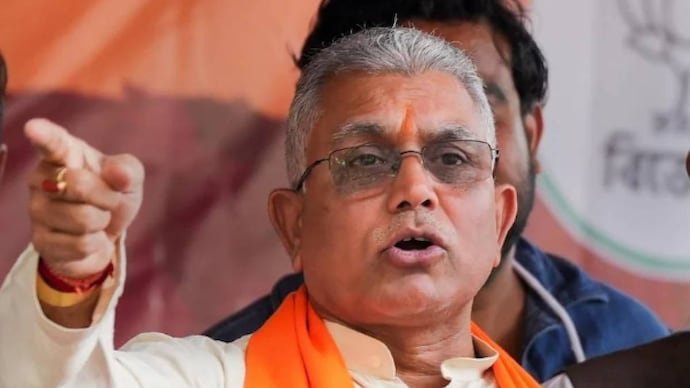
State Panchayat and Rural Development Minister Dilip Ghosh said institutions that want to continue functioning must have valid government permission and comply with applicable rules. His comments have added a sharper political dimension to an administrative exercise that officials say was focused on approval status, infrastructure and management systems.
“Anything illegal will not be tolerated,” Ghosh said, stressing that institutions without government permission would not be allowed to operate. He added that madrasas functioning according to the law and possessing the necessary approvals would be allowed to continue.
The immediate issue, therefore, is not simply the number of institutions facing closure. It is also about how West Bengal regulates educational establishments operating outside the formal approval framework and how the state distinguishes between legitimate religious education and institutions that fail to meet educational or administrative requirements.
Why 252 madrasas have come under scrutiny
The West Bengal government’s action followed a statewide survey conducted by the Minority Affairs and Madrasah Education Department. The exercise examined institutions across districts, with officials looking at areas including approval status, infrastructure and management systems.
Officials have said that the 252 institutions ordered to close lacked requisite approvals and, in several cases, basic infrastructure. Another 100 madrasas have received show-cause notices, meaning the government is seeking explanations and supporting documents before deciding what further action should be taken against them.
The distinction between the two categories is important. A closure order represents a much more serious regulatory step, while a show-cause notice gives an institution an opportunity to explain its position. The latter does not automatically mean that every institution receiving such a notice will ultimately be shut down.
The survey was initiated after directions from Chief Minister Suvendu Adhikari to establish a clearer picture of authorised and unauthorised madrasas operating across West Bengal.
That effort reflects a broader problem faced by governments when educational institutions operate outside established regulatory systems. Without accurate records, authorities can struggle to determine who is responsible for an institution, what curriculum is being taught, whether minimum infrastructure exists and whether students are receiving education under recognised standards.
Dilip Ghosh says madrasa controversy is not new
Ghosh argued that concerns about madrasa administration have existed for years rather than emerging only with the latest survey.
He said allegations and suspicions surrounding certain institutions had persisted for around two decades and claimed that political leaders had raised concerns about madrasa functioning in the past without producing a lasting solution.
His position is that the government should now establish a clear regulatory framework: institutions with valid permission should be able to function, while those operating without approval should not be allowed to continue indefinitely.
This approach places regulatory compliance at the heart of the dispute. The question is not merely whether an institution describes itself as a madrasa, but whether it satisfies the legal and educational conditions required to operate.
The issue becomes especially significant in districts where large numbers of unauthorised institutions have been identified. A regulatory system can only work effectively when authorities know which institutions exist, who runs them and whether they satisfy minimum requirements.
Security allegations raise a separate and more sensitive question
Ghosh also went beyond administrative concerns and made allegations linking some madrasa teachers and institutions to extremist activity. He claimed that people accused of terrorist activity had, in some cases, been associated with madrasa teaching and that terrorists entering West Bengal from Bangladesh had used madrasas as shelters.
Those are serious allegations and need to be separated from the administrative findings of the current survey.
The reported reasons for the latest closure action centre on issues such as lack of requisite approval and basic infrastructure. Claims that particular institutions or individuals have been involved in terrorism require separate evidence, police investigations and, where applicable, judicial proceedings.
There is an important difference between saying that an institution does not possess the required government permission and saying that it is involved in terrorism. The first can be established through administrative records and inspections. The second requires evidence linking specific people or institutions to specific criminal or extremist activities.
Maintaining that distinction is especially important because madrasa education covers a wide range of institutions. Regulatory action against unauthorised establishments should not automatically be interpreted as a finding of criminal activity against every madrasa or everyone associated with one.
Why West Bengal’s Bangladesh border matters to the debate
West Bengal shares a long international border with Bangladesh, making illegal migration, smuggling, Border Security and cross-border criminal networks recurring political issues in the state.
Ghosh has previously raised allegations about madrasas located near the Bangladesh border, arguing that some could be exploited by anti-national or extremist elements. Similar claims have been part of Bengal’s political discourse for years.
But the existence of a border-security challenge does not by itself establish that a particular educational institution is involved in illegal activity. Any such connection must be demonstrated through investigation.
For the state government, this makes the current verification exercise potentially important beyond the immediate closure orders. A functioning database of recognised institutions can help authorities identify organisations operating outside the legal framework and determine whether they meet educational, safety and administrative requirements.
It can also reduce the uncertainty created by institutions whose status is unclear.
What happens to the 100 madrasas issued show-cause notices?
The approximately 100 institutions that received show-cause notices now face a different stage of the process.
Authorities are expected to examine their responses and supporting documents before determining whether further action is necessary. If an institution can demonstrate that it possesses the required approvals and satisfies the applicable conditions, its position could differ from that of an establishment that cannot establish its legal status.
This process is significant because regulatory enforcement is more effective when institutions are given a clearly defined route to demonstrate compliance. It also allows the government to distinguish between institutions that are genuinely unauthorised and those that may have documentation or compliance issues that can be resolved.
The outcome of the review could therefore extend beyond the initial 252 closures. The government’s wider objective appears to be establishing a more systematic picture of madrasa education across the state.
The education question cannot be separated from regulation
The madrasa debate also raises a practical question about students enrolled in institutions affected by government action.
Whenever an educational establishment is closed, authorities must consider what happens to the students studying there. Regulatory enforcement can address illegal or non-compliant institutions, but educational continuity remains an important part of the policy challenge.
For families, the immediate concern is whether children will be able to continue their education and where they will study if an institution closes. For the government, the challenge is to enforce standards without creating unnecessary disruption for students who may have had no role in the institution’s regulatory shortcomings.
That is why the quality of the transition process will matter almost as much as the closure orders themselves. If the government wants stricter compliance, it will need a system that makes lawful operation clear and achievable while dealing firmly with institutions that refuse to meet those requirements.
Political reactions are likely to intensify
The decision has already become part of a wider political argument over Governance, minority education and National Security in West Bengal.
Supporters of the government’s action are likely to present the closures as evidence that the state is prepared to enforce rules against unauthorised institutions. Critics, meanwhile, can be expected to question whether all affected establishments were treated fairly and whether religious educational institutions are being subjected to disproportionate scrutiny.
The strongest way to resolve that debate is through transparent criteria.
If the government publishes clear information about the approval requirements, inspection standards and reasons for individual closure orders, it becomes easier to assess the action on administrative grounds rather than political claims. The same principle applies to allegations involving terrorism or extremist activity: those claims should be supported by identifiable investigations and evidence rather than broad assertions about an entire category of institutions.
West Bengal government also highlights investment and infrastructure
The madrasa controversy comes alongside an effort by the state government to highlight economic development and infrastructure projects.
Chief Minister Suvendu Adhikari has pointed to several investments and initiatives undertaken during the first months of the new administration. These include a project valued at around Rs 15,000 crore, a proposed Rs 600 crore Amul facility and other industrial commitments.
Adhikari also highlighted a robotic firefighting system intended to reach locations where conventional fire tenders may struggle to operate. Such systems are designed around a practical problem faced by emergency services: large fire engines cannot always enter narrow, hazardous or structurally compromised locations.
The government is therefore attempting to put the madrasa action within a broader narrative of administrative enforcement, investment and infrastructure development.
What the madrasa crackdown could mean for Bengal
The immediate impact of the decision will be felt by the institutions ordered to close, their students and the communities that rely on them. But the longer-term significance will depend on what happens after the headlines fade.
If the government follows the survey with transparent registration procedures, regular inspections and clearly defined educational standards, the exercise could create a more organised regulatory framework for madrasa education.
If, however, the issue remains primarily political, the controversy could deepen without resolving the underlying administrative questions.
There is also a wider national-security dimension, but that too requires careful handling. West Bengal’s location next to Bangladesh makes security screening and institutional oversight legitimate areas of government concern. At the same time, security policy is strongest when it is based on specific evidence rather than assumptions about an entire religious or educational category.
The 252 closure orders have therefore opened two separate debates: one about whether educational institutions are complying with government rules, and another about whether particular institutions or individuals have links to extremist activity. The first can be addressed through inspections, records and licensing. The second requires evidence and law-enforcement investigation.
For now, the clearest message from the state government is that madrasas operating without the required approval will not be allowed to continue. The next stage will show how the administration handles the 100 institutions facing show-cause notices and whether the wider review produces a more transparent and regulated madrasa education system across West Bengal.
For breaking news and live news updates, like us on Facebook or follow us on Twitter and Instagram. Read more on Latest India on thefoxdaily.com.






COMMENTS 0