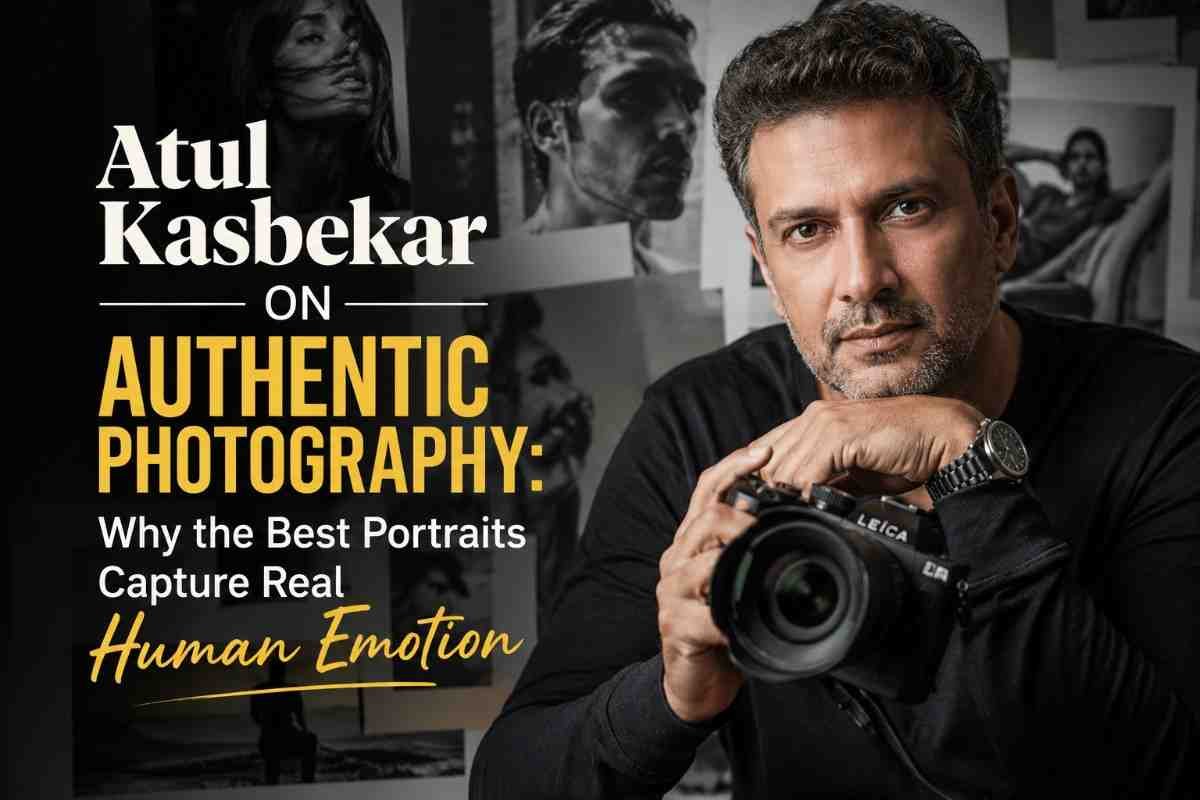
For over three decades, Atul Kasbekar has been one of India’s most recognizable names in photography. While many associate him with the iconic Kingfisher Calendar that redefined glamour photography in India, his creative journey extends far beyond fashion shoots and celebrity portraits. Photographer, filmmaker, producer, entrepreneur, advertising professional, and storyteller, Kasbekar has continuously reinvented himself while remaining committed to one core philosophy—capturing people as they truly are.
His latest exhibition, HONEST: Portraits of Character, offers perhaps the clearest expression of that philosophy. Featuring intimate portraits of acclaimed actors and public figures, the exhibition shifts the focus away from celebrity status and toward the individual behind the public image. Rather than celebrating perfection, it embraces emotion, vulnerability, age, and lived experience.
At a time when social media filters, AI-generated portraits, and carefully curated online identities dominate visual culture, Kasbekar argues that authenticity has become photography’s greatest challenge—and its greatest opportunity. His perspective goes beyond technical photography; it explores trust, human connection, and the changing meaning of portraits in the digital era.
The Search Intent Behind Modern Portrait Photography
Today’s audiences no longer view photographs merely as records of appearance. Instead, they increasingly seek authenticity, personality, and emotional depth. Whether looking at celebrity portraits, documentary photography, or personal photographs, viewers connect more strongly with images that reveal genuine human moments rather than carefully manufactured perfection.
This shift reflects broader changes across media. Consumers have become increasingly aware of digital editing, artificial intelligence, beauty filters, and image manipulation. As a result, photographs that preserve natural expressions and imperfections often carry greater emotional credibility.
Kasbekar’s latest work aligns with this growing appreciation for realism by reminding viewers that meaningful portraits begin with trust rather than technology.
From Fashion Icon to Multifaceted Creative Professional
Although the Kingfisher Calendar remains one of the most influential commercial photography projects in Indian advertising history, Kasbekar’s professional journey has never been confined to one discipline.
Over the years, he has successfully transitioned between multiple creative industries, including:
- Commercial photography
- Celebrity portraiture
- Advertising campaigns
- Film production
- Brand consulting
- Entrepreneurship
Rather than viewing these roles as separate careers, they complement one another. Experience gained behind a film monitor informs his portrait work, while years spent directing advertising campaigns sharpen his understanding of storytelling through a single image.
This ability to adapt illustrates an increasingly important lesson for creative professionals: long-term success depends less on mastering one medium and more on continuously evolving with changing audiences and technologies.
HONEST: Portraits of Character Is More Than a Celebrity Exhibition
Unlike conventional celebrity photography exhibitions that emphasize glamour, styling, or status, HONEST: Portraits of Character aims to reveal something far less obvious—the person beneath the public persona.
The concept grew from Kasbekar’s experiences producing films, where hours spent observing actors between performances revealed dimensions audiences rarely see on screen.
Instead of photographing characters, costumes, or cinematic personas, he sought to capture moments where performance disappeared entirely.
Each portrait becomes less about recognition and more about human identity.
The exhibition also incorporates personal reflections from every subject, encouraging visitors to engage with their philosophies, life lessons, and perspectives alongside their photographs. This combination transforms portraits into conversations rather than static images.
Why Authenticity Has Become Photography’s Most Valuable Asset
The explosion of smartphones, editing applications, and artificial intelligence has fundamentally changed photography.
Today almost anyone can:
- Smooth skin instantly.
- Remove wrinkles.
- Alter facial proportions.
- Change lighting.
- Replace backgrounds.
- Generate entirely artificial portraits.
While these tools have expanded creative possibilities, they have also raised important questions about authenticity.
Kasbekar argues that the features many people rush to erase—wrinkles, scars, fine lines, and signs of ageing—often tell the most meaningful stories.
These marks document experience rather than diminish beauty.
In portrait photography, authenticity increasingly lies not in technical perfection but in emotional honesty.
The Hidden Skill Behind Great Portrait Photography
Photography enthusiasts often assume technical expertise determines the quality of portraits. Cameras, lenses, lighting equipment, and editing software certainly matter, but experienced portrait photographers consistently identify another factor as even more important: psychology.
Kasbekar’s observation that “the best photographs tend to happen when people stop auditioning for them” highlights an often-overlooked reality.
Many subjects unconsciously perform when facing a camera.
They:
- Control facial expressions.
- Adjust posture unnaturally.
- Smile mechanically.
- Attempt to look “photogenic.”
- Become self-conscious.
The photographer’s true challenge is helping subjects forget the camera exists.
Only then do authentic expressions emerge naturally.
Trust Is the Most Underrated Tool in Photography
Technical equipment may create beautiful images, but trust creates meaningful ones.
Celebrity photographers often work with individuals whose lives receive constant public attention. Private family moments, children, and personal milestones require a level of confidentiality that extends well beyond photography.
Clients return not simply because photographs look impressive, but because they trust their photographer to respect privacy and dignity.
This relationship becomes particularly valuable when photographing public figures outside their professional roles.
Trust allows vulnerability.
Vulnerability creates authenticity.
Authenticity creates memorable portraits.
Why Imperfections Make Better Portraits
Modern beauty standards frequently encourage people to hide every perceived flaw.
Photography, however, often tells a different story.
Features commonly considered imperfections frequently become the defining characteristics of memorable portraits.
These include:
- Laugh lines.
- Freckles.
- Grey hair.
- Scars.
- Uneven smiles.
- Natural skin texture.
Rather than distracting viewers, these elements communicate experience, resilience, humour, hardship, and individuality.
In many ways, the rise of AI-generated perfection has increased appreciation for photographs that celebrate genuine human appearance.
Portrait Photography in the Age of Artificial Intelligence
Artificial intelligence has rapidly transformed image creation.
AI can now generate portraits of people who never existed, recreate historical figures, alter facial expressions, or simulate complex lighting with remarkable realism.
Yet this technological progress has also increased demand for photographs rooted in genuine human interaction.
The distinction becomes increasingly important.
| AI-Generated Portraits | Authentic Portrait Photography |
|---|---|
| Created through algorithms | Built through human interaction |
| Can appear technically perfect | May preserve natural imperfections |
| No emotional relationship exists | Photographer-subject connection shapes the image |
| Unlimited editing possibilities | Authenticity remains central |
| Focuses on visual realism | Captures emotional truth |
Neither approach is inherently superior. However, documentary, editorial, and portrait photography increasingly derive value from their ability to preserve genuine human experiences that algorithms cannot replicate.
Lessons Creative Professionals Can Learn from Kasbekar’s Journey
Kasbekar’s career demonstrates that sustained relevance depends on adaptability rather than repetition.
His progression across photography, advertising, filmmaking, and entrepreneurship illustrates several important lessons for professionals across creative industries.
- Continue learning throughout your career.
- Allow personal projects to coexist with commercial work.
- Protect client relationships through professionalism.
- Embrace evolving technologies without abandoning authenticity.
- Build a reputation on consistency rather than trends.
These principles remain relevant regardless of profession.
Why Human Stories Outlast Glamour
Fashion trends evolve.
Advertising campaigns change.
Celebrity culture shifts rapidly.
Yet photographs that capture genuine emotion often remain timeless.
This explains why documentary portraits created decades ago continue to resonate today, while many technically perfect commercial images quickly become dated.
When viewers remember a portrait years later, they rarely recall the lighting setup or camera specifications.
They remember the emotion.
They remember the expression.
They remember the story.
The Psychology Behind Great Portraits
Successful portrait photographers often spend more time building rapport than adjusting camera settings.
Small conversations before the shoot help reduce anxiety and create natural expressions.
Experienced photographers observe subtle behaviours:
- How someone laughs.
- How they pause before speaking.
- Their natural posture.
- Moments of quiet reflection.
- Interactions with people around them.
These observations frequently produce stronger portraits than directing subjects into rigid poses.
Authenticity emerges when individuals become absorbed in conversation rather than conscious of the lens.
Photography Is Becoming More Human, Not Less
Ironically, the rapid advancement of artificial intelligence may be making genuine photography even more valuable.
As perfectly generated images become commonplace, audiences increasingly appreciate photographs that capture spontaneous emotion, lived experience, and real human connection.
This shift suggests the future of portrait photography may depend less on flawless editing and more on emotional intelligence.
Photographers who understand people—not just cameras—are likely to remain indispensable.
The Lasting Legacy of Honest Storytelling
Atul Kasbekar’s latest work serves as a reminder that photography’s greatest strength has never been technical perfection. Instead, it lies in preserving moments that reveal something truthful about the people within the frame.
Whether photographing actors, entrepreneurs, athletes, or ordinary individuals, the goal remains remarkably consistent: create an environment where performance fades and personality emerges.
In an age filled with digital filters, curated identities, and AI-generated visuals, authenticity has become photography’s rarest commodity.
The most memorable portraits are rarely the ones where subjects try hardest to appear perfect. They are the moments when self-consciousness disappears, trust takes over, and the camera quietly captures the person behind the public image.
As visual storytelling continues to evolve, that timeless principle may become more valuable than ever: the best photographs don’t simply show how someone looks—they reveal who they are.
For breaking news and live news updates, like us on Facebook or follow us on Twitter and Instagram. Read more on Latest Lifestyle on thefoxdaily.com.



COMMENTS 0