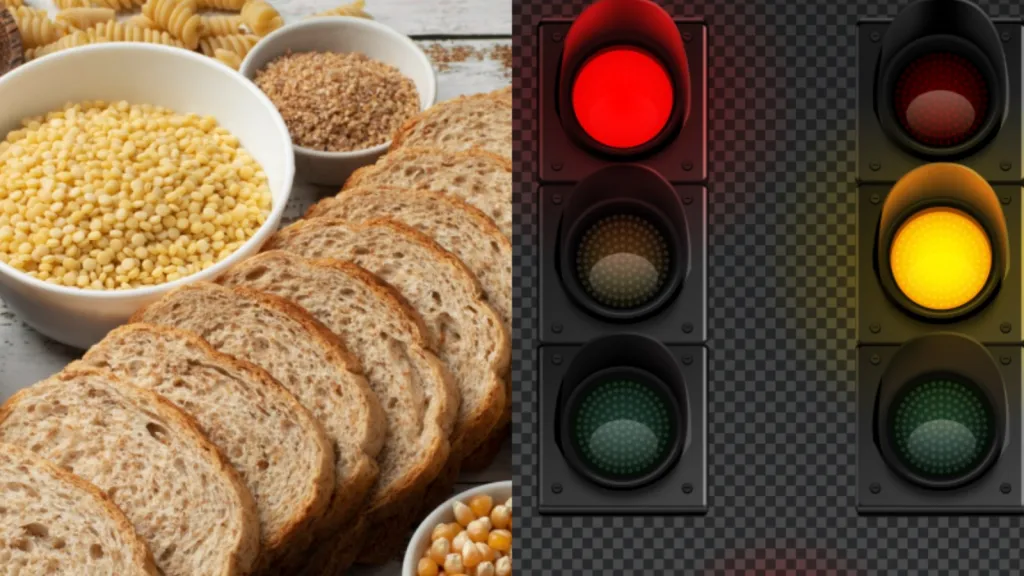
The carbohydrate traffic light system offers a simple way to make everyday food choices, placing vegetables, fruits and legumes in the green category, grains such as rice and wheat in amber, and sugary or ultra-processed foods in red. But these colours are only a starting point. Portion sizes, food preparation, meal combinations and individual health needs all influence how carbohydrates affect blood sugar.
From rice and rotis to dals, millets, fruits and packaged snacks, carbohydrates are a regular part of the Indian diet. Yet many people trying to eat healthily or manage blood sugar find it difficult to decide which carbohydrate-rich foods deserve a place on their plate.
Nutritionist Pooja Jaiswal recently highlighted the carbohydrate traffic light system in an Instagram video, using familiar traffic signals to explain how different foods can fit into a balanced diet. The approach places vegetables, whole fruits and legumes in green, grains and starchy foods in amber, and refined or ultra-processed carbohydrate-rich products in red.
The idea is not to eliminate carbohydrates but to make more informed choices about the types and amounts consumed. Kanikka Malhotra, a consultant dietitian and certified diabetes educator, explains that the system can be a useful educational tool for understanding food choices and their potential effects on blood glucose.
However, a food’s colour does not tell the whole story. Even nutritious foods can raise blood sugar when eaten in large quantities, while the way a meal is prepared and combined can influence the body’s response. Understanding these differences can help people use the traffic light system without turning it into another restrictive diet.
What Is the Carbohydrate Traffic Light System?
The carbohydrate traffic light system categorises foods into three groups to help people make practical decisions about what they eat and how frequently they consume certain foods.
“Think of it as a road signal for your plate. It sorts carbohydrates by how fast they raise blood sugar, not by how many grams they contain,” Malhotra explains.
She emphasises that the system is a dietary teaching tool rather than an official nutritional standard. Food classifications may also vary depending on a person’s health condition, the food’s preparation and the overall composition of a meal.
The three categories generally work as follows:
- Green: Non-starchy vegetables, whole fruits and legumes such as rajma, chana and moong. These foods provide fibre and other nutrients that support a balanced diet.
- Amber: Grains and starchy foods, including rice, wheat, millets, whole-wheat rotis, brown rice, potatoes and bananas. These foods can contribute important nutrients and energy but may require attention to portion sizes.
- Red: Foods such as biscuits, sweets, sugary drinks, white bread and other refined or ultra-processed carbohydrate-rich products. These are generally best limited rather than used as everyday dietary staples.
The system encourages people to think about the quality of their carbohydrates rather than treating every carbohydrate-containing food as equally beneficial or harmful.
Malhotra suggests building a balanced plate with approximately half devoted to vegetables, one-quarter to grains or other starchy foods, and the remaining quarter to protein-rich foods. Highly processed and sugary products can be occasional, planned choices rather than routine parts of every meal.
One important feature of the system is that the same food can fall into a different category depending on its form. A whole orange, for example, retains its fibre, while orange juice is easier to consume quickly and may deliver a concentrated amount of sugar. Similarly, a boiled potato is a starchy food, whereas potato chips contain added fat and are often heavily salted.
These distinctions show why food quality and preparation matter alongside the ingredient itself.
Why Are Vegetables, Fruits and Legumes in the Green Category?
Vegetables, whole fruits and legumes are generally placed in the green category because they provide fibre, vitamins, minerals and other beneficial plant compounds. Their nutritional value makes them useful components of a varied diet.
Malhotra explains that fibre and intact plant cell walls can slow the release of glucose compared with foods made from more refined ingredients. This can influence how quickly carbohydrates are digested and absorbed.
Legumes such as rajma, chana and moong are particularly valuable because they provide both carbohydrates and plant protein. They also contain fibre and resistant starch, which can support beneficial gut bacteria.
For Indian households, these foods are familiar and versatile. Dal, chana curry, rajma, vegetable sabzi and whole fruit can all contribute to meals that combine carbohydrates with fibre and other nutrients.
However, the green label should not be interpreted as permission to eat unlimited quantities.
A bowl of dal still contributes carbohydrates to a meal, and the total amount consumed matters, especially for people managing diabetes. Fruits also vary in their carbohydrate content. Very ripe mangoes, chikoo and dried fruits can provide relatively concentrated amounts of sugar or carbohydrates, making serving size an important consideration.
Whole fruit is generally preferable to juice because it retains its fibre and tends to be more filling. Eating an orange or chewing pieces of watermelon also takes longer than drinking the same fruit in liquid form, which can make it easier to recognise when you have had enough.
Malhotra notes that studies have linked whole-fruit consumption with a lower risk of type 2 diabetes, while fruit juice has not demonstrated the same benefit. This is an important distinction for people who assume that juice is automatically equivalent to eating whole fruit.
The practical takeaway is straightforward: include a variety of vegetables, legumes and whole fruits, but consider portions and the carbohydrate content of the entire meal.
Are Millets Better Than Rice and Wheat for Blood Sugar Control?
Millets such as ragi, jowar and bajra are increasingly popular among people seeking alternatives to polished rice and refined wheat products. They can provide fibre, minerals and certain plant compounds, making them useful additions to a diverse diet.
But millets are not carbohydrate-free foods. Like rice and wheat, they contribute carbohydrates and can raise blood glucose. Their effect depends on factors including the variety of millet, how finely it is processed, the way it is cooked, the quantity eaten and what accompanies it.
“Better than polished rice and maida, yes, but the gap is smaller than the marketing suggests,” Malhotra says.
She explains that research has reported improvements in measures such as fasting blood glucose and HbA1c following millet consumption. However, some studies are small or compare millets with refined rice. The difference may be less pronounced when millets are compared with whole-wheat flour.
This matters because a food’s reputation as a traditional grain or health food does not automatically make it the best choice in every situation. Replacing polished rice with a less-refined grain may improve the nutritional profile of a meal, but portion sizes and the rest of the diet remain important.
For example, a meal containing bajra roti, vegetables and dal provides a different combination of nutrients from one built around a large serving of refined grain with very little fibre or protein. The benefits come from the overall meal pattern, not simply from changing the name of the grain.
There is also no universal need to replace every serving of rice or wheat with millets. People can choose among different grains based on availability, preference, cultural eating habits and individual health goals.
The more sustainable approach is to prioritise less-refined grains where practical, include a variety of foods and pay attention to how different portions affect personal blood glucose readings when monitoring is recommended.
How Much Rice, Roti or Other Carbohydrates Should You Eat?
Portion size is one of the most important considerations when using the carbohydrate traffic light system. A food may provide fibre and other nutrients, but the amount eaten still influences the total carbohydrates in a meal.
Malhotra suggests starting with approximately one-quarter of the plate devoted to grains or other starchy foods. As a practical starting point, this could mean one katori of cooked grain or around two rotis, depending on their size and the composition of the rest of the meal.
These examples are not universal prescriptions. A small roti and a large restaurant-style roti do not contain the same amount of food, and a katori can vary considerably in size. The carbohydrate content of cooked rice can also differ according to the serving and preparation method.
Individual requirements depend on several factors, including activity levels, overall dietary intake, health goals and medical conditions. Someone who is physically active may have different energy needs from someone with a largely sedentary routine. People managing diabetes may also need to consider their medication, glucose readings and clinician-recommended meal plan.
Rather than focusing exclusively on reducing rice or roti, it can be more useful to look at the proportions of the entire meal.
A balanced plate might include vegetables, a measured serving of rice or rotis, and a protein-rich food such as dal, beans, paneer, eggs or another suitable option. This approach allows carbohydrates to remain part of the diet while making room for fibre and protein.
People who monitor blood glucose can discuss their readings with a healthcare professional or qualified dietitian to determine whether their current portions are appropriate. Changes should be based on individual needs rather than a colour category alone.
Does the Timing of Carbohydrates Affect Blood Sugar?
Carbohydrate management involves more than deciding what to eat. The timing of meals, the order in which foods are consumed and physical activity after eating may also influence post-meal blood glucose levels.
Malhotra identifies three practical strategies that may help some people manage their blood sugar responses.
1. Avoid Disproportionately Heavy Dinners
The body’s response to food can vary throughout the day. Insulin sensitivity follows a daily rhythm, and some controlled studies suggest that glucose responses may be higher in the evening than in the morning.
For this reason, Malhotra recommends eating larger meals earlier when practical and avoiding disproportionately heavy dinners. She also suggests finishing dinner two to three hours before bedtime.
This does not mean everyone must eat at the same time or follow a rigid schedule. Work patterns, family responsibilities, medication and individual health requirements can affect meal timing. The goal is to establish a routine that supports overall health and is realistic to maintain.
2. Consider Eating Vegetables and Protein Before Carbohydrates
The order in which foods are eaten may influence the rise in blood sugar after a meal. Some research suggests that consuming vegetables and protein before carbohydrate-rich foods can moderate the post-meal glucose response in certain circumstances.
For example, a person eating roti or rice with dal and vegetables could begin with some vegetables and dal before moving on to the grain portion.
This strategy does not remove the carbohydrates from the meal, nor does it guarantee a particular blood sugar response. Its usefulness can vary from person to person, and the overall quantity and composition of the meal remain important.
For people who find it difficult to change their usual foods, adjusting meal order may be a relatively simple habit to try, provided it fits their dietary needs.
3. Take a Short Walk After Meals
Physical activity can also play a role in managing blood glucose. During movement, working muscles use glucose for energy, which can help reduce the amount circulating in the bloodstream.
Malhotra recommends a short walk after eating. “Ten to 15 minutes after eating helps muscles absorb glucose,” she explains.
A brief walk may be easier to incorporate into daily life than a lengthy workout, particularly for people with desk-based jobs or busy schedules. Walking around the neighbourhood, moving indoors or taking a gentle stroll after dinner can provide an opportunity to break up prolonged sitting.
The appropriate level of activity depends on a person’s fitness, mobility and medical circumstances. People with exercise restrictions or health conditions should seek professional advice about suitable activities.
Can the Traffic Light System Work for Everyone?
The traffic light system is useful because it simplifies a complicated topic into categories that are easy to understand. However, it should not be treated as a precise measure of how every individual food will affect every person’s blood glucose.
Carbohydrate quality is only one part of the picture. Portion size, food processing, cooking methods, meal composition, activity and individual metabolic responses can all influence the result.
For example, a large serving of a food in the green category may contribute more carbohydrates than a small serving of an amber food. Similarly, the effect of a grain-based meal can differ depending on whether it is accompanied by vegetables and protein or eaten on its own.
People with diabetes, prediabetes or other health conditions may need more individualised advice than a general colour-coded guide can provide. They should not use the system as a substitute for professional dietary guidance, glucose monitoring where recommended or prescribed treatment.
It is also important not to interpret the red category as meaning that a food is permanently forbidden. The system is intended to help people make informed choices and limit foods that are often refined, sugary or highly processed. A sustainable eating pattern generally works better when it allows flexibility while prioritising nutritious everyday meals.
How to Use the Carbohydrate Traffic Light System in Everyday Indian Meals
Applying the system does not require a separate diet or expensive ingredients. Many familiar Indian foods can fit into a balanced plate with a few practical adjustments.
- Include vegetables regularly: Add non-starchy vegetables such as leafy greens, cauliflower, beans or gourds to meals where possible.
- Keep legumes in the rotation: Dal, rajma, chana and moong provide carbohydrates alongside fibre and plant protein.
- Measure grain portions: Pay attention to the amount of rice, roti, millet or other starchy food served rather than assuming that one type can be eaten without limits.
- Choose whole fruit more often than juice: Whole fruit retains its fibre and is generally more filling.
- Limit highly processed carbohydrate-rich foods: Keep biscuits, sweets, sugary drinks and similar products from becoming everyday staples.
- Build a balanced plate: Combine vegetables, a measured portion of grains or starchy foods, and a suitable protein source.
- Consider movement after meals: A short walk can be a practical way to add activity to the day, if appropriate for your health and mobility.
These steps focus on the overall pattern of eating instead of relying on a single food to deliver better health outcomes.
The Bottom Line
The carbohydrate traffic light system can make everyday food decisions easier by distinguishing between fibre-rich foods, grain-based and starchy foods, and refined or ultra-processed carbohydrate-rich products. It offers a practical framework for thinking about food quality without requiring people to eliminate carbohydrates altogether.
However, green does not mean unlimited, amber does not mean unhealthy, and red does not necessarily mean a food must never be eaten. Rice, wheat and millets can all be part of a balanced diet when portions and meal composition suit individual needs.
The most useful approach is to prioritise vegetables, whole fruits and legumes, choose less-refined grains when practical, moderate portions of carbohydrate-rich foods and limit highly processed products. Meal timing, food order and light physical activity after eating may also support blood sugar management for some people.
Ultimately, the best dietary approach is one that is balanced, varied and sustainable. Anyone managing diabetes or another health condition should consult a qualified healthcare professional or dietitian for advice tailored to their individual needs.
Disclaimer: This article is for general informational purposes and is based on publicly available information and expert comments. It is not a substitute for personalised medical advice. Consult your healthcare practitioner before making significant changes to your diet or health routine.
For breaking news and live news updates, like us on Facebook or follow us on Twitter and Instagram. Read more on Latest Lifestyle on thefoxdaily.com.





COMMENTS 0