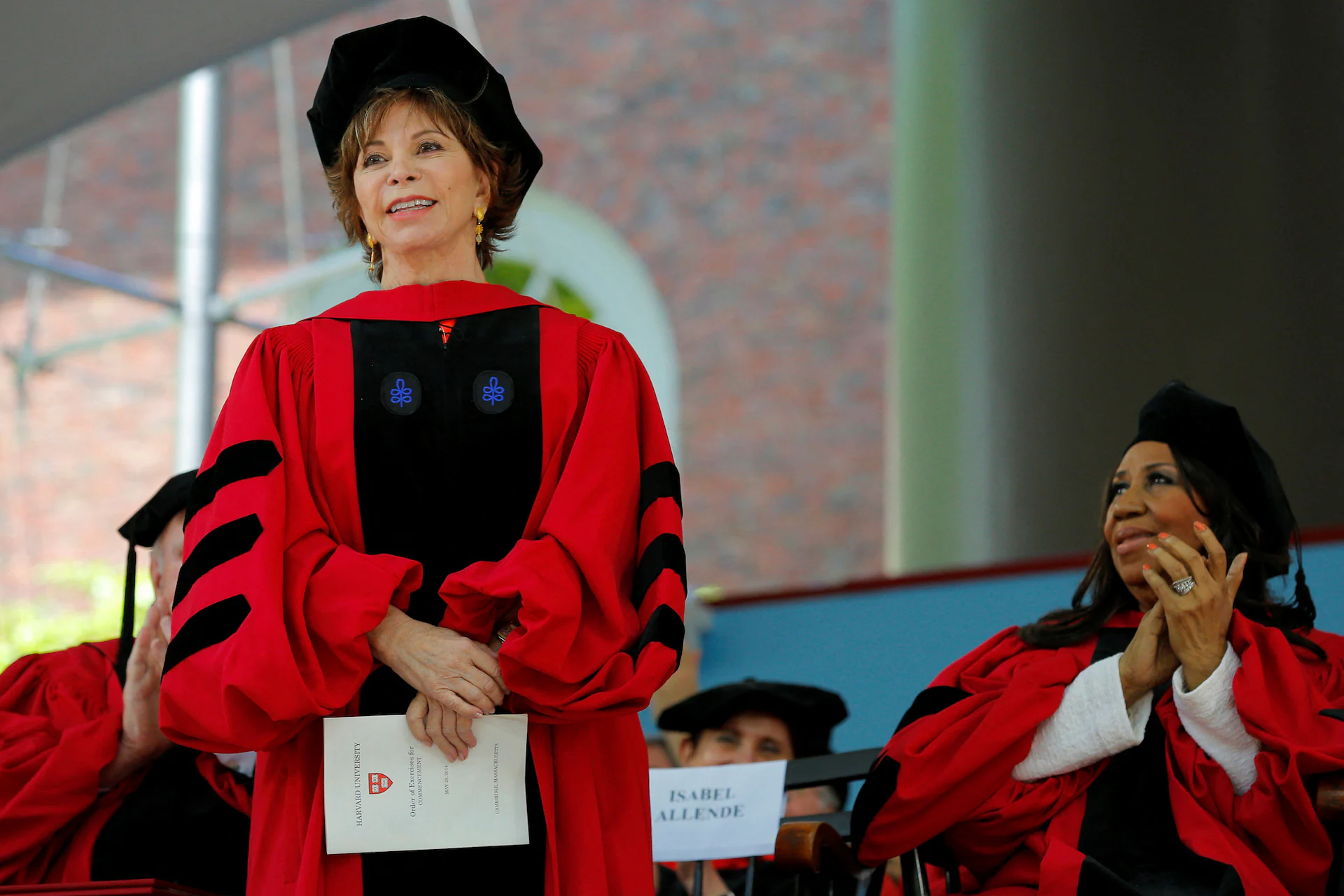
Chilean novelist Isabel Allende has won Spain’s prestigious Planeta Prize for her latest novel, La hora antes del alba (The Hour Before Dawn), marking a significant moment in the career of one of the Spanish-speaking world’s most widely recognised contemporary authors. Announced in Barcelona on October 15, the award recognises a story that returns to the fictional world of her internationally acclaimed debut, The House of the Spirits.
The €1 million prize, one of the most commercially significant literary awards in the Spanish-speaking world, was presented during a ceremony attended by Spain’s King Felipe VI and Queen Letizia. Allende, who is 84, described the achievement as an extraordinary moment, telling reporters that winning the award felt like winning the Nobel Prize.
The new novel follows Alba, the granddaughter of Esteban Trueba and Clara del Valle, as she attempts to rebuild her life after imprisonment and torture under the dictatorship of Augusto Pinochet in Chile. By returning to a character connected to her literary debut, Allende brings themes of political violence, survival and personal memory back into focus.
The award also marks a major publishing development for the author. After more than four decades with Plaza & Janés, an imprint within Penguin Random House, Allende has signed with Planeta, the publishing group that sponsors the prize. The move places a celebrated literary figure within a new publishing relationship while drawing fresh attention to a fictional world that has remained central to her reputation.
What Is the Planeta Prize and Why Does Allende’s Win Matter?
The Planeta Prize is one of the most commercially prominent literary awards in the Spanish-speaking world. Its €1 million cash prize places it among the major financial honours available to writers publishing in Spanish, giving the winning book considerable visibility in the international literary market.
Unlike awards that primarily recognise an author’s complete body of work, the Planeta Prize focuses on a particular literary submission. Winning can give a novel a significant promotional platform, helping it reach readers who might otherwise be unfamiliar with the work.
For publishers, such recognition can influence the commercial life of a book through publicity, bookstore visibility and increased public interest. For readers, the prize can serve as a discovery point, directing attention towards a new release and its author.
Allende’s victory is particularly notable because she is already an internationally established novelist. Her name carries decades of literary recognition, and her debut remains closely associated with her distinctive combination of family history, political conflict and supernatural elements.
However, the Planeta Prize has also faced criticism over its selection process. Critics have questioned aspects of the award’s presentation and selection, which have been described as theatrical and as favouring established literary names. These concerns form part of the broader debate about the relationship between literary merit, commercial publishing and major book prizes.
Allende’s win therefore brings together two sides of the literary industry: the recognition of an established author’s continuing creative work and the commercial machinery that can help a new novel reach a mass audience.
La hora antes del alba Returns to the World of The House of the Spirits
The winning novel revisits a fictional universe first introduced in Allende’s The House of the Spirits, published in 1982. That debut established the Trueba family as the centre of a story shaped by generations of relationships, political upheaval, family secrets and supernatural occurrences.
Rather than introducing an entirely separate fictional setting, La hora antes del alba returns to the family through Alba, the granddaughter of Esteban Trueba and Clara del Valle. The character’s experiences provide a connection between Allende’s earlier work and her latest novel.
Alba’s story centres on the aftermath of imprisonment and torture under Augusto Pinochet’s dictatorship. Her struggle to rebuild her life places personal recovery within a wider history of authoritarian rule and political violence.
The premise allows the novel to examine the consequences of repression beyond the immediate experience of imprisonment. Rebuilding a life after torture involves confronting memory, recovering a sense of personal agency and finding ways to continue despite the lasting effects of violence.
These themes also connect the new book to Allende’s broader literary interests. Across her career, she has frequently returned to exile, memory, family relationships and women who endure violence while preserving their identities and voices.
The return to Alba also creates an opportunity for readers familiar with The House of the Spirits to revisit a character connected to the earlier novel. At the same time, the new book’s focus on the aftermath of political repression gives its central story a distinct emphasis.
How The House of the Spirits Established Allende’s Literary Reputation
Published in 1982, The House of the Spirits introduced readers to a multigenerational family saga that combined intimate family relationships with larger political and social transformations.
The novel’s narrative world blends elements of the supernatural with recognisable human experiences, including love, loss, power, memory and conflict. Its combination of family history and political upheaval helped establish Allende as a distinctive voice in contemporary Spanish-language fiction.
The Trueba family’s story also provides a framework for exploring how political events affect private lives. Rather than treating history as something that happens only in government offices or public institutions, the novel examines how broader forces reshape relationships, households and individual identities.
That approach remains relevant to the premise of La hora antes del alba. Alba’s experience connects the consequences of authoritarian government with the personal challenge of rebuilding a life after persecution.
The relationship between the two books also highlights the possibilities of returning to an established fictional world. A sequel can revisit familiar characters while examining how their experiences acquire new meaning in a different narrative context.
For readers who have followed the Trueba family across generations, the new novel offers another perspective on the lasting consequences of the family’s history. For those approaching Allende’s work for the first time, it may provide an entry point into a body of fiction that repeatedly explores the intersection of personal memory and political change.
Isabel Allende’s Life and the Experience of Exile
Allende’s literary interest in exile and political violence is closely connected to her own history. Following the 1973 military coup in Chile, which overthrew her uncle, President Salvador Allende, she was forced to leave her country.
The coup brought an end to the government of Salvador Allende and ushered in the military dictatorship led by Augusto Pinochet. The period became a defining chapter in Chile’s modern history, marked by political repression and serious human rights abuses.
For writers and other cultural figures, exile can create a complicated relationship with home. Physical separation does not necessarily end a person’s connection to their country; memories, family histories, language and political experiences can continue to shape identity long after departure.
These tensions have frequently appeared in Isabel Allende’s fiction. Her writing often examines how people preserve their identities amid displacement, how families carry memories across generations and how women navigate circumstances shaped by political and personal violence.
Her return to Alba’s story brings these concerns into a narrative about survival after imprisonment and torture. The character’s attempt to rebuild her life reflects a broader question that runs through Literature about authoritarianism: how can individuals recover a sense of freedom after institutions have attempted to take it away?
Although fiction is not a substitute for historical documentation, it can explore the emotional and personal consequences of political events. By focusing on a character’s experience, a novel can bring attention to dimensions of history that are not always captured through political timelines alone.
Allende Warns About the Threat of Authoritarianism
During her acceptance speech, Allende connected the themes of her new book with contemporary political concerns. She said that the subject felt timely because discussions about authoritarianism and democratic vulnerability were increasingly prominent.
She also expressed concern about threats to democratic systems, extreme nationalism and fascism, explaining that these developments brought back the fear she experienced before leaving Chile.
Her remarks connected the historical setting of the novel with political debates beyond Chile. Although the story is rooted in the consequences of Pinochet’s dictatorship, its themes of repression, political power and personal freedom can resonate with readers examining developments in other countries.
Democracy depends on more than the formal existence of elections. Political institutions, legal protections, civil liberties and the ability of citizens to express dissent all contribute to the functioning of democratic systems. The weakening of these safeguards can affect individuals and communities in ways that extend beyond the political arena.
Literature offers one way to examine such questions through human experiences. A fictional account of imprisonment, torture and recovery can direct attention towards the consequences of political repression for individuals whose lives are shaped by decisions made in positions of power.
Allende’s comments suggest that she sees the novel’s historical subject as relevant to contemporary readers. The connection is not that every political situation is identical, but that the questions raised by authoritarianism, violence and the loss of freedom remain important across different historical contexts.
A Major Publishing Shift After Four Decades
Beyond the literary recognition, the Planeta Prize marks a significant change in Allende’s publishing career. After more than 40 years with Plaza & Janés, part of Penguin Random House, she has signed with Planeta, the publishing group behind the award.
For a writer with an established international readership, changing publishing houses can represent a major professional transition. A publishing relationship influences how a book is produced, promoted and distributed, although the specific implications of Allende’s move have not been detailed in the supplied announcement.
The relationship between the award and its sponsoring publisher also highlights an important feature of the contemporary book industry. Major literary prizes can generate attention for a winning title, while publishers have the resources to bring that title before a broad readership.
Such an arrangement can create opportunities for readers to discover new books, but it can also prompt questions about the balance between literary recognition and commercial interests.
In Allende’s case, the award arrives at a stage when her name is already widely recognised. The central question for readers will be what the new novel contributes to her body of work and how its return to the Trueba family develops themes that have occupied her writing for decades.
What Allende’s Planeta Prize Win Means for Readers
The immediate significance of the award is clear: La hora antes del alba has received one of the Spanish-speaking world’s most commercially prominent literary honours, bringing renewed attention to Allende’s work.
For readers who enjoyed The House of the Spirits, the sequel offers an opportunity to revisit a familiar family through Alba’s experiences. Its focus on survival after political imprisonment also provides a different way of engaging with the consequences of Chile’s dictatorship.
Readers interested in historical fiction may find the novel’s combination of individual experience and political history particularly relevant. Its premise places the effects of authoritarian rule within the personal struggle to recover after violence.
The prize’s financial value and public ceremony may increase the book’s visibility, but the long-term significance of the win will depend on readers’ responses to the novel itself. Commercial recognition can introduce a work to a wider audience; its lasting literary standing depends on what readers and critics find in its characters, themes and storytelling.
Allende’s achievement also illustrates how established authors can return to earlier fictional worlds without abandoning the concerns that shaped their original work. By bringing Alba back into focus, she revisits the relationship between family memory and political history that helped define her debut.
What Comes Next for La hora antes del alba?
The Planeta Prize gives Allende’s latest novel a substantial platform, but its wider reception will unfold through publication, distribution and engagement with readers. The award’s commercial prominence may help the book attract attention across Spanish-language markets, while its connection to The House of the Spirits provides an established point of interest for existing readers.
The publishing transition to Planeta adds another dimension to that process. How the new partnership develops and how the novel is received will become clearer as readers encounter the work and assess its contribution to Allende’s career.
For now, the award represents both a major professional milestone and a return to a fictional family that has been central to her literary identity since 1982. Its subject also reflects the continuing importance of stories that examine the personal cost of political repression.
Conclusion
Isabel Allende’s victory at the Planeta Prize brings together literary achievement, publishing industry recognition and a story rooted in the lasting consequences of authoritarian rule. Her winning novel, La hora antes del alba, follows Alba as she attempts to rebuild her life after imprisonment and torture under Pinochet’s dictatorship, returning readers to the world of The House of the Spirits.
The €1 million award marks a significant moment for the 84-year-old Chilean novelist, while her move from Plaza & Janés to Planeta signals a new chapter in her publishing career.
More broadly, Allende’s acceptance speech underscores the continuing relevance of literature that explores exile, memory, political violence and the fragility of democratic freedoms. Her latest work revisits a familiar fictional world while engaging with questions that remain important far beyond Chile’s borders.
For breaking news and live news updates, like us on Facebook or follow us on Twitter and Instagram. Read more on Latest Lifestyle on thefoxdaily.com.




COMMENTS 0